


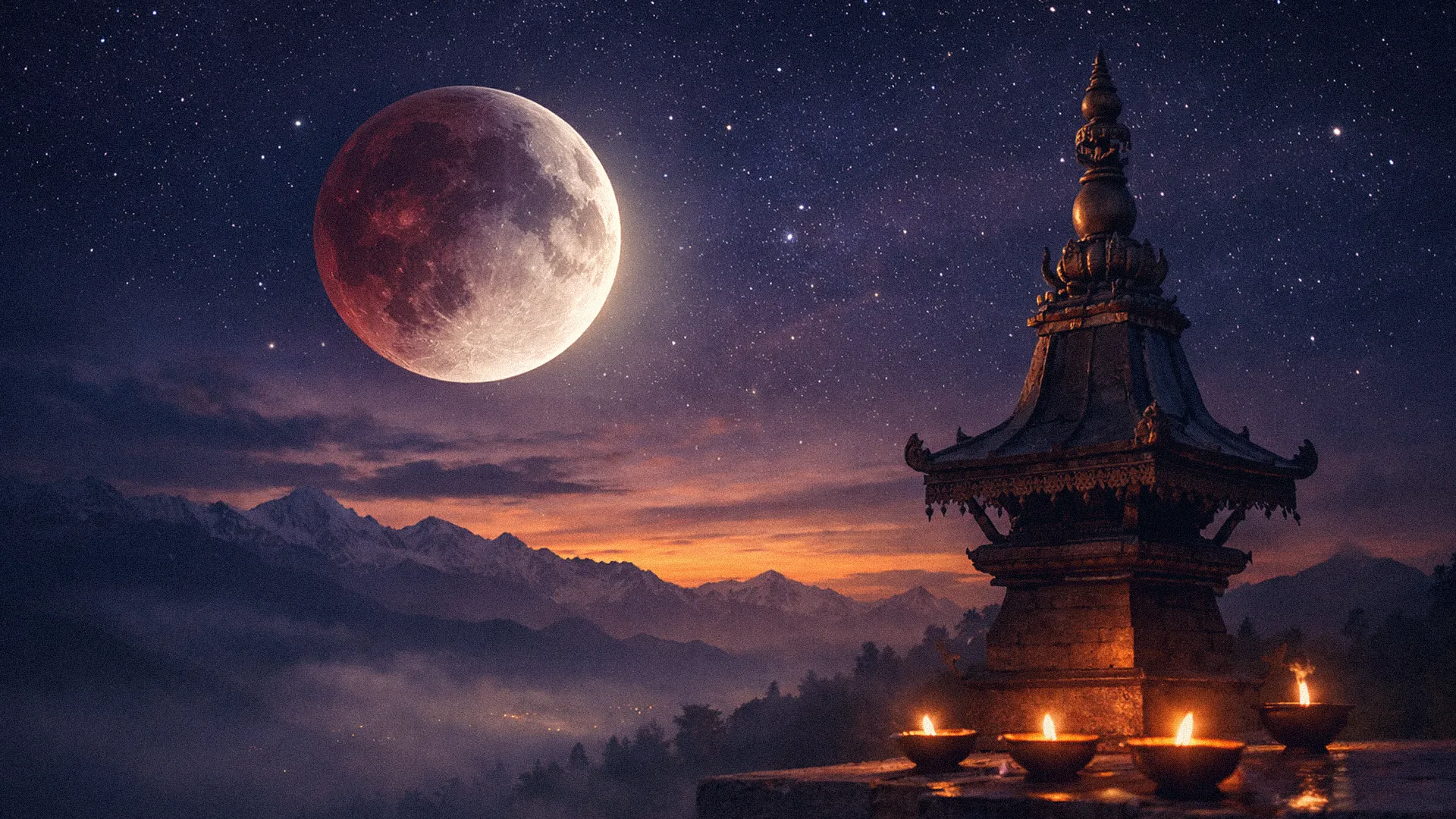
On the full moon day of Falgun 19, 2082 B.S., a partial lunar eclipse will occur. According to Nepali time, the eclipse can be observed this evening from 6:03 PM to 7:02 PM. Although the eclipse will conclude at 2:38 AM, the main visible duration from Nepal will be 1 hour and 5 minutes.
Sutak Period and Religious Beliefs
According to tradition, the Sutak period begins 9 hours before the start of the lunar eclipse. During this time, many devotees refrain from auspicious activities and spend time in worship and spiritual reflection. After the eclipse ends, there is a tradition of offering charity, singing devotional hymns, and bathing in sacred rivers or holy places.
Scientific and Astrological Perspectives
- Science:
According to astronomy, a lunar eclipse occurs when the Earth comes between the Sun and the Moon, and the Earth’s shadow falls on the Moon. If the shadow covers only a part of the Moon, it is called a partial eclipse; if it covers the entire Moon, it is called a total lunar eclipse. - Astrology:
This time, the eclipse is occurring in the Leo zodiac sign and the Purva Phalguni constellation. According to astrological calculations, worshipping Lord Shiva or chanting mantras during the eclipse is considered beneficial.
Probable Effects According to Zodiac Signs
According to astrology, the impact of the eclipse on different zodiac signs is believed to be as follows:
Aries: Anxiety
Taurus: Distress (Hardship)
Gemini: Gain of prosperity

Interested in this ad?
Would you like to continue to the link or provide your information for more details?
Please provide your information
To continue, please fill in your details
Cancer: Loss
Leo: Harm
Virgo: Expenses
Libra: Gain
Scorpio: Comfort
Sagittarius: Loss of honor
Capricorn: Hardship
Aquarius: Trouble related to women
Pisces: Well-being (Happiness)
Although scientifically considered a regular astronomical event, the lunar eclipse holds great cultural and spiritual significance. It is hoped that this eclipse brings peace, harmony, and positive energy to all Nepalis—from Mechi to Mahakali and those living abroad.