


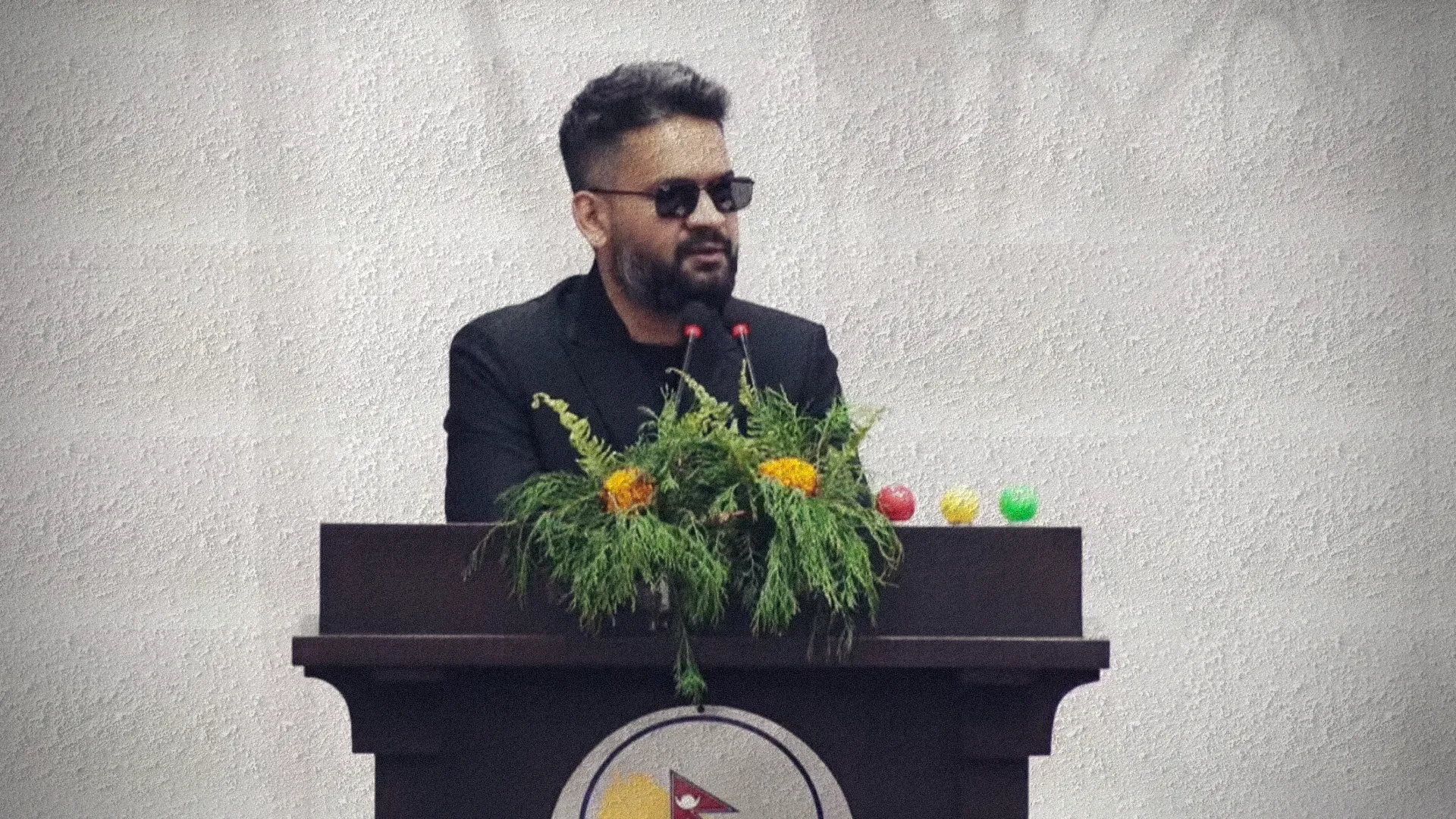
KATHMANDU. A realistic and diplomatic debate has commenced over the decades-long border dispute between Nepal and India, rising above mere emotions. Addressing the Parliament recently, Prime Minister Balendra (Balen) Shah clarified that the border dispute should not be viewed solely through the lens of political sloganeering and radical nationalism. He emphasized that the sensitivity of the border must be resolved based strictly on facts and evidence.
Prime Minister Shah stated in Parliament:
"After becoming Prime Minister, I came to know that India has not only encroached on Nepal's land, but in several places, land has also been encroached upon from Nepal's side. Both sides need to sit down, discuss this matter seriously, and find a solution based on facts."
No-Man's Land (Dashgaja): Encroachment is Not One-Sided
This statement by Prime Minister Shah has triggered a new debate in Nepali diplomatic and political circles. According to experts, the issues of border encroachment from the Indian side must be firmly raised in international forums and at the diplomatic table. However, alongside that, honestly accepting the encroachments that occurred from the Nepali side, whether inadvertently or intentionally, is the hallmark of mature nationalism.
Recent field facts from the border regions also validate the Prime Minister's statement:
-
Ilam–Darjeeling Border Area: During a recent joint inspection, permanent and temporary structures were found built by both sides in the Dashgaja (No-Man's Land) area. Apart from the Indian side, facts have emerged showing that Nepali citizens have also encroached upon the Dashgaja area to construct houses and other structures.
-
Dhodhara–Chandani of Kanchanpur: In this area, farming and the construction of temporary huts by encroaching on the Dashgaja had been ongoing for a long time. There are positive examples of security forces from both Nepal and India (Armed Police Force and SSB) jointly conducting operations to clear the Dashgaja area.
-
Uttarakhand Border Area: The local Indian administration had officially expressed concern and objection, stating that Nepali citizens were farming by encroaching on the No-Man's Land area along the border connected with Sudurpashchim.

Interested in this ad?
Would you like to continue to the link or provide your information for more details?
Please provide your information
To continue, please fill in your details
The Path to Resolution Through Talks and Expert Teams
Rather than spreading provocation to resolve strategic and historical border disputes, including Lipulekh, Limpiyadhura, and Kalapani, Prime Minister Balen Shah has adopted a policy of mobilizing concrete diplomatic mechanisms.
The government has put forward the following steps for a permanent solution to this problem:
-
Formation of a Joint Expert Team: Constructing a joint team comprising historians, survey experts, and technicians from both countries who understand border mapping, history, and geography.
-
Study of Historical Documents: Settling the border demarcation through table talks based on the 1816 Sugauli Treaty and related evidence.
-
Trilateral and International Diplomacy: If necessary for historical clarity of the border, advancing diplomatic dialogue regarding historical maps and documents held by China and the United Kingdom (UK).
Changing Nationalism: Acceptance of Truth, Not Illusion
Balen Shah, who raised the debate of nationality to a new height by placing a map of 'Greater Nepal' in his office when he was the Mayor of Kathmandu, has appeared more responsible and practical after reaching the Prime Minister's chair. The youth-led government has shown maturity in foreign policy, utilizing evidence as a weapon rather than provocation to protect national interests.
Editorial Note: Nationalism does not mean hiding one's own mistakes and only pointing fingers at others. True patriotism is based on facts, not illusions. Honestly accepting our own shortcomings and dialogue with the neighboring country on the basis of sovereign equality will be in the best interest of Nepal.