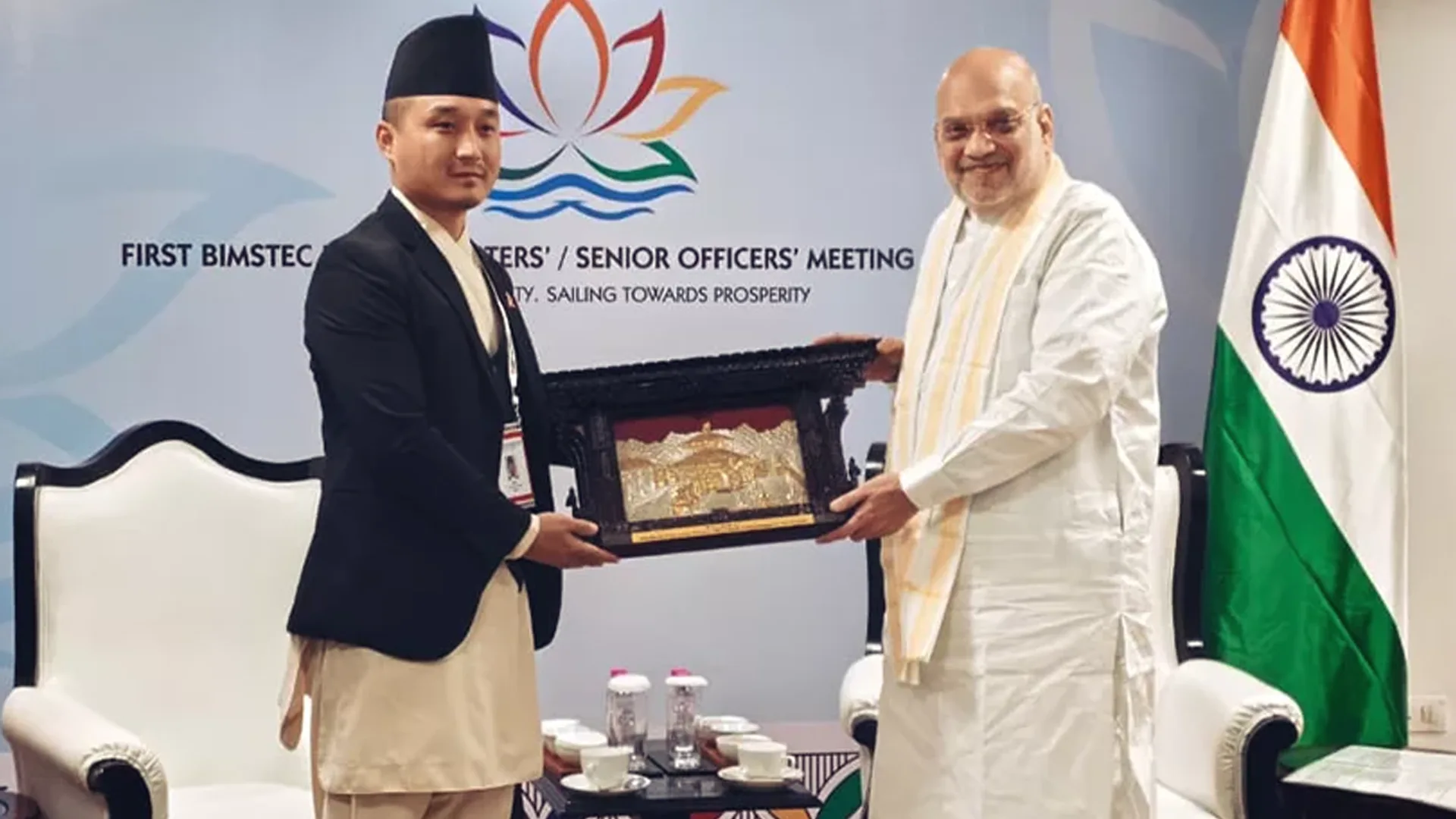



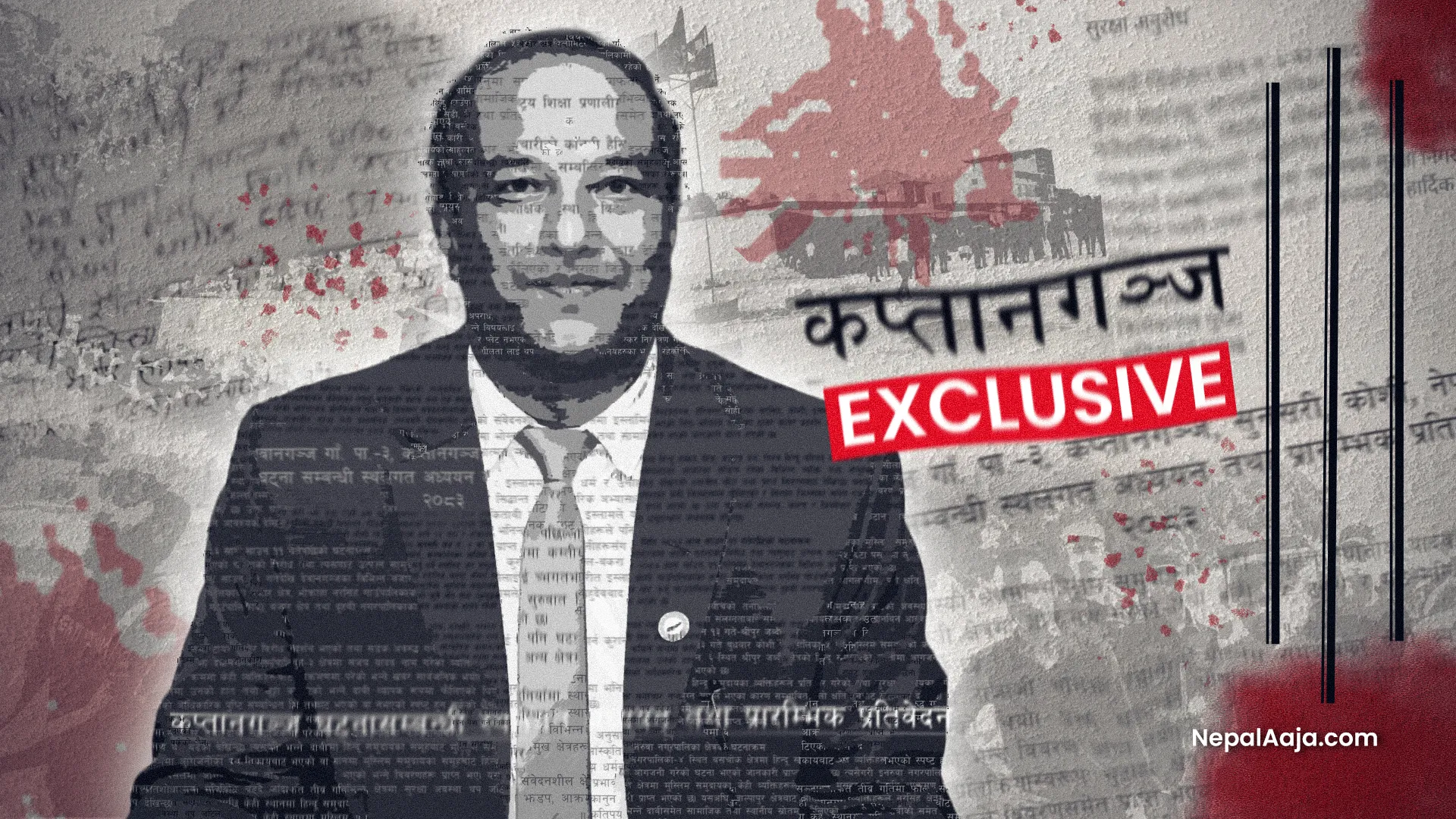
A field study report prepared following the Home Minister's directive to ascertain the actual situation of the violent incident in Sunsari district, Nepal, has been submitted to the Ministry of Home Affairs. Member of the House of Representatives from Sunsari region and engineer Deepak Kumar Sah prepared this study report with the support of locals. However, MP Sah stated that further work still needs to be done on the report and declined to make other official comments regarding its authenticity. The report obtained by Nepal Aaj reveals detailed facts about the background of the Kaptanganj incident, security agency failures, human and physical losses, and the long-term impact on communal harmony.
Background of the Incident and Beginning of Communal Tension
According to the report, on Shrawan 10, 2083, at around seven in the evening, a dispute began at the Shivalaya temple premises located in Dewanaganj-3. While twenty to twenty-five Hindu youths were preparing to play a DJ sound system for the Bol Bam yatra, twenty-five to thirty Muslim youths requested them to stop the DJ, starting a minor argument. The report notes that the failure to remove a religious flag placed during the Moharram festival in time, the subsequent erection of a large bamboo pole to place the flag again, as well as sensitive namings like Shreeram Chowk, Islam Chowk, and BP Chowk had already heightened distrust at the local level. This pre-existing dispute and the argument over playing the DJ escalated, resulting in the vandalism of the DJ system and triggering communal clashes between both sides.
Clash with Security Personnel and Firing
The report points out that after the DJ was vandalized at the temple premises, the situation spun out of control, and a crowd of about two hundred people gathered. On the same night, between 9:45 PM and 10:15 PM, amidst a power blackout, the crowd attempted to breach the security cordon, leading to a direct clash with the police. To bring the situation under control, a total of twenty-five rounds of warning and direct shots were fired—three rounds by Nepal Police and twenty-two rounds by the Armed Police Force. Following the incident on the night of Shrawan 10, this communal tension spread from Shrawan 11 to 14 across various markets and settlements of Harinagar, Bhokraha Narsingh, Koshi Rural Municipality, Inaruwa, Barju, Duhabi, and Itahari. False and unverified news along with hate speech spread on social media led to attacks, vandalism, and arson by both sides.
Human, Physical Damage and Statistical Details

Interested in this ad?
Would you like to continue to the link or provide your information for more details?
Please provide your information
To continue, please fill in your details
Three civilians—Omprakash Mehta, Jayprakash Mehta, and Ravindra Mehta—lost their lives in this violent incident. Between twenty-two and forty citizens and security personnel were injured in the clashes and firing, with most of the injured civilians suffering gunshot wounds above the waist. The injured include Police Inspector Rakesh Rai and eight to thirteen security personnel. In terms of physical damage, a total of sixty-nine vehicles were damaged, including fifty-two two-wheelers, eight three-wheelers, and four four-wheelers. Similarly, one hundred and twelve houses and physical structures were damaged, including twenty-three concrete houses, thirty-four mud houses, fifty sheds and shops, partial damage to two temples, five other structures, and one brick kiln.
Religious Institutions, Underlying Causes, and Security Failure
The report raises serious questions about the deep underlying causes and security failures behind the incident. It highlights the need to investigate Suffa Academy Nepal in Dewanaganj-4—registered as a private school or NGO but operating a madrasa and hostel—regarding its legal status, the presence of foreign students and teachers, and financial sources. In Sunsari Constituency No. 4 alone, more than forty-three madrasas are operating in Koshi and Bhokraha Narsingh municipalities. Furthermore, questions were raised over shooting civilians above the waist without sufficient use of non-lethal means like tear gas or lathi charge, adherence to the command chain, and a demand was made to test the call details of an alleged phone call received by Inspector Rakesh Rai from Iliyas Mansuri on the night of the incident. The report mentions that despite prior information, top security officials including the Chief District Officer failed to make adequate preparations; illicit activities like smuggling and hundi due to the open border, as well as the local communal mindset stemming from unaddressed grievances over the Ramnagar-Bhutaha incident in Harinagar two years ago, also fueled this violence.
Major Recommendations to the Home Ministry and Future Steps
For an impartial investigation of the incident, it is recommended to form a high-level investigation committee under the Ministry of Home Affairs to examine the command chain and perform forensic and ballistic testing of weapons, bullets, and shell casings used. It states that CCTV footage, videos, call details, wireless communications, and misleading social media content related to the incident should be collected to take legal action against rumor-mongers. Regarding victims, suggestions include providing immediate relief to families of the deceased, free medical treatment for the injured, and technical evaluation and proper compensation for damaged structures and vehicles. Additionally, strict monitoring of registration, legal status, foreign visas, curriculum, and funding of madrasas, maktabs, and religious institutions is advised, along with implementing a common integrated civic education covering nationality, human rights, and interfaith tolerance in all schools. For security strengthening, recommendations include GIS-based mapping, 24-hour CCTV and drone surveillance, quick response teams, and early warning systems.
As this report is a preliminary study, technical verification among data from the police, hospitals, district administration, and local levels is deemed necessary before reaching final conclusions. The state's primary responsibility will be to avoid blaming any community collectively, take legal action against guilty individuals or officials based on personal crimes, protect innocent citizens, and re-establish communal harmony.