


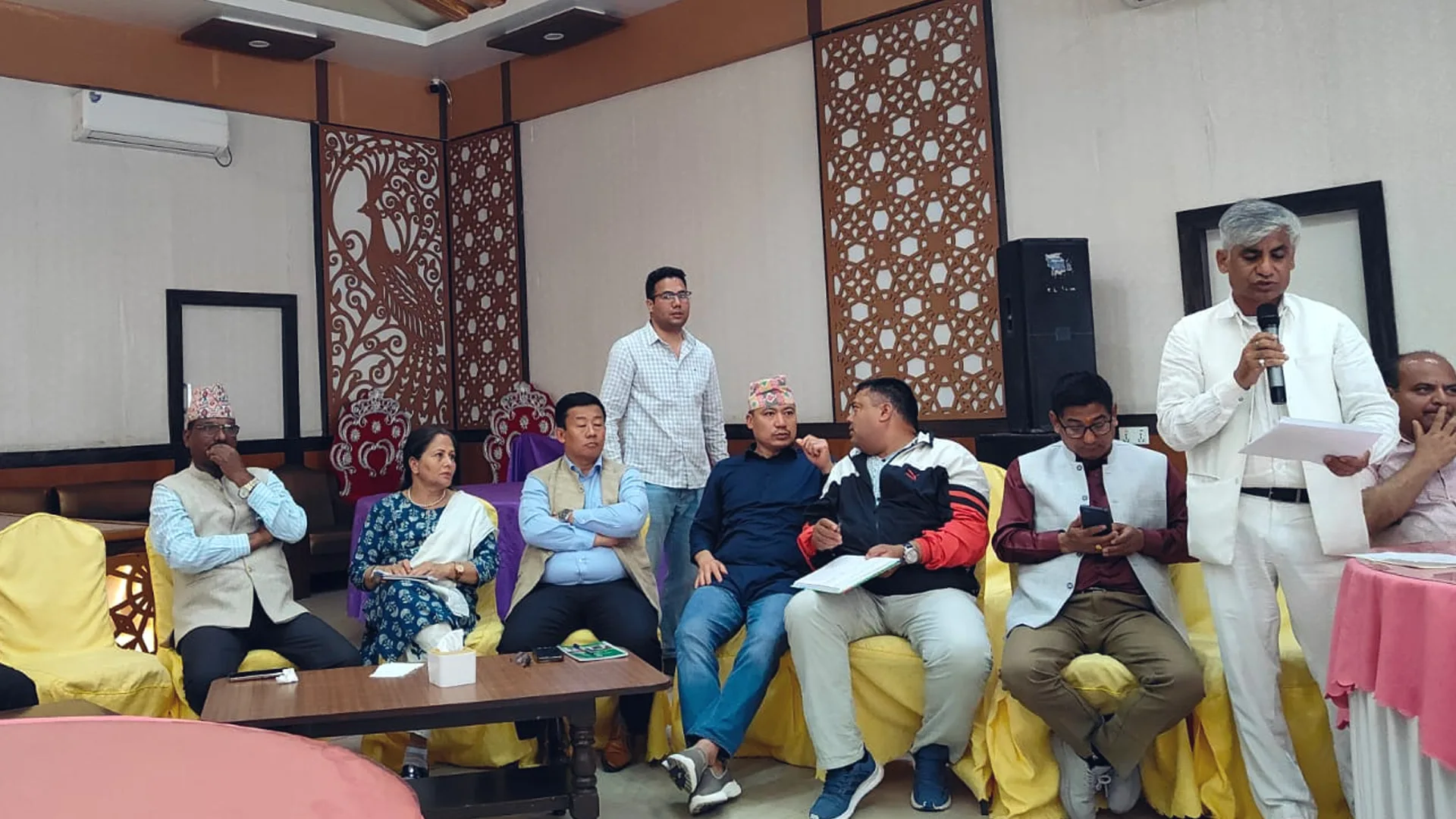
A deepening rift within the Nepali Congress has burst into the open as a dissident faction of youth leaders launched a nationwide resistance campaign, challenging the current leadership's governance style. Calling themselves advocates for broader unity, the disgruntled group organized a major gathering in Kathmandu on Saturday, signaling a sharp escalation in internal friction ahead of the party's upcoming 15th general convention.
The assembly, chaired by youth leader Kundan Kafle at Sukedhara, drew significant participation from representatives across various districts, including notable figures such as Jeet Sherchan, Kedar Karki, Bhupendra Rai, and Raju Shrestha. According to a comprehensive press statement released after the event, the dissidents accused the Central Working Committee—headed by Gagan Kumar Thapa—of violating party statutes, organizational procedures, and democratic values. They alleged that the leadership has systematically sidelined dissenting voices, exerted undue pressure under the guise of maintaining discipline, and attempted to run the organization through control-oriented tactics.
A primary grievance centers on the "undemocratic dissolution" of key sister organizations, including the Nepal Women’s Association, Nepal Students’ Union, and Nepal Tarun Dal. The youth leaders argued that these actions have severely fractured internal trust. In response, they announced plans to hold separate assemblies for these fraternal wings to establish independent, alternative central committees.
The faction also took aim at the leadership’s strategy surrounding the general convention, alleging a calculated attempt to capture the party apparatus. They claimed that despite active members fulfilling statutory renewal requirements, the leadership is forcing an "unnecessary update process" with malicious intent. The gathering issued a public appeal to active members across Nepal to boycott this registration update, asserting that transparency and rule-bound administration are crucial for a fair election.
Beyond internal politics, the youth leaders leveled strong criticism against the government's recent actions, particularly the demolition of squatter settlements without providing alternative housing. The faction condemned the campaign as inhumane, noting that it violates the basic human rights of vulnerable groups, including pregnant women, the elderly, and school-going children. They warned of upcoming protests to defend the rights of the landless.
The gathering further condemned ongoing state interference in trade unions and student organizations, pledging to resist attempts to weaken bodies protected under the constitutional right to freedom of association. Additionally, the leaders addressed the cooperative fraud scandal, strongly opposing any government move to bail out cooperative victims using taxpayer funds. They labeled such plans as conspiracies to shield perpetrators, demanding instead that funds be forcefully recovered from the embezzlers to compensate victims.
As political observers interpret this mobilization as the emergence of a new power equation within the Nepali Congress, the camp led by Gagan Kumar Thapa has yet to issue an official response. The resolutions adopted at this gathering indicate that the internal politics of Nepal's oldest democratic party will grow increasingly volatile as the general convention approaches.