


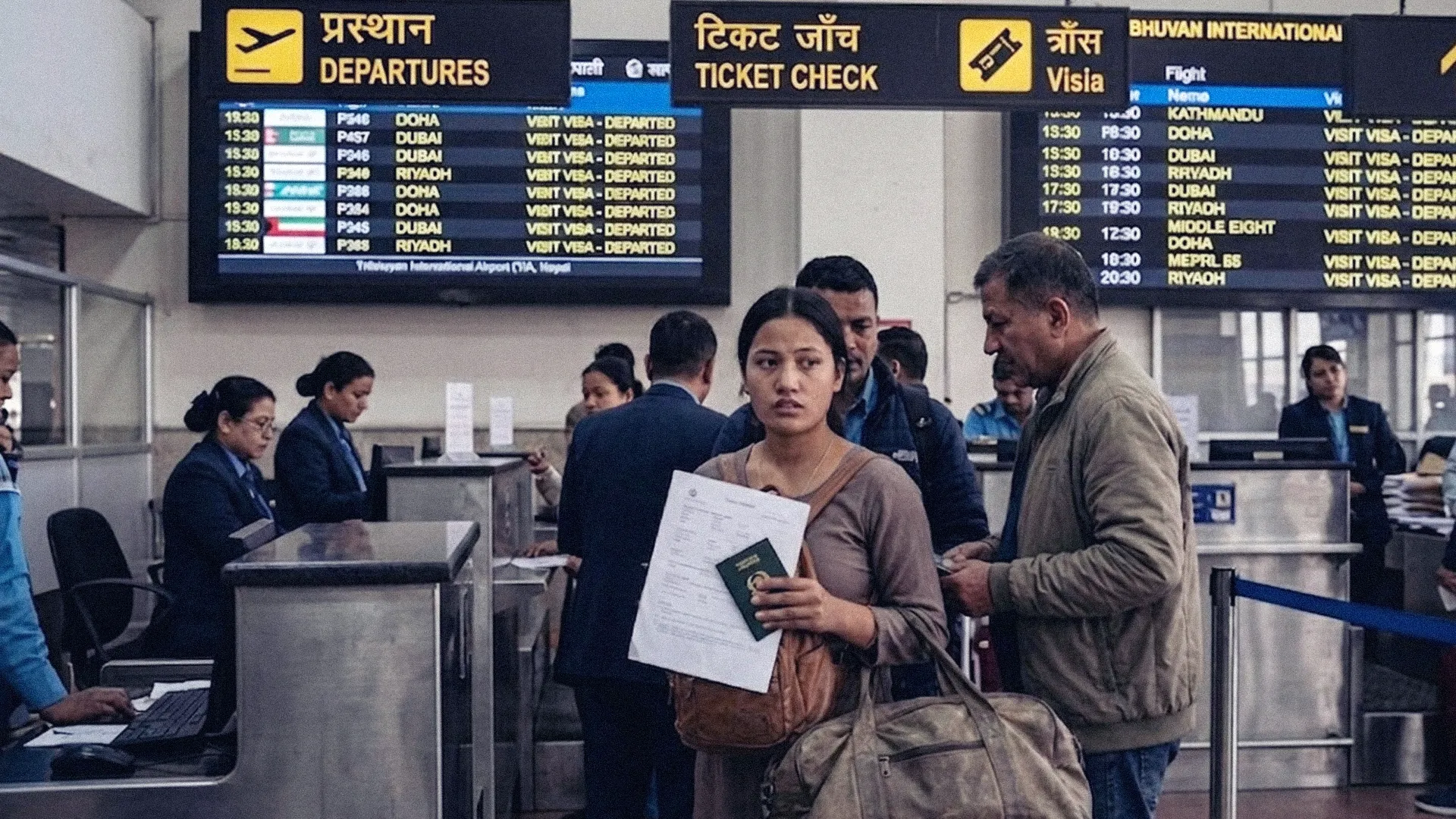
State efforts to dismantle human trafficking rings operating under the guise of tourism have hit a significant wall. Critics and stakeholders point to the Immigration Department's simplified "three-document" rule—requiring only a passport, ticket, and visa—as the primary mechanism currently exploited by illicit travel agencies and brokers to bypass safety protocols.
Despite a 2016 ban on sending domestic workers to Gulf nations, the illicit trade has flourished. Smugglers have successfully rebranded forced labor migration as casual tourism. By meeting basic paperwork requirements, traffickers effectively utilize legal channels to transport vulnerable individuals into high-risk environments, often far removed from their intended destinations.
Investigations reveal that Oman has surfaced as a primary transit hub for these networks. Once Nepalese citizens reach Oman on visit visas, they are frequently diverted to Kuwait, Saudi Arabia, Iraq, Libya, Syria, and even Uganda. Many victims remain unaware of their final destination until they are already in transit, leaving them defenseless against exploitation.

Interested in this ad?
Would you like to continue to the link or provide your information for more details?
Please provide your information
To continue, please fill in your details
Testimonies from returnees highlight the harrowing reality of this deception. A victim from Jhapa recounted being sent to Oman under the pretense of a holiday, only to be told upon arrival that she was being trafficked to a third country. Another 21-year-old from Surkhet shared how she was coerced into domestic servitude despite promises of high-paying professional work, eventually fleeing back to Nepal due to unbearable pressure.
The persistence of this syndicate has raised serious allegations of complicity among immigration staff at Tribhuvan International Airport. Observers suggest that informal bribery may be shielding these illegal operations. Furthermore, traffickers are increasingly utilizing open borders to fly victims out of Indian airports, leading to urgent calls for a mandatory "No Objection Certificate" (NOC) for Nepalese citizens departing from India.
The perceived inaction of the Department of Foreign Employment and the Ministry of Foreign Affairs has drawn sharp rebuke. Advocates are now demanding criminal prosecution for brokers and rigorous audits of involved officials. As the crisis threatens Nepal’s international standing, the government faces mounting pressure to implement systemic reforms before the humanitarian toll escalates further.