


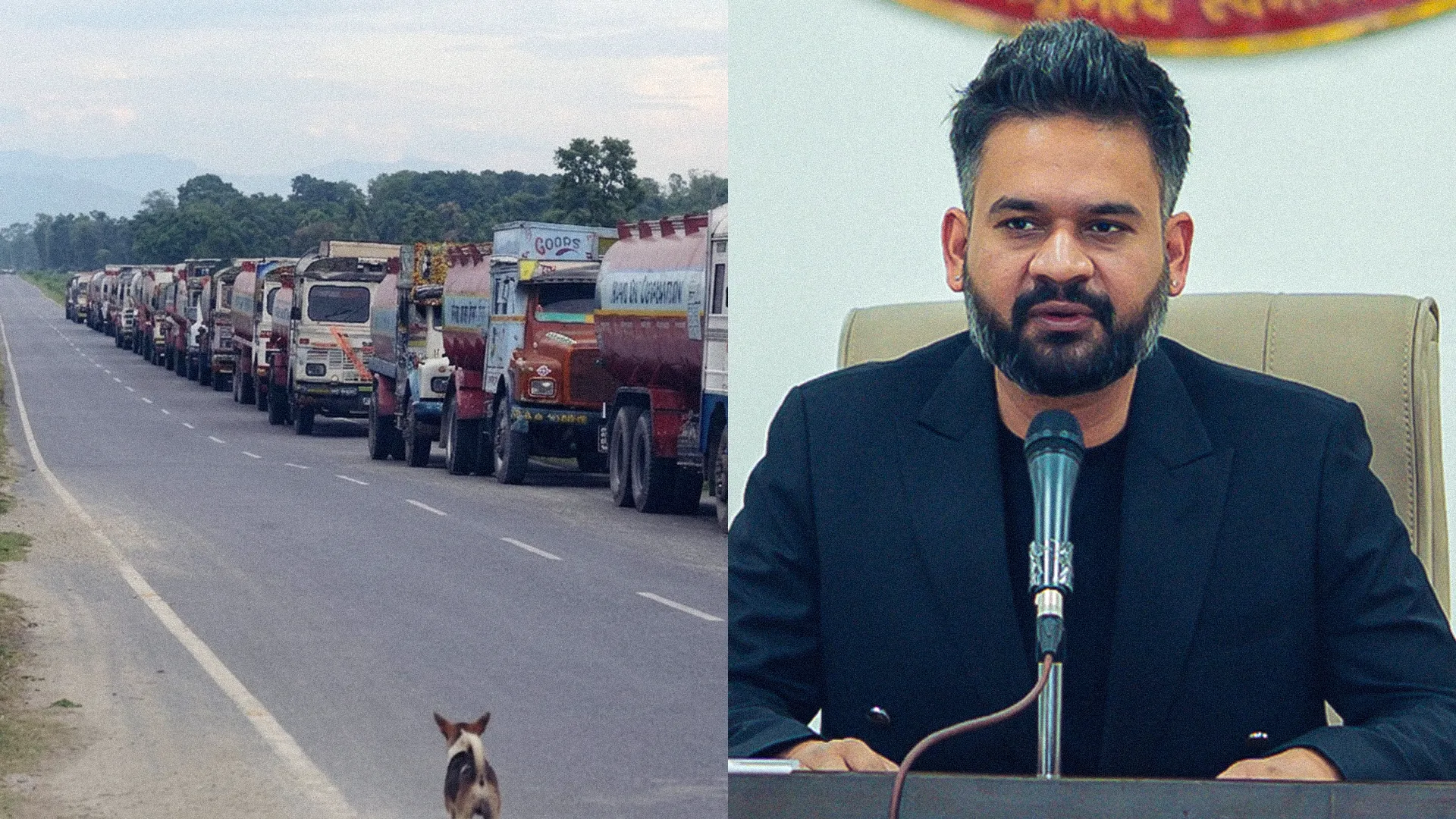
Kathmandu. After the government made Maximum Retail Price (MRP) mandatory for customs clearance, its direct impact has fallen on the import of industrial raw materials. As customs demands MRP even on raw materials not meant for retail sale, hundreds of freight vehicles have been stranded at border checkpoints, a situation businessmen have termed a 'government blockade'.
The Compulsion of Small Industries and Trading Units
Most small industries in Nepal do not have the capacity to independently import the industrial raw materials required for their production. Small industries require raw materials in small quantities, but importing them directly from the domestic or international market creates a technical and financial compulsion to import in large (bulk) quantities.
As a solution, trading units dealing in industrial raw materials import these materials in bulk and distribute them to small industries according to their needs. However, the new MRP rule has brought the import process of these trading units to a complete standstill.
The Impracticality of Demanding MRP on Raw Materials
Raw materials are not finished goods. For example, industrial raw materials like Plastic Granules, used to manufacture plastic items, are not sold in packets to general consumers in the retail market.
Since these materials are strictly used in the industrial production process, they do not have a designated Maximum Retail Price (MRP), nor is it possible to assign one. However, after the government blindly mandated MRP on all types of imported goods, the raw materials brought by these trading units for small industries have been halted right at customs.

Interested in this ad?
Would you like to continue to the link or provide your information for more details?
Please provide your information
To continue, please fill in your details
Chaos at Customs Checkpoints and the 'Government Blockade'
A severe crisis has now emerged at border checkpoints after customs offices halted clearance, citing the lack of MRP on industrial raw materials. A long queue of hundreds of freight vehicles waiting for import clearance has formed at the customs points.
Main problems caused by this policy:
● Risk of industries shutting down: Due to the shortage of raw materials, the production of domestic small and medium enterprises is on the verge of coming to a halt.
● Financial burden: With vehicles stalled at customs, businessmen are forced to pay heavy 'demurrage' (delay charges) daily.
● Policy void: The rule, introduced without distinguishing between goods not meant for retail and direct consumer goods, has ruined the business environment.
Businessmen state that this policy, introduced without prior study and ignoring practical aspects, has devastated the country's productive sector. Stakeholders have warned that if the government does not timely rectify this impractical rule—which equates to an 'undeclared blockade'—and scrap the MRP provision for importing industrial raw materials, the country's economy will have to pay an even heavier price.