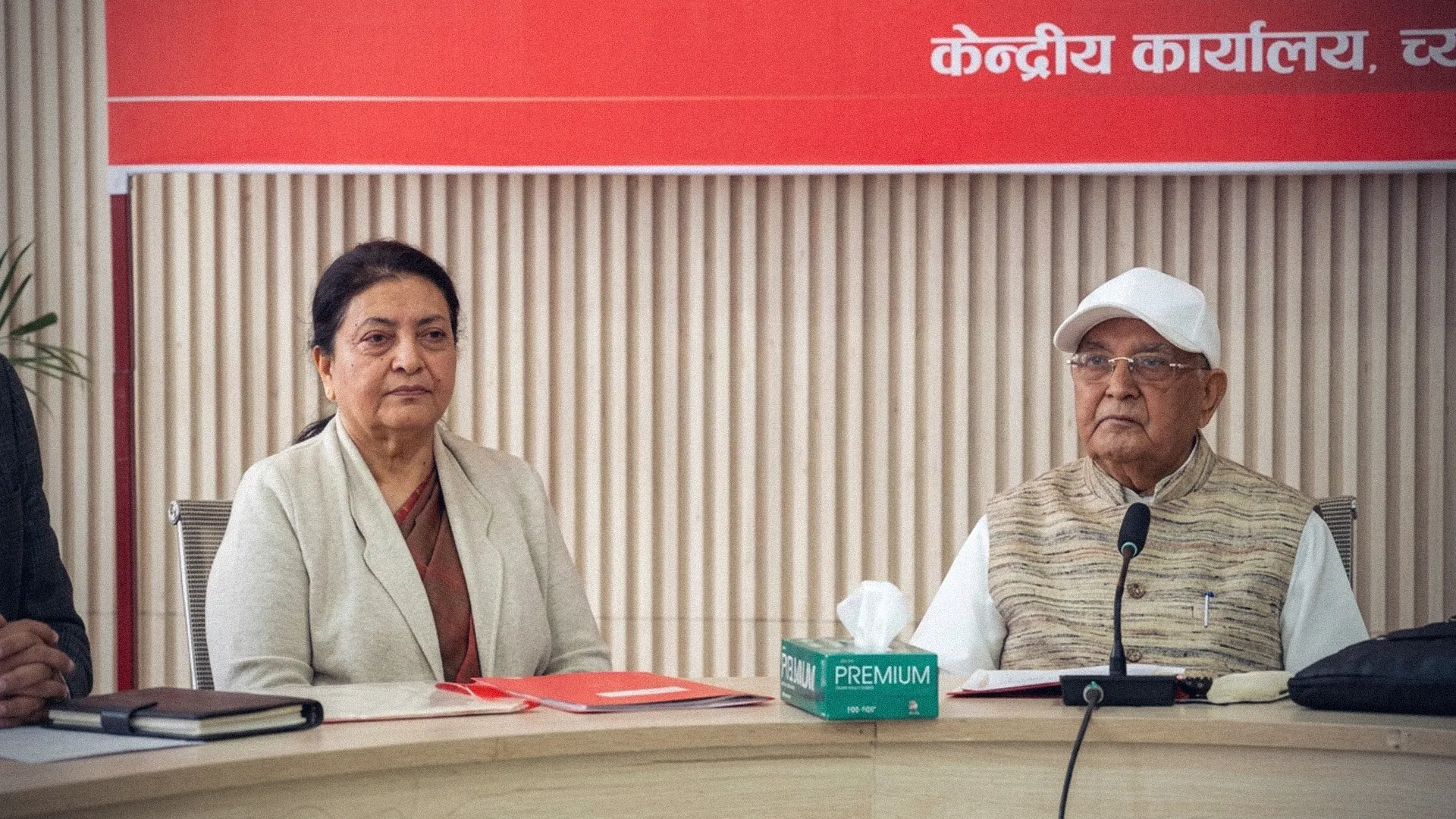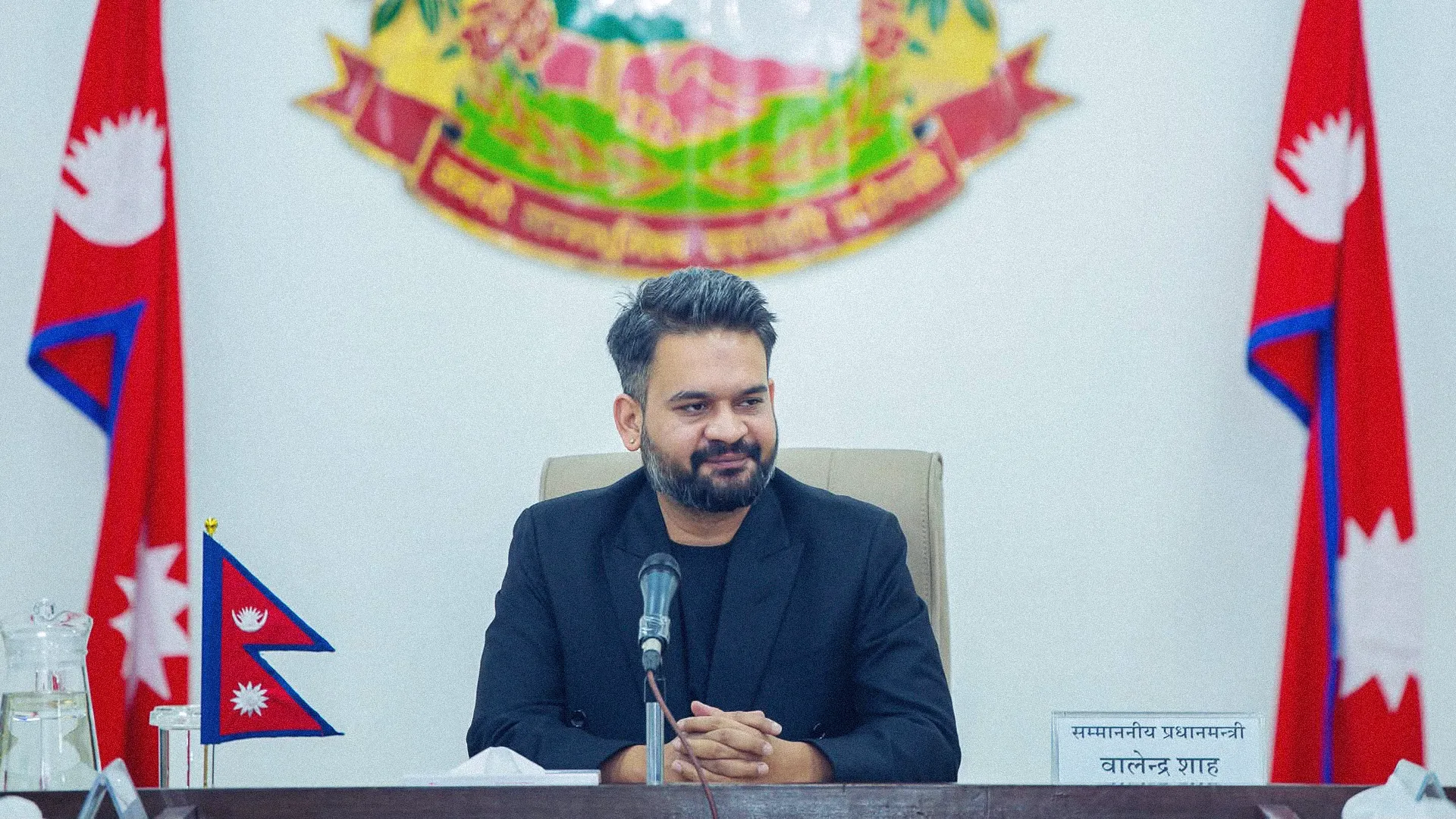



The meeting between Rastriya Swatantra Party (RSP) President Rabi Lamichhane and Prime Minister Balen (Balendra) Shah at the Prime Minister's official residence in Baluwatar on Sunday evening, Shrawan 24, is being viewed as a highly significant development in terms of the latest political equation and government operations. Amidst the growing distance and bitterness between the government and the ruling partner RSP recently, this dialogue continued uninterrupted for about 3 to 4 hours. Although similar long and intensive discussions have taken place in the past between PM Balen, who is also a senior leader of the RSP, and President Lamichhane, this Baluwatar talk, which stretched for 3-4 hours due to power balance issues, internal squabbles, and mutual dissatisfaction, is being analyzed with special interest. A source close to Lamichhane has claimed that such regular meetings between the two top leaders are merely a natural process for mutual coordination between the party and the government, and it should not be considered the result of any dispute or uncomfortable situation.
However, even though official circles tried to portray the meeting as a normal and regular process, sources claim that the 3-4 hour long stay at Baluwatar was full of bitterness and heated arguments. It is claimed that a serious disagreement and an open verbal spat took place between the two leaders during the meeting, which proceeded with sips of alcohol. The atmosphere became further tense after Prime Minister Balen directly vented severe dissatisfaction, stating that there was complete non-cooperation in running the government from his own partner party and leadership. During the talks, there was a flurry of accusations and counter-accusations regarding the role of the Attorney General and allegations that Lamichhane's side was creating obstacles in the government's functioning. In this context, an MP from Lamichhane's side expressed anger and told Nepal Aaja, "Rabi is ready to drink the poison that emerged from churning the ocean (Samudra Manthan), but let Balen, Kumar Ben, and Bhupdev drink the nectar. Rabi has a spirit of sacrifice; he has not been uncooperative with the government." Lamichhane's side has been claiming that they have always maintained a spirit of sacrifice and that the accusation of non-cooperation with the government is baseless.

Interested in this ad?
Would you like to continue to the link or provide your information for more details?
Please provide your information
To continue, please fill in your details
Tourist Destinations The foundation of the growing distrust between the government and within the party was already being built. PM Balen was already dissatisfied with the constant warnings and severe criticism coming from his own coalition and party MPs. An emotional and cryptic remark he expressed on social media on Friday night, Shrawan 22, clearly highlighted this dissatisfaction, where he mentioned that "even if it takes a little longer for the right time to come, I remain unwavering on the path of truth, and sometimes one has to face the situation of fighting alone." Immediately after this expression by Balen, RSP leader Manish Jha stood up in the House of Representatives meeting and issued a strong warning, raising questions over the government's sluggishness and stylistic failure. Against this backdrop, the 3-4 hour long dialogue at Baluwatar focused and debated on complex issues like the future direction of the government, ambassadorial appointments, and the long-pending nominations of central office bearers and members within the party.
The competition for power balance between the two factions is considered responsible for the prolongation of power-sharing and the nomination process within the party organization. Following the second meeting of the central committee held on Shrawan 13, differences remain over whether to select Home Minister Sudhan Gurung or Infrastructure Development Minister Sunil Lamsal for the post of Deputy President. Lamichhane's faction alleges that organizational expansion and the nomination process have been stalled because Balen's team delayed submitting the necessary names for the office bearers and members. In addition, the 3-4 hour long meeting also thoroughly reviewed various political, administrative, and constitutional appointments made by the government so far. At a time when there is severe criticism that individuals with controversial pasts and those who have repeatedly enjoyed positions of benefit were given responsibilities again, serious brainstorming took place on how to manage or dismiss the newly appointed officials as their real backgrounds began to surface. Ultimately, the Baluwatar talks concluded with an effort to find a strategic consensus on how to make coordination between the party and the executive effective and mature while saving the government's prestige in the coming days.