


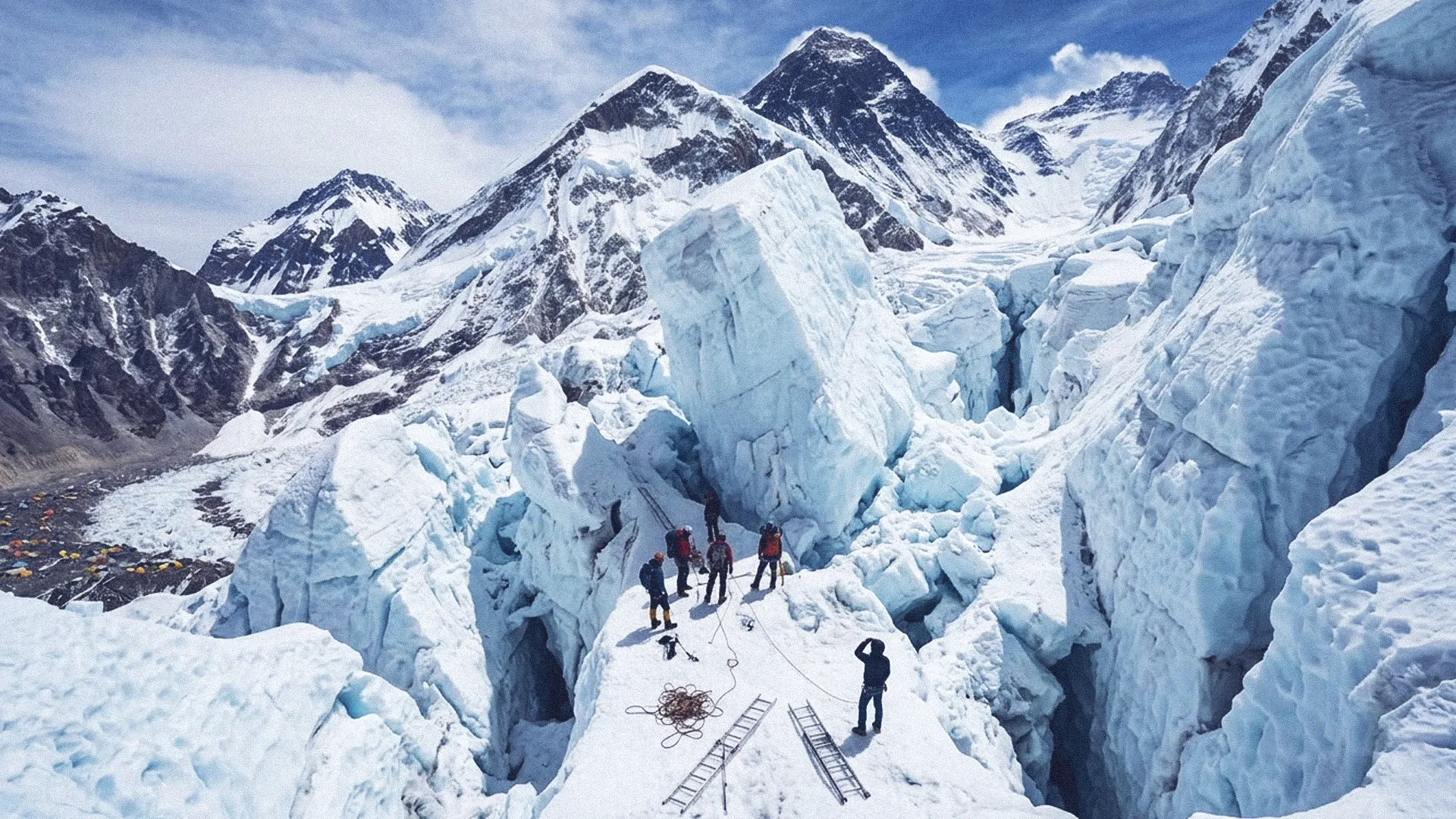
A formidable 100-foot ice tower has brought the early Mount Everest climbing season to a standstill, leaving hundreds of international mountaineers confined to base camp. The massive block of ice, known as a serac, is perched precariously above the treacherous Khumbu Icefall, preventing "icefall doctors" from securing the necessary ropes and ladders for a safe passage to Camp II.
This seasonal delay is particularly significant as the route typically opens by the third week of April. According to officials from Nepal’s Department of Tourism, the impasse has disrupted the essential schedule for gear ferrying and acclimatization rotations, which are critical for a successful summit bid during the brief window of favorable weather in May.
Experienced climbers on the ground, including Garrett Madison of Madison Mountaineering, describe the ice tower as an imminent threat that could collapse at any moment. While the waiting continues, the financial and logistical stakes remain high; Nepal has already issued 410 permits this year, each costing $15,000, contributing significantly to the national economy.

Interested in this ad?
Would you like to continue to the link or provide your information for more details?
Please provide your information
To continue, please fill in your details
International teams, including large contingents from China, the United States, and India, are currently monitoring the situation. If the serac does not collapse or melt soon, authorities plan to deploy additional Sherpa teams to scout for alternative paths through the shifting glacier.
The bottleneck at base camp is further intensified this year as the Tibetan side of the mountain remains closed, pushing more expeditions toward the Nepali south face. Mountaineers now face a race against time to reach the 8,849-metre peak before the monsoon season arrives.