


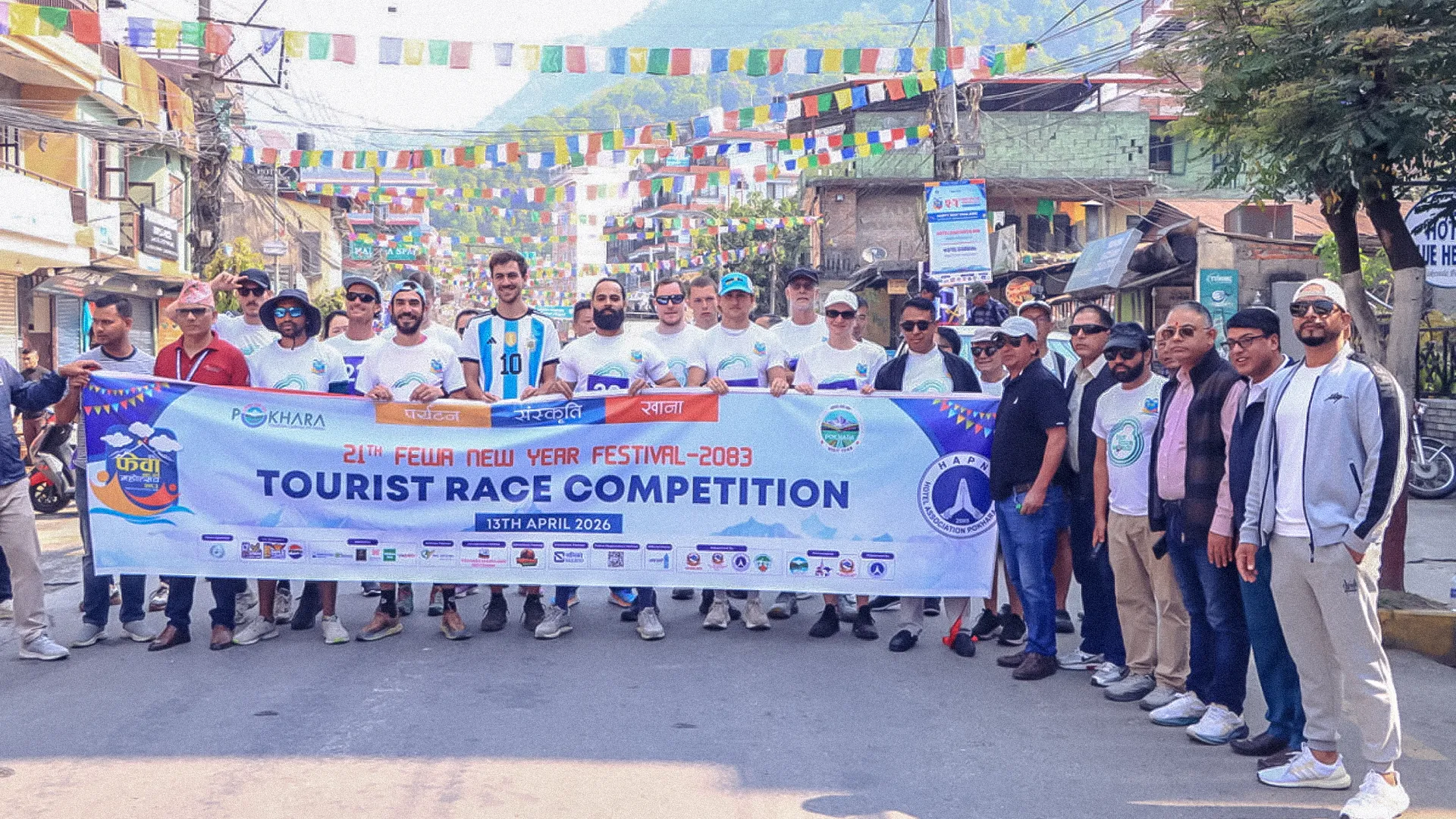
The lakeside of Pokhara recently buzzed with energy as the "Tourism Run" took center stage during the 21st Fewa New Year Festival. Aimed at welcoming the year 2083, the event drew over 35 participants, including local athletes and international travelers from 28 different nations such as Canada, Australia, and parts of Europe.
Organized by the Hotel Association, the 3-kilometer sprint from Khahare to Ambot was designed to integrate foreign visitors into Nepali cultural celebrations. Pratik Pahari, the event coordinator, noted that the festival has successfully boosted hotel occupancy in Pokhara to an impressive 90–95 percent, signaling a robust start to the new year for local businesses.
However, broader shifts in global geopolitics are reshaping the demographic of visitors. Modi Lamichhane, coordinator for the Nepal Tourism Board in Gandaki Province, reported that ongoing conflicts in the Middle East have disrupted transit routes. Consequently, arrivals from Europe and America have plummeted by approximately 20 to 22 percent compared to March of the previous year.

Interested in this ad?
Would you like to continue to the link or provide your information for more details?
Please provide your information
To continue, please fill in your details
To counter this decline, the tourism sector has witnessed a stabilizing surge from neighboring markets. Arrivals from India and Southeast Asia have grown by 15 to 20 percent, keeping overall tourism figures comparable to last year's statistics. This shift is credited to targeted campaigns like "Jaun Hai Pokhara" and a strategic focus on regional markets.
Looking ahead, the Nepal Tourism Board plans to intensify its outreach in Japan, Korea, and Australia. By inviting prominent international vloggers and utilizing global media, officials aim to reinforce the message that Pokhara remains a secure and vibrant destination for the world.