


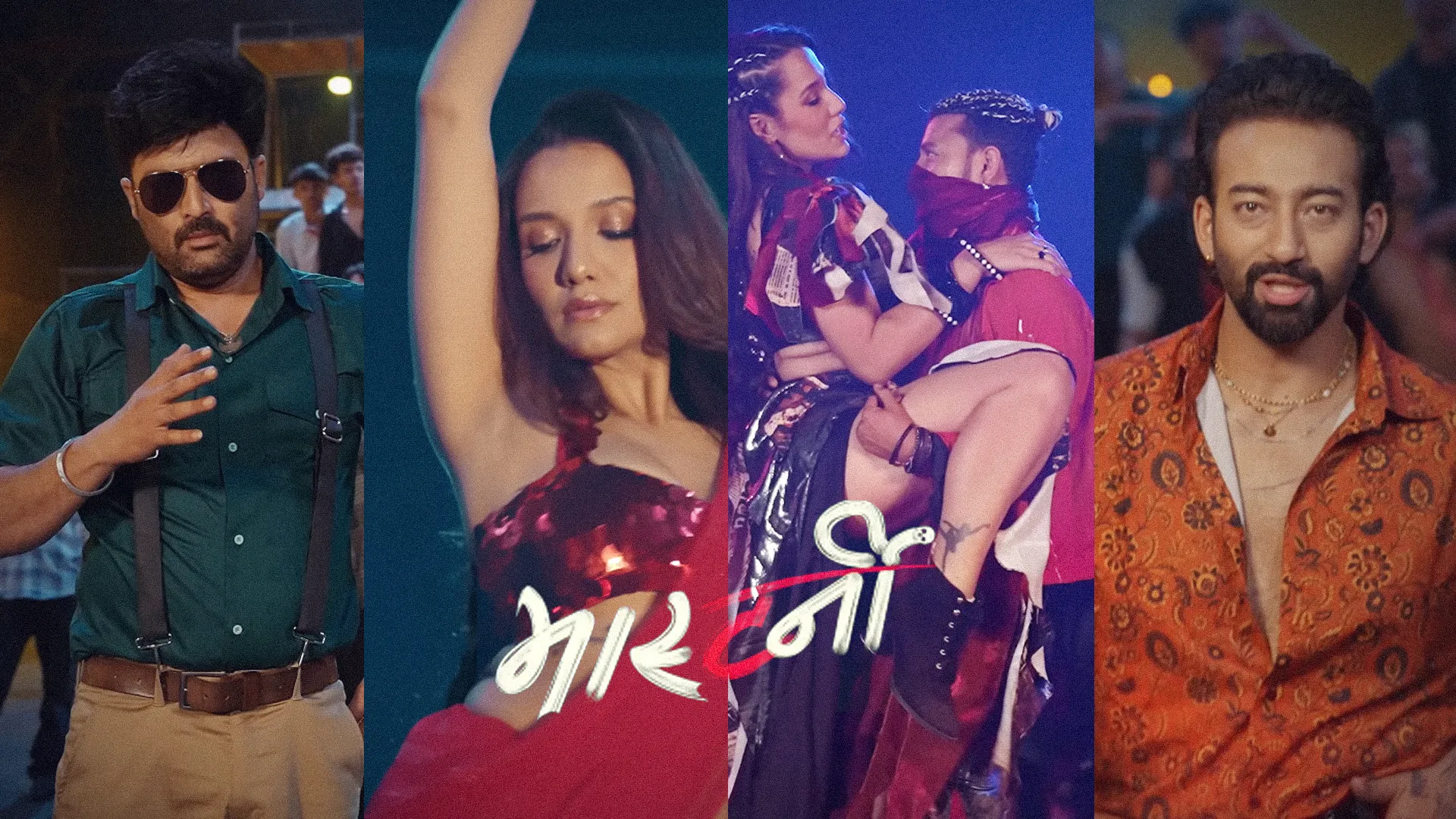
Widespread debate and outrage have recently sparked in the Nepali art sector and intellectual circles regarding a newly released song and the naming of the film ‘Masterni’. Said to be releasing on Bhadra 12, 2083 B.S., the title of this movie raises numerous questions in the mind just by hearing it. Not just two, but if analyzed closely, a thousand meanings and implications emerge from this name, leaving the general audience in deep confusion.
What exactly is meant by ‘Masterni’? Does it mean a master's wife? If so, classifying any woman's identity based on her husband's profession, while excluding her own existence, is downright archaic, male-dominated, and patriarchal thinking. On the other hand, if the film's main character is a teacher herself and this name is used to define her, it strikes at a woman's self-respect. In today’s modern society, the word 'teacher' is inherently gender-neutral and dignified. Whether a man or a woman, the person who imparts knowledge is a ‘Teacher’ or ‘Guru’. In such a scenario, to what extent is it justifiable to deliberately use a cheap, derogatory term like ‘Masterni’ for cheap publicity and commercial viability?
Another intriguing point is, why must we only think of the academic profession of teaching in a school or college when we hear ‘Master’? In our daily parlance, a tailor who cuts and sews clothes is a ‘Tailor Master’, an electrician who fixes wires is an ‘Electrician Master’, a mechanic who repairs broken vehicles is a ‘Mechanic Master’, and a mason who builds walls is a ‘Mason Master’. They are all equally skilled and respectable masters in their respective lines of work. If this film is woven around the story of a tailoring or mechanic shop, the filmmakers must provide a timely clarification. Otherwise, what commercial interest lies behind presenting an academic profession in such a twisted manner has become a matter of serious review.
Listening to the lyrics and presentation of the song released in the market, it is evident that it was prepared not for an academic or civilized society, but merely for cheap and low-quality entertainment. In our society and culture, the teaching profession is always placed in an intellectual, dignified, and highly respected position. Parents send their children to school with immense faith in the Guru, entrusting them with their children's future. In our Eastern philosophy, a Guru is given a status even higher than that of parents.

Interested in this ad?
Would you like to continue to the link or provide your information for more details?
Please provide your information
To continue, please fill in your details
But ironically, the script and video of this song seem to shred that social dignity to pieces. Throughout the song, scenes openly promoting lustful words and alcohol consumption are included. Associating such low-level elements with a sacred and academic profession is highly objectionable. If the film's plot itself revolves around sex and alcohol, it would have been appropriate to choose a provocative name accordingly; why defame the teaching profession? Even if it is a story of another profession, every occupation has its own dignity, and crossing limits in the name of alcohol and sex should not be pardoned anywhere. The production team must answer all these questions publicly.
Double-meaning dialogues and words like ‘teaching tuition when it gets dark or in the evening’ are woven into the song's script. Looking at the entire video and script presentation, its connection does not seem to be tied to actual teaching and education anywhere; rather, it is clear that this ploy was crafted merely to give a glimpse of a flashy and entertaining time after dark. Even if the song truly intended to take the matter of tuition teaching seriously, teaching students additionally outside school hours to give them a mental burden can never be scientific or practical. Instead of providing quality education within the classroom, this song further encourages the malpractice of breaking the backs of parents by summoning students in the mornings and evenings under the guise of tuition. Students are already exhausted by evening from a full day of studying. In such a situation, even if tuition is to be taught, the morning time is considered more scientific, practical, and optimal for students' concentration, but the song gives priority only to the 'excitement' of the night.
Looking at the antics and scenes of this film's song, it feels like this is not a family movie at all. Rather, it is on the path to becoming an obscene documentary that can never pass the scales of the Censor Board. And if it passes by mistake, there is no option but to give it an 'Adult' (18+) certificate and lock it away in some closed room instead of a cinema hall. The producers who make films defaming such a dignified profession, the actors who flaunt nudity and deliver double-meaning dialogues, and the audience who pay money to watch such filth—all should be punished with three months to life imprisonment according to their offense. If current laws lack provisions to discipline those spreading such cultural pollution, then at a time when debates on constitutional amendments are ongoing in the country, Prime Minister Balendra Shah's team and the constitutional amendment drafting committee must take this matter with utmost seriousness and arrange strict laws to protect our original culture.