Sushila-Oli Secret Summit: Election Prep or a Deal to Save the 'Old Guard'?
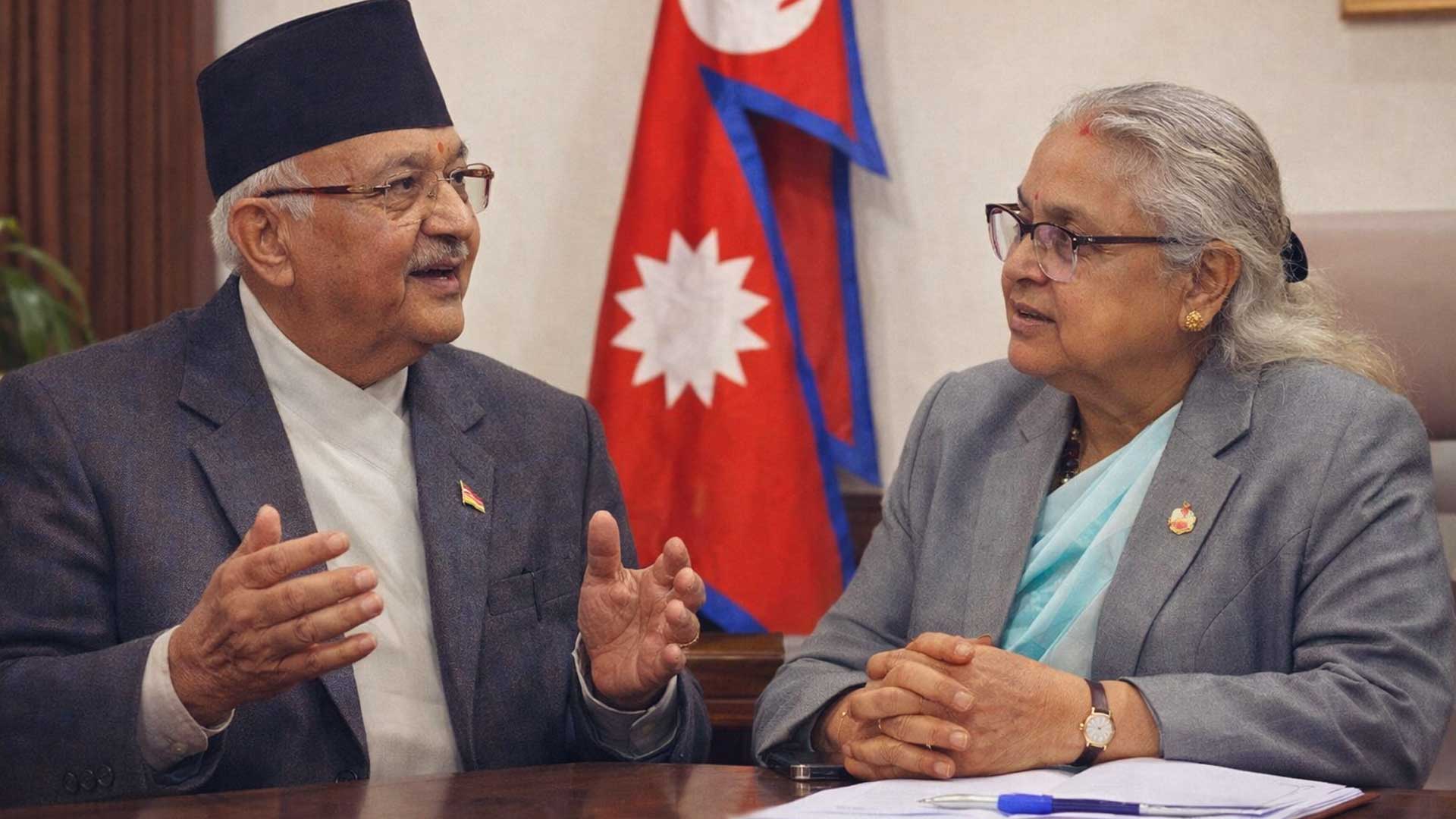
KATHMANDU — The unexpected thawing of relations between Interim Prime Minister Sushila Karki—swept into power by the recent "Gen-Z movement"—and CPN-UML Chairman K.P. Sharma Oli has sent ripples through the Nepali political sphere. Analysts remain skeptical that Thursday’s three-hour "one-on-one" meeting at the Prime Minister’s residence (Baluwatar) was limited solely to election preparations and family health inquiries. Given the unusual duration of the meeting for a standard briefing, speculation is mounting that a significant political compromise or "backroom deal" is being orchestrated behind closed doors.
Oli’s Sudden Solo Entry at Baluwatar
On Thursday morning around 11:00 AM, Chairman Oli arrived at Baluwatar alone, notably without his usual entourage of party leaders. This solitary visit is significant, given Oli's history of aggressive rhetoric against PM Karki following his ouster by the Gen-Z protests.
Officially, sources claim Oli visited to inquire about the health of the Prime Minister’s husband, Durga Subedi, who is currently undergoing medical treatment in New Delhi. However, what reportedly began as a courtesy call regarding family health evolved into an intense three-hour closed-door political dialogue. While official sources attempt to frame this as an "election-focused discussion," observers find it difficult to believe that mere procedural briefings required such an extensive amount of time.
Election Preparation or Backroom Bargaining?
While the meeting ostensibly focused on the upcoming elections, there are strong suspicions of deep political maneuvering. The CPN-UML has publicly demanded the restoration of parliament, yet privately, the party is aggressively preparing for polls—registering with the Election Commission and submitting proportional representation lists even ahead of the Nepali Congress. This behavior confirms Oli’s "dual strategy."
Sources suggest Oli sought to gauge the government's confidence in holding the elections. However, analysts point to recent coincidences—specifically Oli’s statement to a government inquiry commission followed immediately by the lifting of a freeze on his land holdings—as evidence that a transactional "deal" regarding future power equations and legal immunity may have been the true agenda of the three-hour sit-down.
Breaking the Ice and Future Signals
The dialogue marks a significant shift from the previously hostile relationship between Karki and Oli, a thaw that began after a meeting hosted by the President on Poush 8 (late December). During Thursday's meeting, PM Karki reportedly praised the UML's election readiness and reiterated her firm stance on holding elections on Phagun 21 (early March).
While the Prime Minister's Press Coordinator, Ram Bahadur Rawal, claimed the meeting was cordial and secured the UML's commitment to participating in the polls, a critical question remains. The Prime Minister has refused to extend administrative deadlines for new political forces, such as Kathmandu Mayor Balen Shah, yet is granting hours of secret counsel to the leader of the "old guard." This dichotomy suggests a potential new political equation where the interim leadership may be aligning with traditional parties to secure stability.
![From Kathmandu to the World: How Excel Students Are Winning Big [Admission Open]](https://nepalaaja.com/img/70194/medium/excel-college-info-eng-nep-2342.jpg)