


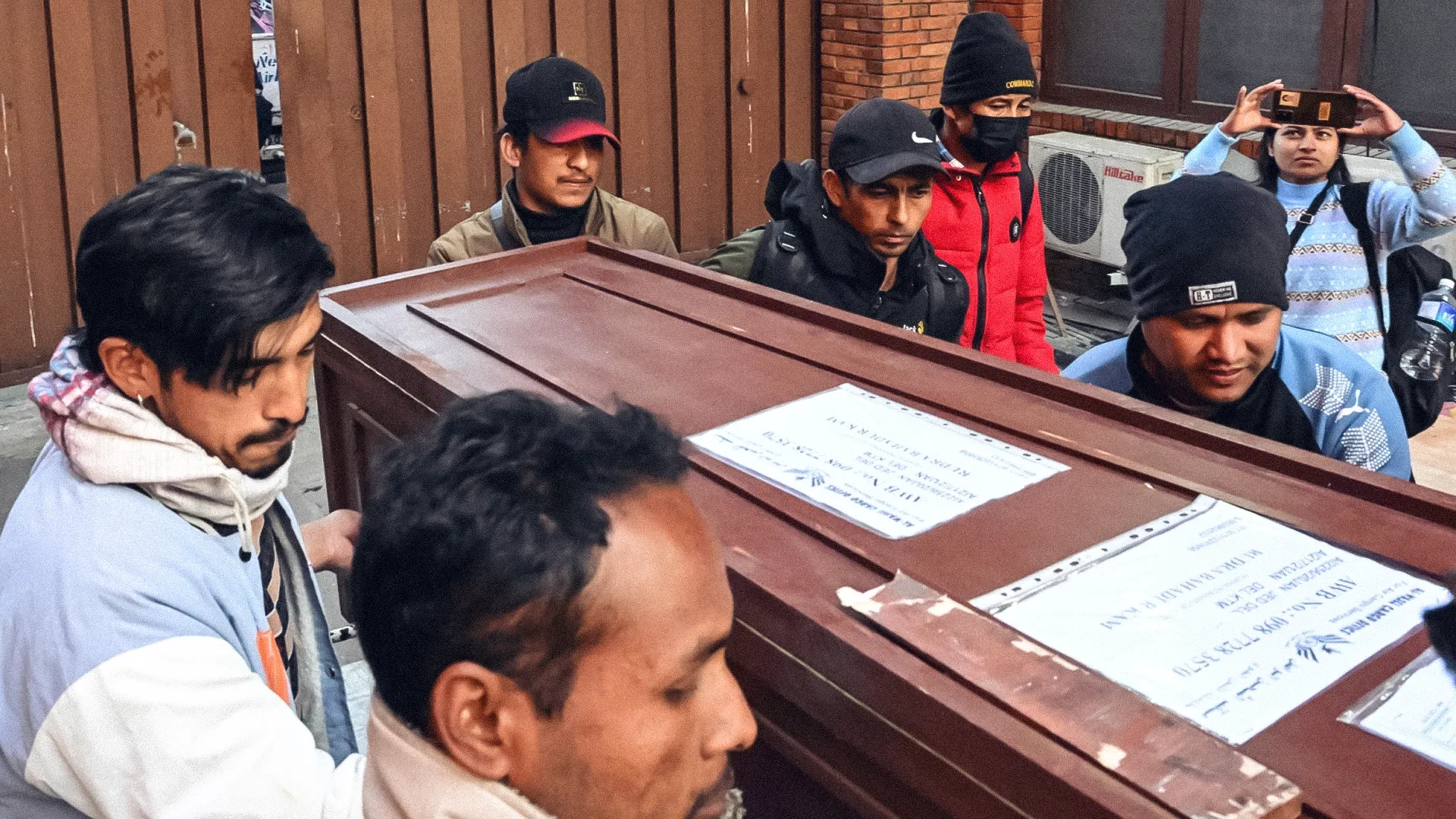
KATHMANDU – The Japan Times has published a report on February 18, 2026, describing Nepal as being "addicted" to the trade of its own people, highlighting a reality that is both bitter and shameful for the nation and its citizens. According to the report by Anup Ojha of AFP-JIJI, the daily arrival of coffins at Tribhuvan International Airport has become a routine "final transaction" in a state-overseen system that sustains the national economy through the export of labor. The story of Rudra Bahadur Kami, a 43-year-old worker who returned from Saudi Arabia in a coffin after a decade of labor, serves as a grim illustration of this phenomenon. His 21-year-old son, Lalit Bishowkarma, was left to receive the body, which was officially recorded as a death by heart attack, while baggage handlers processed the remains as lost luggage to make room for subsequent arrivals.
The scale of this migration has reached an industrial level, with approximately 2.5 million Nepalis—or 7.5% of the population—currently working abroad. These individuals primarily toil in the construction sites, hotels, and factories of the Persian Gulf, Saudi Arabia, Malaysia, and India. The World Bank reports that the remittances sent home by these workers now account for more than one-third of Nepal's gross domestic product. Chronic unemployment in what remains one of South Asia’s poorest countries continues to drive the youth exodus, a factor that also contributed to the "Gen Z" uprising in September that toppled the government of former Prime Minister KP Sharma Oli.
In the southern town of Madi, near Chitwan National Park, the local dependence on foreign labor is visible in the very homes residents build. Dipak Magar, 39, constructed a small concrete house using 700,000 Nepali rupees earned over three years in a Saudi marble factory. Despite the emotional toll of leaving his family, Magar is preparing to return to Riyadh due to the lack of local job opportunities and insufficient land to support his family. Local councilor Birendra Bahadur Bhandar noted that roughly 1,500 young people from his district of 50,000 are working abroad, while resident Juna Gautam reported that even educated youth, including her own daughters, are forced to seek work in Japan after falling into debt to pay recruitment agencies.
The Department of Foreign Employment (DoFE) has seen a massive surge in demand, issuing nearly three times as many work permits last year as it did in 2016. Nilambar Badal of the National Network for Safe Migration (NNSM) argues that the government has become reliant on this cycle, prioritizing the promotion of "foreign employment" over the development of domestic industries. He suggested that the state expects citizens to depart and send money back to keep the country running, effectively operating as a remittance-dependent economy where nearly half of all households receive funds from abroad.

Interested in this ad?
Would you like to continue to the link or provide your information for more details?
Please provide your information
To continue, please fill in your details
The system has faced harsh criticism from former labor minister Sarita Giri, who described it as a "rotten and corrupt" network. She alleged that the licensed agency system acts as a "mafia" that funnels money to political parties through government officials, ensuring the exploitation of workers remains unresolved. Despite a 2007 law intended to regulate the roughly 1,000 recruitment agencies, or "manpowers," critics claim that aspiring migrants are often charged 30 to 40 times the official service fee. This often results in workers like Sanjib Ghoraisaine paying exorbitant amounts for jobs that pay half of what was promised, sometimes forcing them into debt-bondage conditions.
The human cost of this economic model is stark, with official figures showing that 14,843 Nepalis died abroad between 2008 and 2025, including 1,544 in the last year alone. While authorities often attribute these deaths to natural causes, NGOs have long argued that many perish due to extreme heat and deplorable working conditions. Human rights lawyer Barun Ghimire observed that the current legal framework focuses more on regulating the business of foreign employment rather than protecting the fundamental rights of the workers themselves.
As Nepal approaches its elections on March 5, candidates are promising to address these systemic issues. Balendra Shah, the former mayor of Kathmandu and a leading contender for the premiership, has pledged to make job creation and investment his priorities to encourage the return of those who left out of necessity. However, with monthly remittances recently exceeding 200 billion rupees, reversing the nation's deep-seated economic dependency remains a daunting challenge. For workers like Dipak Magar, who has already returned to Saudi Arabia, there is little hope that political changes will yield tangible improvements for those laboring far from home.
The upcoming election results may determine whether the next administration can successfully pivot from a labor-export economy to one focused on domestic growth and worker protection.