


This is my fourth take on elections or under the title “Predicting the Unpredictable”. So, all the analysis, prognosis, diagnosis and predictions gone wrong? The results clearly indicate RSP is not only winning with flying colors but heading towards absolute two-third absolute majority. Many political veterans within NC, UML and the Maoist party are biting the dust. Those who did not contest or spared from contesting elections are lucky ones. Must be having a sigh of relief.
Earlier, including this scribe, many assumed and predicted, NC and UML to take any of first two positions, with RSP tailing behind; or RSP coming at the top but we continue to grapple with a hung parliament situation, possibly, more complicated than the previous one.
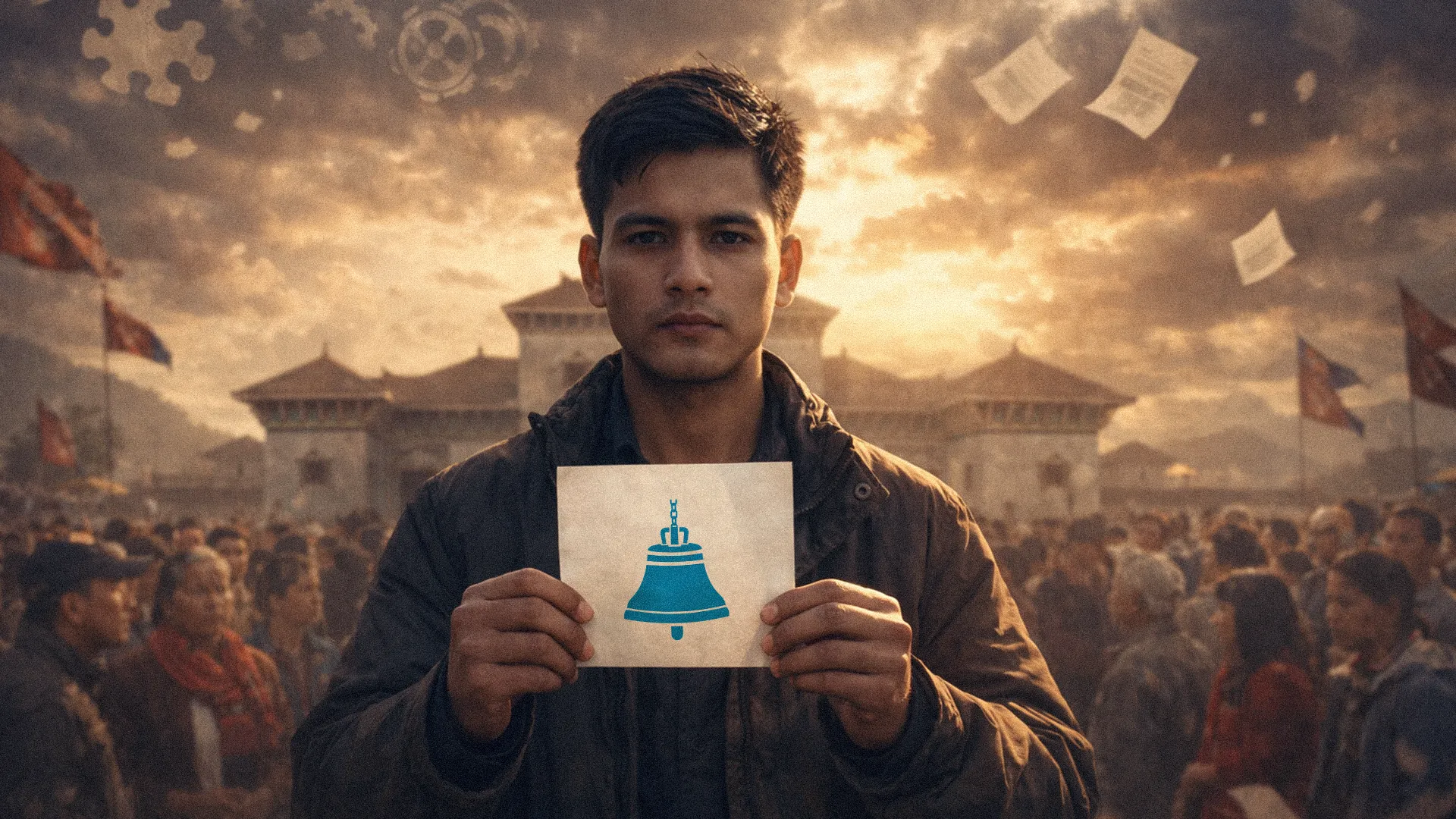
Going by the social media, one can find five categories of people having their minds on this totally “unexpected” outcomes. Obviously, the first category, constituting a large majority, puts blame on traditional political parties. They say that the people, the janata, have punished them for their misrule, corruption and partylization over last 35 years. This is the end of the game of political musical chairs played by the trio. The situation is very much similar to us blaming panchas, immediately after Jana Andolan I in 1990s. What they see here is weaknesses and pitfalls of the opponents rather than the strengths and virtues of the winning party. The outcome is due to “distraction” with political parties than an “attraction” to a new outfits. “For Whom the Bell Tolls” - this is an editorial in an English broadsheet. They say Nepali janata are so fed up with their politics that they were seeking for a change. I don’t understand when they say “Nepali Janata”. I don’t think we have people, what we have here is sheeples.
Borrowing words from Oli, I continue to believe that this is a haa-hoo party now expecting to run another haa-hoo sarkar with, equally, haa-hoo consequences. Just watch my words.
The second category of people, literally, now living in cloud nine, assume the coming sarkar is here to stay for five years and make Nepal another haven on earth. Similar to the promises we had earlier of making Nepal another Singapore or Switzerland in Asia. They say they will bulldoze Oli, Deuba and Prachanda, investigate on their propoerties, put them behind the bars or make them scuttle in the helicopters. Oli, who I have designed as Bruce Lee in Nepali politics post Gen-Z movement, is already contemplating behind the bars situation.
The situation is euphoric similar to post Jana Andolan I days. During those days, we also celebrated a lot, similar to, Madhav Kumar Nepal, throwing party after party for a month, at Baluwatar on becoming him the prime minister of Nepal. Don’t ever dare to criticize these youngsters, you will end up with barrage of, often foul-mouthed, responses.
The third group are muted people. They are keeping quiet and deeply thinking what went wrong? Who is this janata? I don’t think it is possible for a industrial-type mass-scale vote rigging. May be, over the days, the facts will gradually emerge. There is now new data that only 58% exercised their voting rights. This is the lowest figure in Nepal’s electoral history. The people in the second category, just mentioned above, say “the low turnout is due to millions of Nepali working abroad. That is why we demanded voting rights to them”. During first and second CA elections, I do remember finding a discrepancy of one million voters gone missing. Our electoral democracy, at least, voters and voting turnouts need careful thinking. This low voters turnout need to be juxtaposed with simple ballot paper, and relaxed voting system - no need for compulsory voting ID cards.
The fourth group of people, actually, lawyers are of varied types. Some are saying it is near impossible for Ravi Lamichhane to get into the parliament. With court cases he is not fit to take official oath, forget leading the government. There are others saying it is near impossible for Balen to be the next PM as he is not the leader of RSP parliamentary party; he has not even taken RSP membership, forget about becoming a leader of the parliamentary party. There are others boasting possibility of securing majority under existing electoral system, totally forgetting the fact that we are into an exceptional political situation in the country. This scribe once asked a professor in a foreign university, “During WW II, many Jews escaped concentration camps by bribing Nazi soldiers. Therefore, by this reasoning, during a situation of life and death, corruption can be legitimate?” He informed me that legal provisions are not made to address exceptional situations.
The fifth group included geo-political thinkers, the elites living in ivory towers. They see “foreign hand” on every thing, something akin to Adam Smith’s workings of invisible-hand in the study of economics. Some of their favourite topics included: arrival of Zelenskye in Nepal, MCC/BRI SPP, ToB factors, forces in the South, in the North and up-above in the sky. Their cliche included desi-bideshi shakti, chalkhel, and shadyentra or plotting. Did anybody read an expert explaining Balen contesting from Jhapa simply because it is the closet point to India’s Chicken Neck? There could be some element of truth and interest to listen them, similar to watching 007 James Bond movie in verbal terms. They do provide endless trail of thrills, suspense and intrigues.
Given Nepal a divided country with unique geo-political situation they do have a point. As for example, there is nothing like pro-Nepali concept. You have to be anti-India and this, eventually, means pro-China and which, again implies, anti-US. Reverse the situation: pro-US implies anti-China which means pro-India and again you back to anti-nationalist. This is like you cannot cycle backward or forward. And it is not possible to stand still.
The problem with these conspiracy theorists is that they think geo-politics even when they are eating, sleeping, toileting, walking and talking. Irked by never ending explanations, one guy has equated bhu-rajniti with gu-rajniti.
Remember referendum of 1980?

Interested in this ad?
Would you like to continue to the link or provide your information for more details?
Please provide your information
To continue, please fill in your details
The closet thing I could compare Gen-Z movement and election outcome is with the referendum of 1980. An illegitimate process cannot produce legitimate outcome. I continue to hold this dictum. By this reasoning, Sushila Karki Government is not a legitimate body to hold elections, therefore, there is no point mulling over election results. Nearly for a decade (1980-1990), the country suffered and, eventually, multi-party system has to be introduced in 1990. Only thing to be assured this time is that we may not have to wait that long. If it is sure to happen, it is sure to happen soon. Because the time is running too fast these days. Our suffering will continue, may be at a higher level than those we have experienced earlier.
What possibly could have happened?
May be in future, some researcher will definitely dig into the situation. I do remember reading a material by C.K. Mainali, in one of the online news portals, how and why hardliner communists boycotted referendum thereby, indirectly, contributing to panchas’ win. There is greater possibility, given the track history, to have inter and intra-party betrayal or antarghat in Nepali politics. Simply, a large number of voters did not vote (reflected by low voter turnout) or voted in favour of ghanti. The PR votes do not even match their claimed party membership figure. We need a deeper analysis. Moreover, country’s demography has simply shifted, the age group 18-40 constituted majority of the voters. Even with old guards, the elected new MPs are of younger age group, saving Gagan Thapa.
Other important factor to be counted is the growing urbanization that included shifting from voters from rural to urban areas. RSP don’t have good showing in sparsely populated rural and mountain areas. Balen factor helped to catch Terai-Madhesi votes.
With near divided NC, UML living with intense discontents and the Maoist Party in total disarray, RSP performed a near chutzpahlike action. Forget about rajabadis, janaatis and madhesbadis, even fiefdom of Narayan Man Bijukchhe is being dismantled to the ground. If in Kathmandu, Newars are busy blaming Newars for the situation, in Terai, madhesis are blaming madhesis for the betrayal.
What may possibly happen?
Earlier, I predicted RSP, eventually, to split into three factions. I continue to hold on to this view, not with skepticism, but with facts and the way RSP is being organized and managed. The three possible factions included: one, faction to be headed by Swarnim Wagle type guys - Buddhanilkantha School background, educated or highly educated or worked or having family links in Western countries, previous links with Bibeksheel-Shajha, two, Balen-type factors, with lots of jos but little hos, backed by army, and three, Lamichhane type characters, seeking to mediate between the two but having their own (personal) agenda to fulfill. By the way, we have not been able to dispense with this triangular politics. If there is anything commonality between these three is a bit of sympathy with rajabadis. If RSP falls down, it falls down because of its own inconsistencies, reasoning, and weight not due to attacks by the opponents and the outsiders. There will be constant dispute over whether RSP is there only to change awastha (condition) within current bewastha (system) overhauling or revamping of the system? They will be marred by “Awastha-bewastha” hypothesis.
Earlier, I wrote the contest is between past (Oli), present (Gagan) and future (Balen). Past is nostalgic, present to be illusive, an ephemeral and future to be uncertain. People voted in favour of uncertainties. Only thing that is certain to happen is uncertainty.
Narayan Manandhar