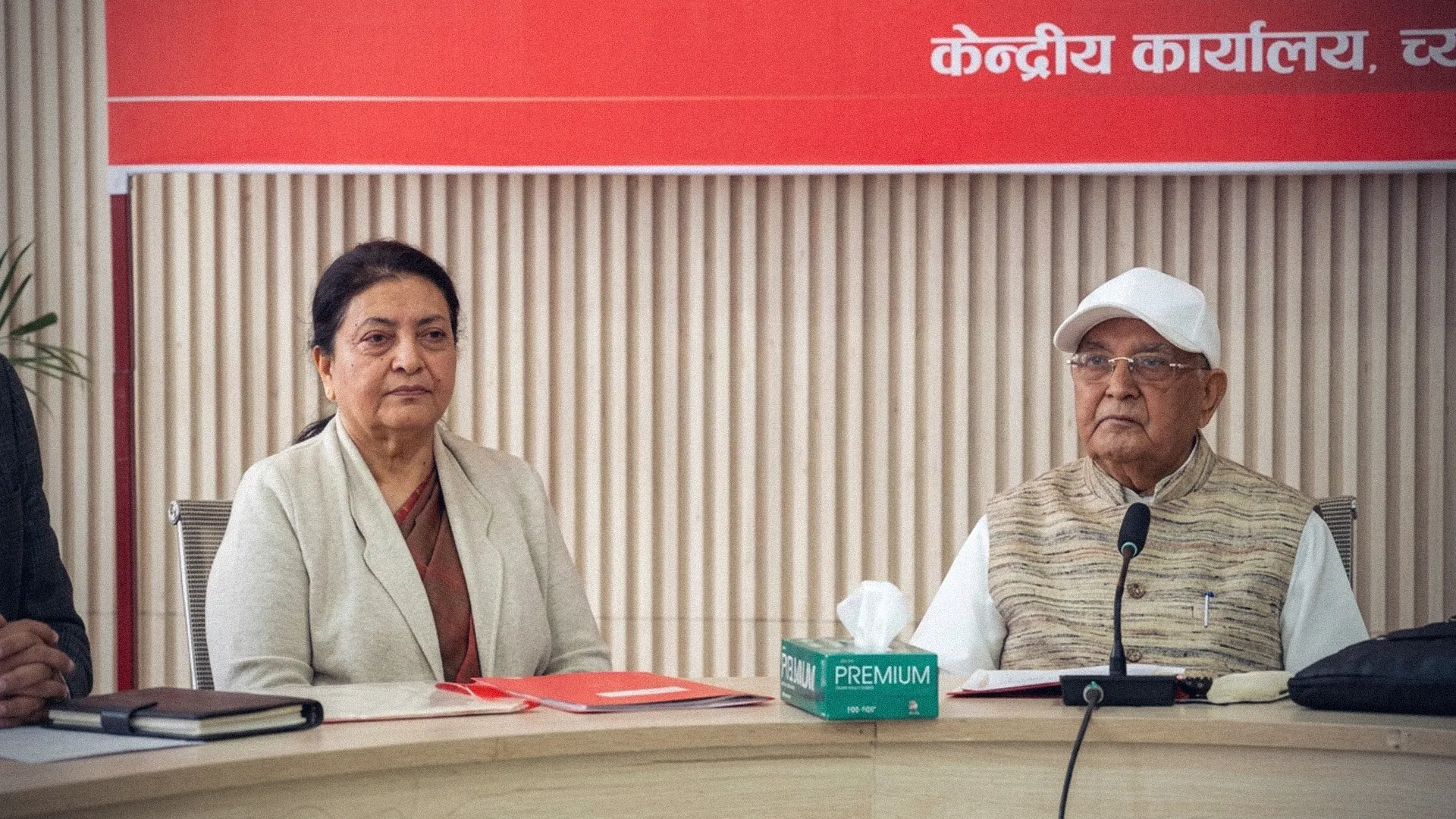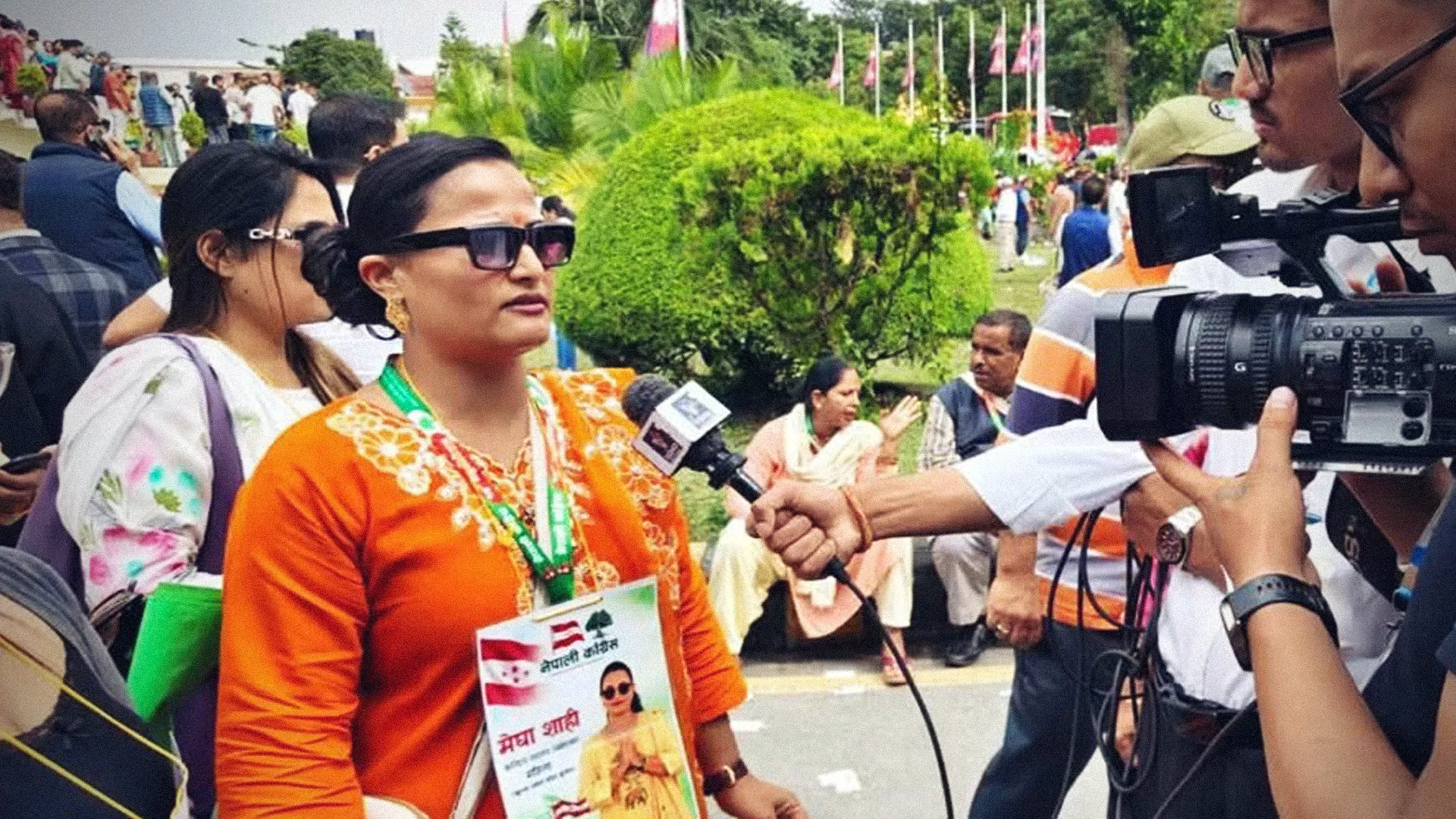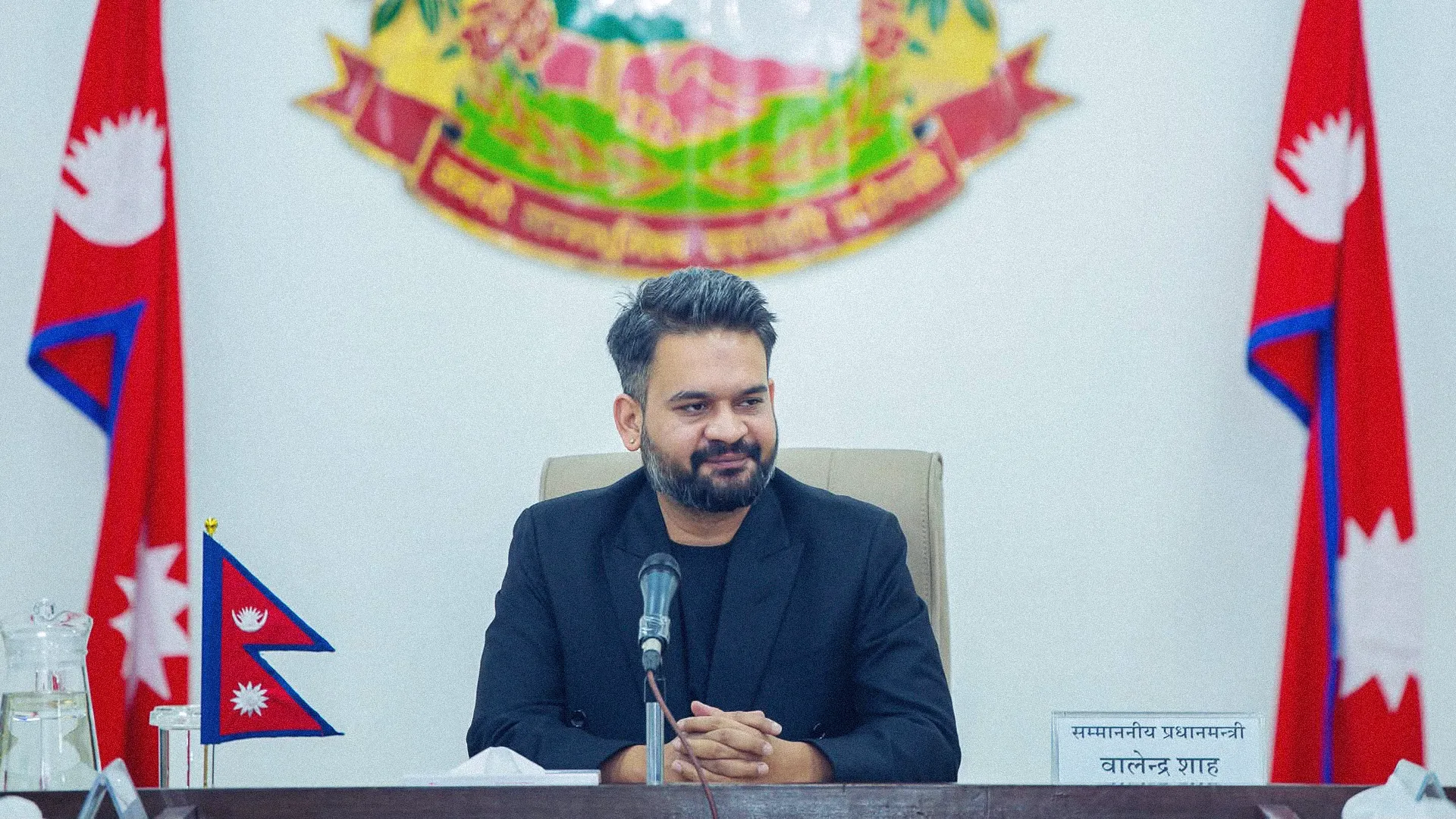


Anushka Dhami - Exactly one year has passed since major party leaders were beaten, their residences burned, and public infrastructure destroyed during the Gen Z movement. That movement brought a massive shift in Nepal's political history, putting decades-old ruling parties on the defensive all at once.
The Gen Z generation took to the streets a year ago demanding the lifting of a social media ban after the then-government abruptly banned 26 social media platforms. The demonstration, which began peacefully on Bhadra 23, turned violent by Bhadra 24 following clashes with security forces.
Over 70 people lost their lives in police repression and clashes. The protests escalated drastically after students and youth were shot down on the streets.
The following day—exactly a year ago today—youth anger spread nationwide, leading to vandalism and arson at Singha Durbar, Parliament, police posts, government buildings, and leaders' homes. Several leaders were beaten, chased, and forced into hiding to save their lives.
Consequently, old political forces suddenly grew weak and defensive. Top leaders dispersed, and many did not appear in public for one or two months after the movement. Yet the movement sent a stern message: politics that ignores the people's voice is no longer safe.
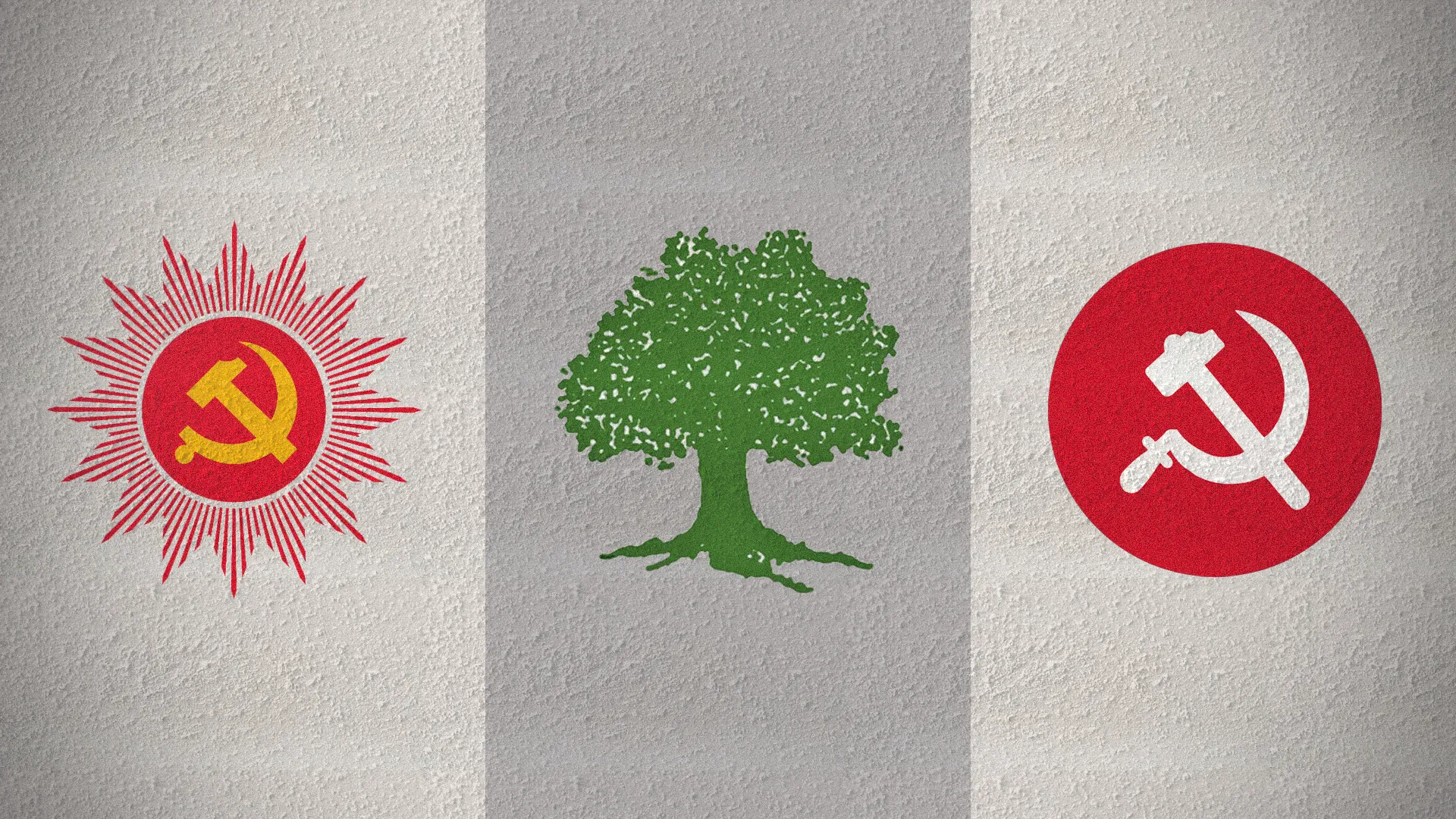
Today, as one year completes since the Gen Z movement, the biggest question remains: how much did Nepal's old political parties internalize that lesson? How much have parties accused of corruption, misrule, injustice, and tyranny transformed in this one year after losing power? Today, we discuss the current state of three major political forces: Nepali Congress, CPN-UML, and CPN (Maoist) / Nepali Communist Party.
These three forces held power turn by turn, shaping the nation's political direction and managing the state treasury for decades. But post-Gen Z movement, people asked them a new question: will you change or repeat the old ways?
Nepali Congress
After the Gen Z movement, debates over leadership change intensified within Congress. After being assaulted during the movement, Party President Sher Bahadur Deuba and his wife Arzu Rana Deuba handed party leadership to Purna Bahadur Khadka and flew abroad for medical treatment. Meanwhile, youth voices and energy grew stronger inside the party.
The demand to bring a new generation to leadership rose within Congress, which had been under the influence of the same leadership for years. Eventually, Gagan Thapa reached party leadership via the 14th General Convention and became NC President. Although the establishment faction questioned his leadership and internal disputes flared, Gagan Thapa led the party into elections after receiving official legitimacy from the Election Commission. However, Congress failed to achieve expected success. The Rastriya Swatantra Party (RSP), which gained immense popularity among youth post-movement, won the election, while Congress lost in many places. Even Gagan Thapa, party president and prime ministerial aspirant, lost.
Despite the loss, Gagan Thapa appears to be trying to steer the party in a new direction. Though differences remain between the old establishment and new leadership, he remains positive about unifying the party. During elections, he prioritized new and young faces rather than just loyalists or old figures—seen as a sign of Congress's transformation.
Currently, Congress attempts to reconnect with the new generation, returning to BP Koirala's ideology and democratic values. Some leaders admit staying silent during past corruption and misrule, acknowledging mistakes and stressing the need to learn from them.
However, the battle for legitimacy continues inside Congress, trapped in internal power struggles and parallel general conventions. Amid a 9-month internal feud and a legality case pending at the Supreme Court, the establishment and the opposition faction led by Sher Bahadur Deuba have unveiled separate schedules for the 15th General Convention. The establishment group scheduled it for Ashoj 16-19, while the opposition group released a schedule for Mangsir, bringing Congress to the brink of a split.
Yet the question remains: will leadership change alone truly transform Congress, or must party structure, mindset, and political culture change too?

Interested in this ad?
Would you like to continue to the link or provide your information for more details?
Please provide your information
To continue, please fill in your details
CPN-UML
Around 2015/16 (2072 BS), CPN-UML and KP Sharma Oli enjoyed extraordinary popularity with "We Love KP Ba" slogans nationwide. Similar to Mayor Balen Shah's political hype today, KP Oli had immense hype back then.
Under Oli's leadership, UML achieved remarkable electoral success. But times changed. Once immensely popular, KP Sharma Oli came to be criticized by a large segment of the public. From fleeing to save his life during the Gen Z movement to staying away from public programs for months, UML faced tough times.
Debates on transformation began, and leadership change was raised. However, after the convention, KP Sharma Oli became chairman again. Oli is known as a leader who does not bow easily. Even after losing power, he showed no inclination to change his style or rhetoric, which repeatedly sparked controversy. After losing heavily to Balen Shah in Jhapa-5, RSP formed the government. Soon after, Sudhan Gurung was appointed Home Minister, and KP Sharma Oli was arrested the very next day. UML leaders warned of street protests, but court invalidated the arrest, leading to his release.
Yet voices against him inside UML haven't stopped. Even General Secretary Shankar Pokharel, once considered Oli's confidant, has not backed him and is demanding reorganization. Pokharel's proposal to reorganize leadership via the statute convention or representative council has been put on 'hold' by Oli, who labels opponents as 'vagabonds'.
Another political rivalry inside UML is seeing who can talk or write more on social media, oppose other parties harder, and go viral. But does writing on social media restore public trust?
After a year, there are no clear signs of UML improving its image; criticism inside and outside continues to grow. UML's attempt to present itself in a new form failed to meet expectations. Once one of the country's most popular forces, UML now struggles to regain lost trust. Whether real transformation occurred according to the Gen Z message remains unanswered.
Nepali Communist Party
Although not directly in power during the movement, CPN (Maoist) faced equal questioning regarding past corruption and misrule. During the uprising, homes and private properties of 19 top leaders, including Pushpa Kamal Dahal 'Prachanda', were vandalized, looted, and torched. This made it clear that public anger was not limited to one ruling party but extended to all past governing forces.
Post-movement, debates began within the Maoist stream on transforming and enlarging the political force. A campaign for political unification followed. On Kartik 19, 2082 BS, 10 communist factions—including CPN (Maoist Centre) led by Prachanda and CPN (Unified Socialist) led by Madhav Kumar Nepal—announced the new Nepali Communist Party. This is considered one of the largest structural changes in the movement post-Gen Z uprising, forcing traditional communist forces into defensive polarization and transformation. However, regaining youth trust remains a major hurdle.
Although Prachanda's electoral victory revived political discussion around him, highlighting his experience and organizational strategy, he frequently faces controversy over his statements. Thus, the question for the Nepali Communist Party remains: is changing party name and structure true transformation, or must old political culture change as well?
Looking at Nepal's politics one year after the Gen Z movement, all three major parties stand at different crossroads. Congress shows signs of leadership and generational transition; UML struggles to break free from old leadership and style; the Nepali Communist Party attempts to build a new force via unity. Yet a common challenge remains: how to win back youth trust?
Today's Gen Z does not want speeches; they want results, transparency, real action against corruption, and opportunities. Most importantly, they view themselves as decision-makers of the nation's future, not mere spectators of old leaders' political games. One year has passed, but the questions raised by the movement remain alive: Have Nepal's old political parties truly changed, or have only faces changed while politics remains the same?