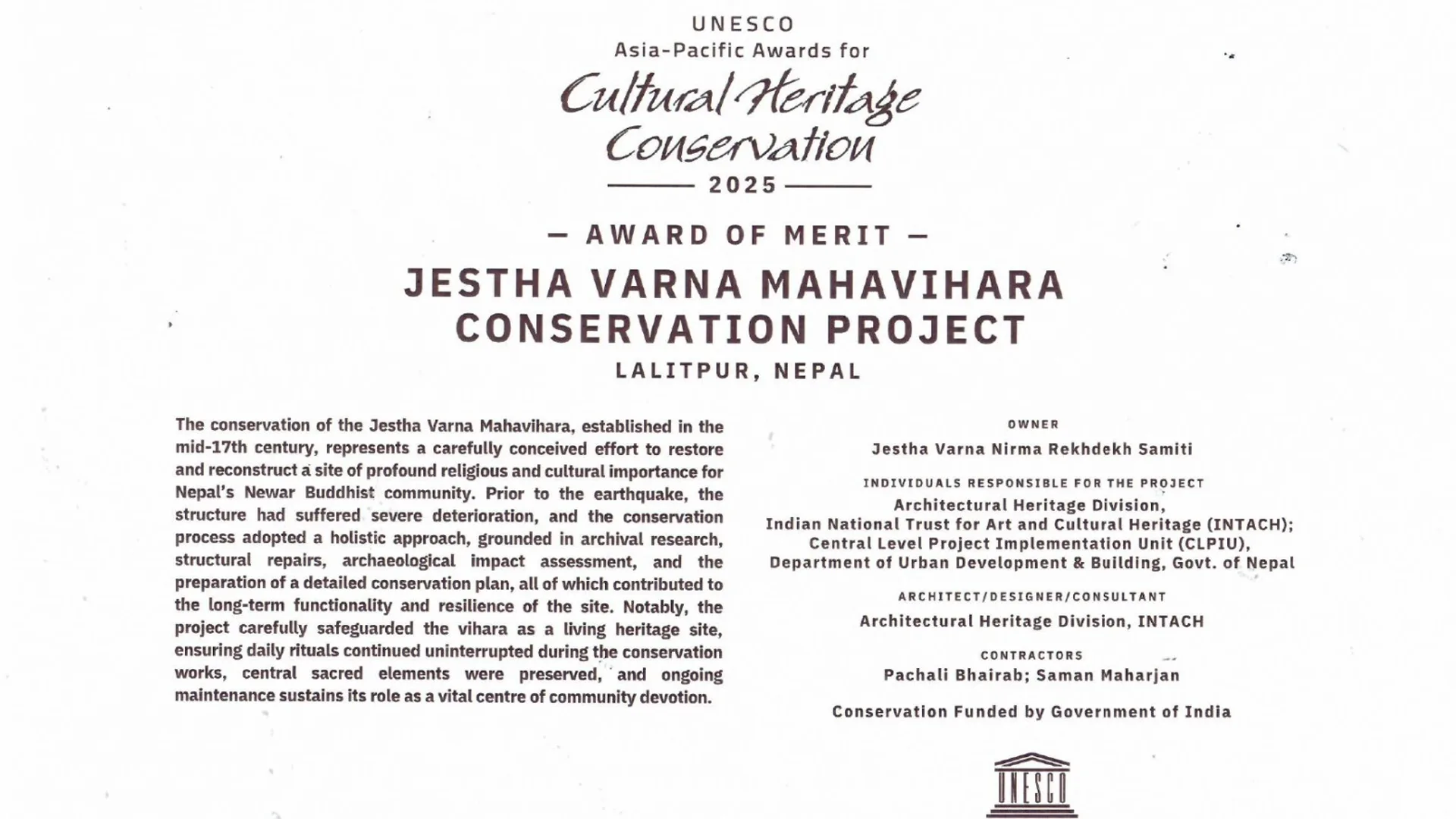



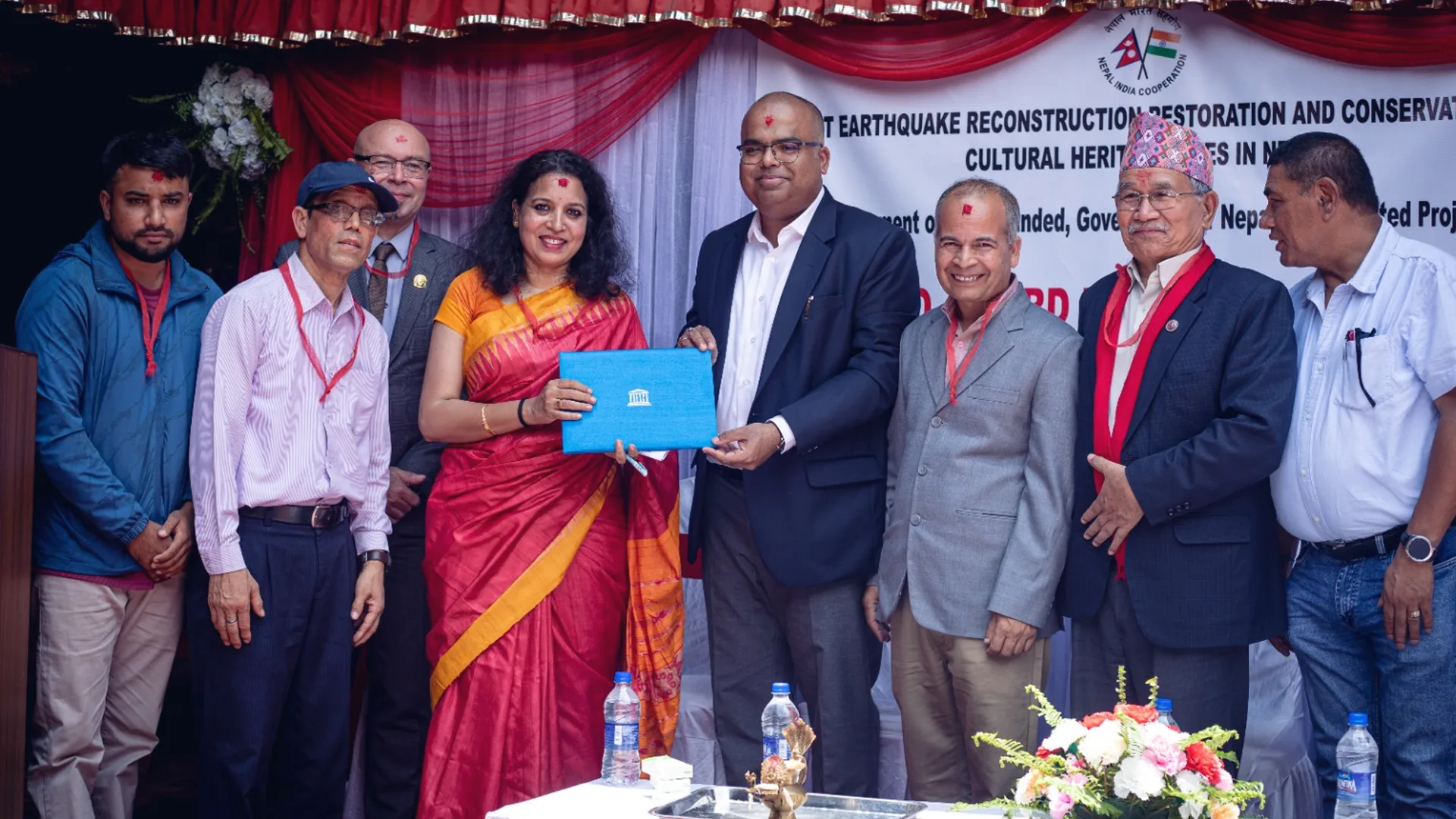
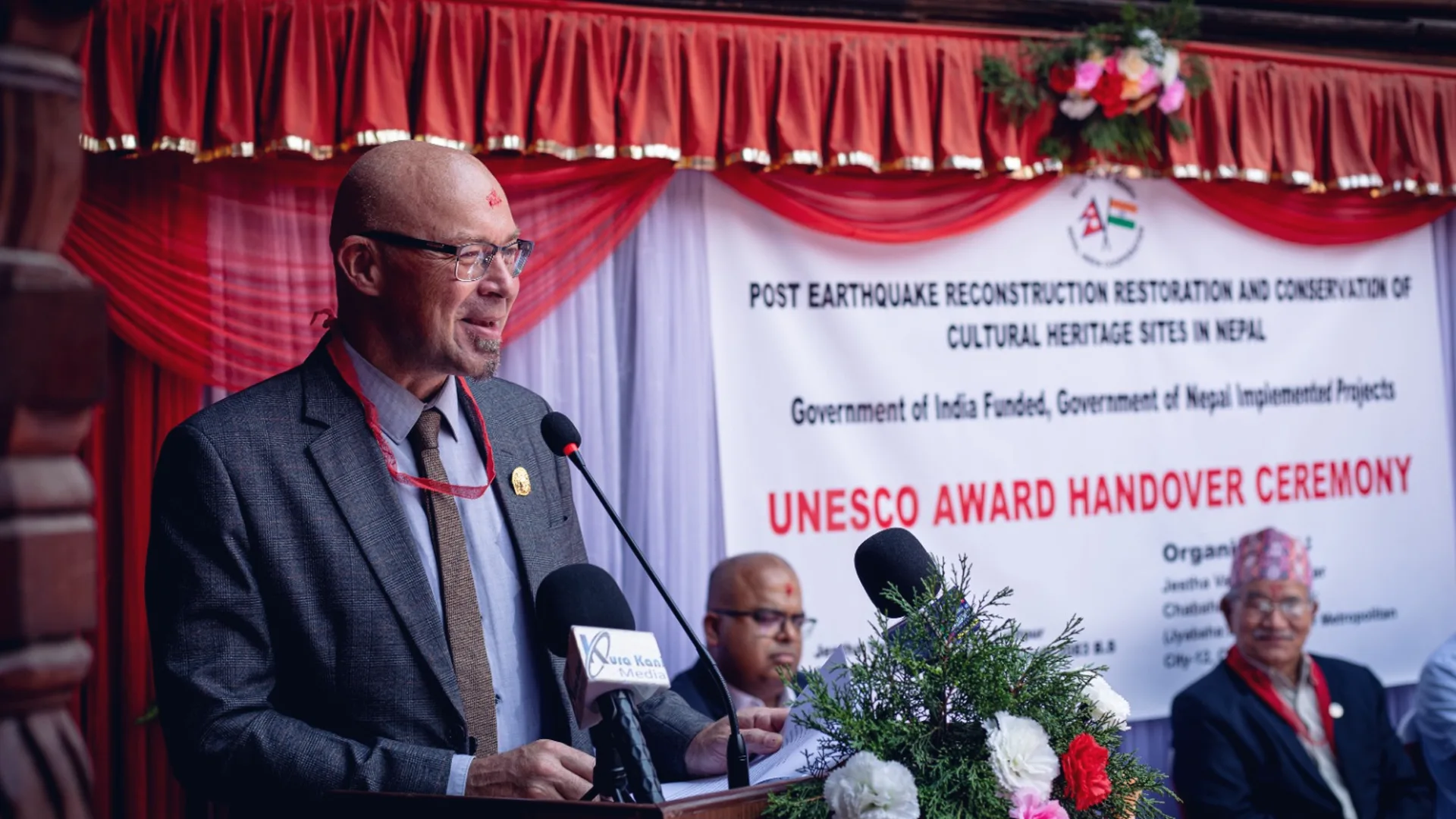
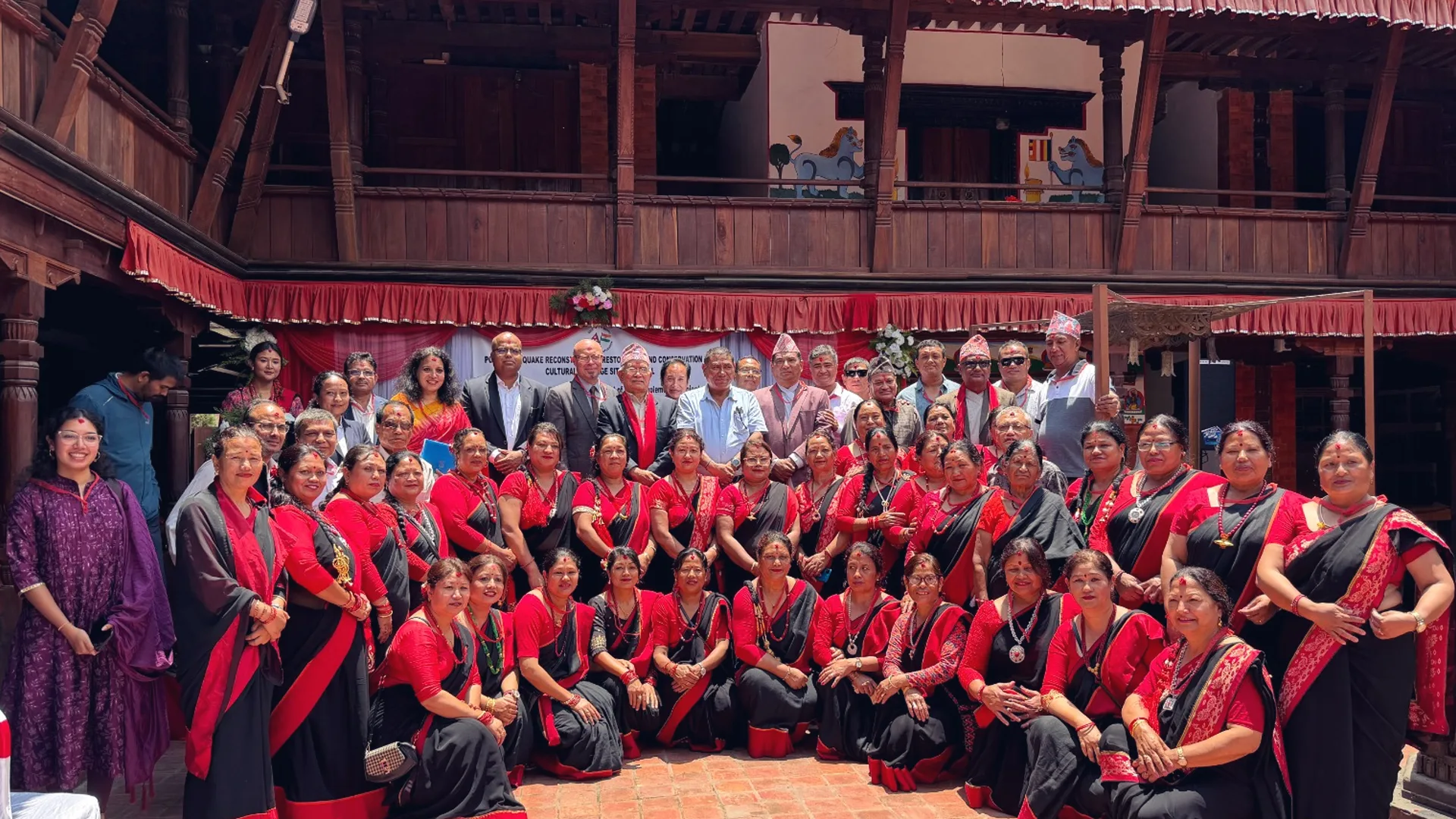
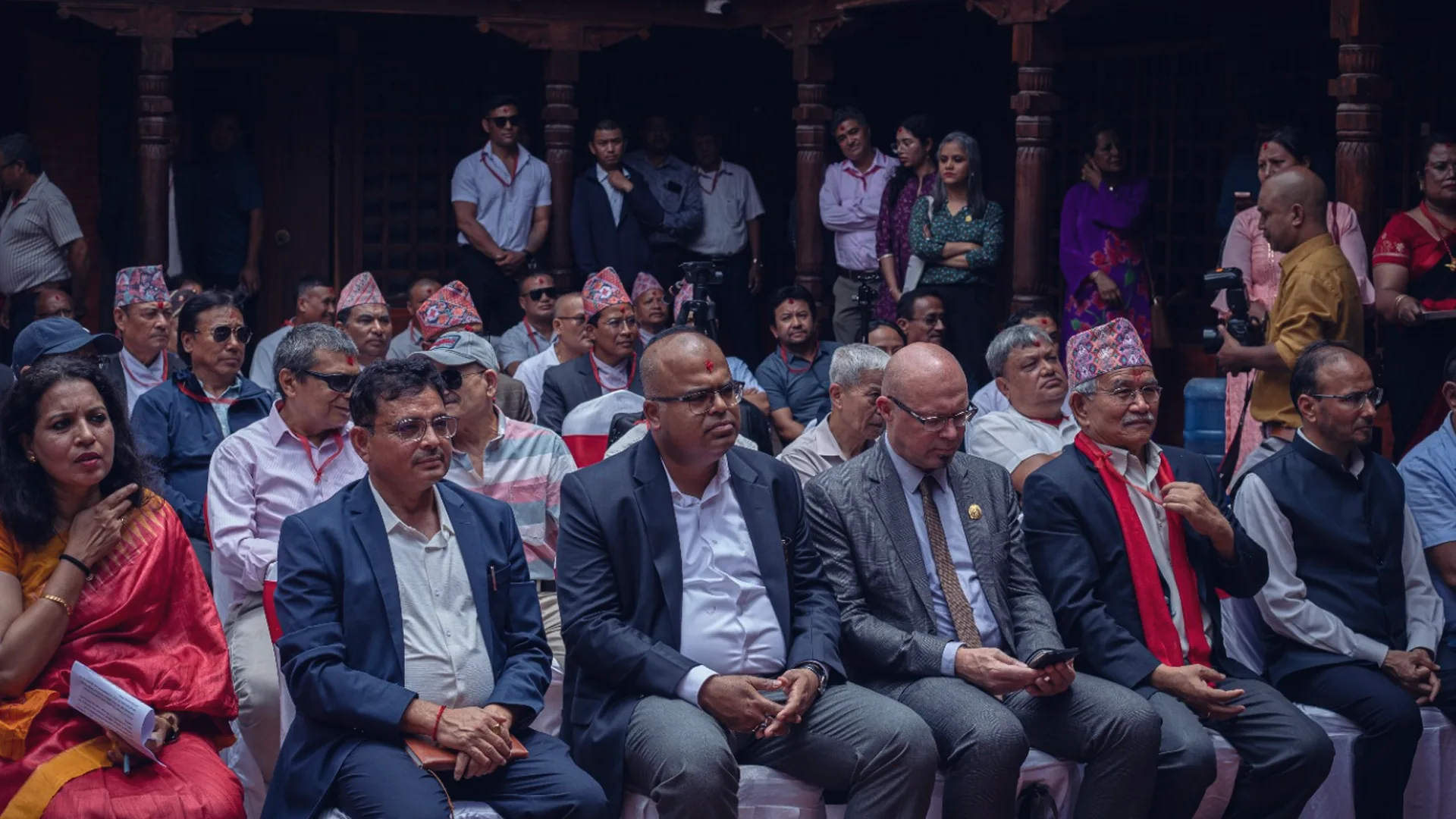
In a significant milestone for cross-border heritage preservation, the Jyestha Varna Mahavihara in Lalitpur has officially received the prestigious 2025 UNESCO Asia-Pacific Award for Cultural Heritage Conservation. The plaque and official certificate for the "Award of Merit" were formally handed over to the Jyestha Varna Mahavihara User Committee during a special ceremony on Friday. The event was attended by local community members, heritage conservationists, government officials, and representatives from the Indian National Trust for Art and Cultural Heritage (INTACH).
The structural revival of this ancient Buddhist monastery was made possible through a NPR 13.78 crore grant allocated under the Government of India’s post-earthquake reconstruction package. To ensure the highest conservation standards, India appointed INTACH as the project management consultant. The specialized agency worked in tandem with Nepal's Central Level Project Implementation Unit (CLPIU) and local residents to rebuild the site following its destruction in the 2015 Gorkha earthquake. The project was previously inaugurated in March 2024 by Indian Ambassador Naveen Srivastava and Nepal's then Urban Development Minister Dhan Bahadur Budha.
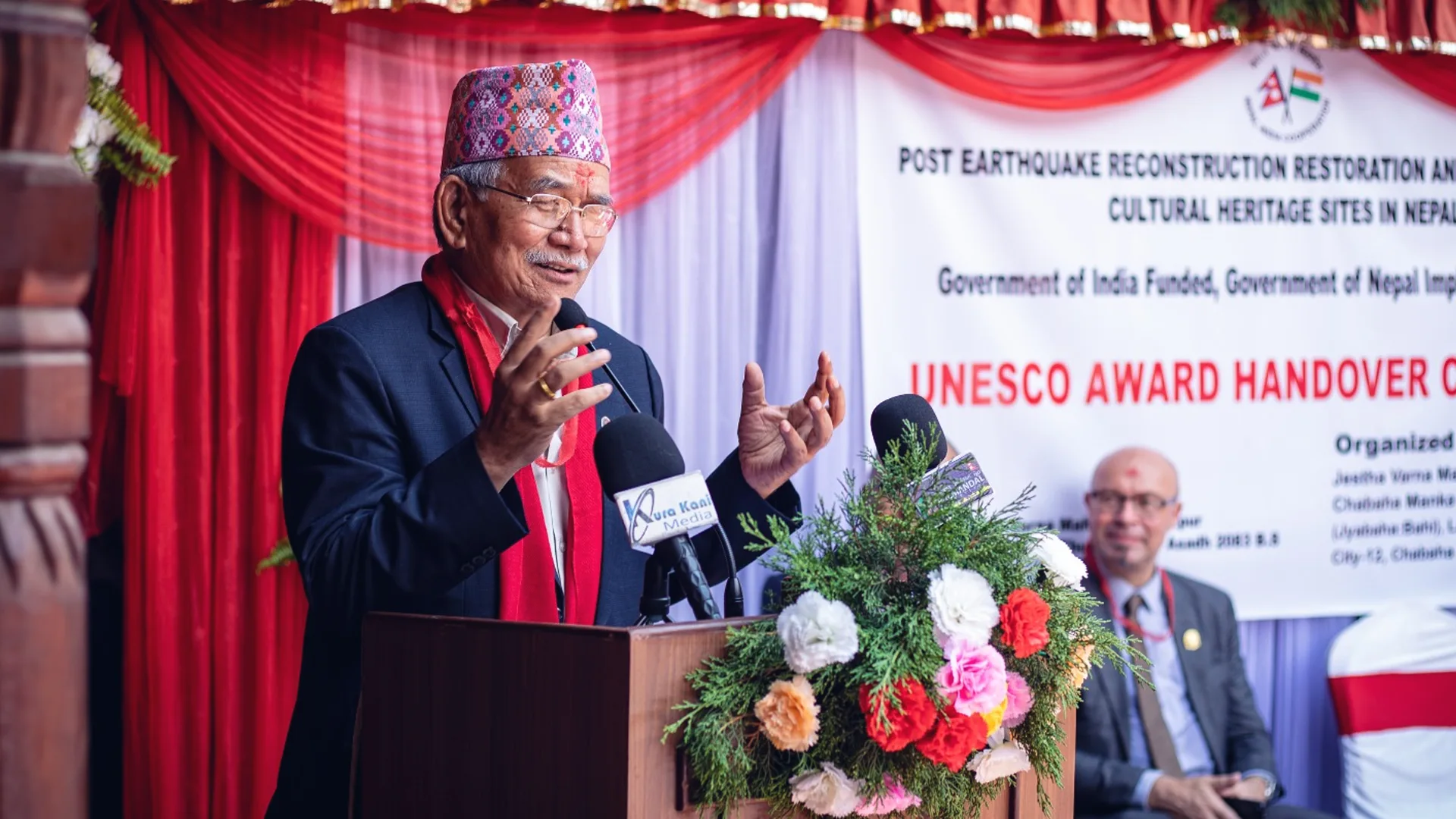
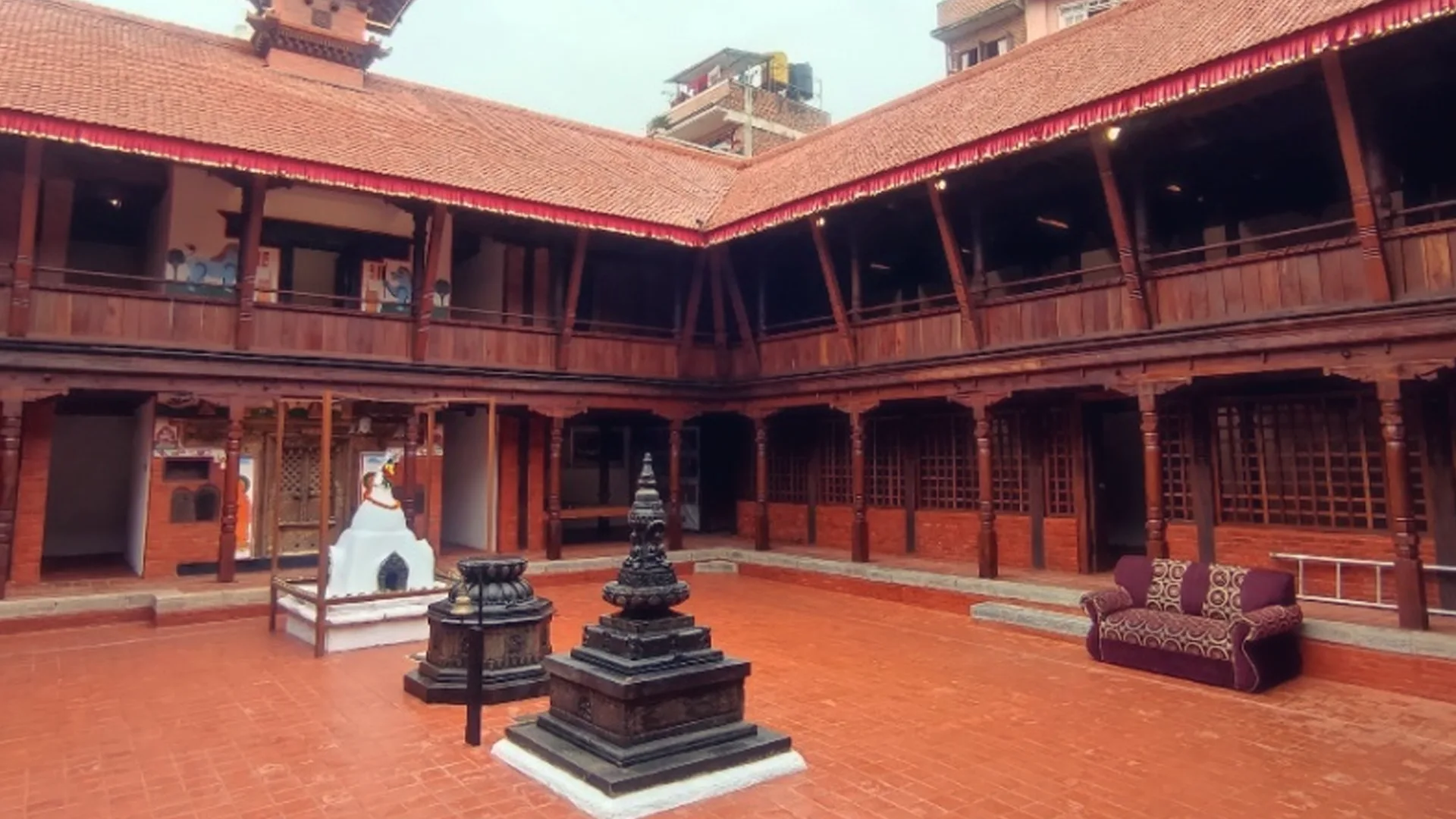
UNESCO’s recognition highlights the project's exemplary community-centric philosophy. The restoration successfully established a balance between implementing modern seismic retrofitting and preserving the intricate, traditional Newari woodcraft and historical architecture. Crucially, the reconstruction framework allowed the Newar Buddhist community’s living heritage, daily rituals, and religious practices to continue completely uninterrupted throughout the physical renovation phase.

Interested in this ad?
Would you like to continue to the link or provide your information for more details?
Please provide your information
To continue, please fill in your details
Reflecting on the achievement, Dr. Rakesh Pandey, Deputy Chief of Mission at the Embassy of India in Kathmandu, extended his congratulations to the local stakeholders. He noted that the international accolade mirrors the deep-rooted cultural and historical ties shared between India and Nepal. Dr. Pandey reiterated India's ongoing commitment to collaborating with Nepal to protect their shared, prosperous regional identity.
Lalitpur Metropolitan City Mayor Chiri Babu Maharjan expressed his gratitude toward India for its critical financial and technical solidarity in reviving Lalitpur's heritage landmarks. He remarked that the successfully completed monastery stands as a powerful testament to the bilateral development partnership between the two neighbors. Similarly, representatives of the Jyestha Varna Mahavihara User Committee thanked India for its timely assistance, noting that the restored monument now serves as a proud symbol of community resilience and enduring bilateral friendship.
The initiative is part of a broader USD 1 billion reconstruction commitment made by India following the 2012 Gorkha earthquake. Under this scheme, India is backing 30 major cultural heritage projects across eight districts in Nepal, including high-profile sites like the Seto Machindranath Temple in Kathmandu, Jangam Math in Bhaktapur, and Tarke Ghyang Gumba in Sindhupalchok. To date, 17 heritage sites, 50,000 private houses, 70 schools, and 122 health facilities have been completed and handed over, laying a sustainable foundation for Nepal's long-term socioeconomic and cultural rejuvenation.