


For decades, Jammu and Kashmir was discussed largely through the vocabulary of conflict, security and political uncertainty. Today, another vocabulary is becoming increasingly prominent: railways, highways, tourism, investment, hydropower, agriculture, digital connectivity and jobs. The change is visible not in a single project or one economic indicator, but in the way several parts of the Union Territory's development architecture are beginning to reinforce one another.
New rail links are connecting the Kashmir Valley with the national railway network, roads and tunnels are improving all-weather access, airports are expanding, tourism is attracting record visitor numbers and the economy is recording sustained growth.
The latest economic data underline this transition. The J&K Economic Survey 2025-26 estimates that real Gross State Domestic Product (GSDP) will grow by 5.82 percent in 2025-26, while nominal GSDP is projected at around $307.53 billion (₹2.86 lakh crore). The Survey also estimates per capita income at $1,809.06 (₹1,68,243) and identifies services as the largest contributor to the economy, accounting for 61.02 percent of Gross State Value Added.
A new economic foundation
The transformation of Jammu and Kashmir is increasingly being supported by a broader economic base. Agriculture and allied activities continue to sustain livelihoods, while horticulture, tourism, manufacturing, construction, energy and services are expanding the region's economic possibilities.
The Economic Survey notes that the primary sector contributed 20.45 percent and the secondary sector 18.52 percent to Gross State Value Added in 2025-26, with the tertiary sector accounting for 61.02 percent.
Agriculture and horticulture remain particularly important, with high-density plantations, improved market access and Farmer Producer Organisations contributing to a more commercially oriented rural economy. The government's Holistic Agriculture Development Plan is another significant intervention. The plan envisages investment of $539.03 million (₹5,013 crore) across 29 projects over five years, intending to increase agricultural productivity, strengthen value chains and generate employment.
This diversification matters because development in Jammu and Kashmir is increasingly being built around multiple economic engines rather than a single sector.
Connectivity becomes the new catalyst
Few developments illustrate the changing economic geography of Jammu and Kashmir more clearly than the expansion of rail connectivity.
The completion and inauguration of the 272-kilometre Udhampur-Srinagar-Baramulla Rail Link in June 2025 connected the Kashmir Valley with the wider Indian railway network. The Chenab Rail Bridge and Anji Bridge became landmark engineering components of this corridor, while the introduction of Vande Bharat services created a faster passenger connection between the Valley and the rest of the country.
The impact has continued to expand in 2026. In April, the Jammu-Srinagar Vande Bharat service was extended to Jammu Tawi and its capacity was increased from eight to 20 coaches. The service began regular operations on 2 May 2026. The Railway Ministry reported that the trains carried 44,727 passengers in their first ten days of regular operation, demonstrating substantial demand from tourists, pilgrims, traders and local residents.
Rail connectivity is also creating an economic channel for agricultural producers. Railway authorities have highlighted the movement of Kashmir's apple produce to markets elsewhere in India, alongside the transportation of cement, foodgrains, fertilisers, salt and milk into the Valley. The significance goes beyond faster passenger travel. Better connectivity reduces geographical isolation, widens access to markets and strengthens the movement of goods, workers and visitors.
Roads, tunnels and all-weather access
Road infrastructure remains equally central to Jammu and Kashmir's development strategy. The J&K Economic Survey 2024-25 recorded substantial progress in major road projects, including the Jammu Semi Ring Road, while work on the Srinagar Semi Ring Road and other connectivity projects continued. Existing transport networks are being complemented by major tunnel infrastructure designed to improve year-round access across difficult terrain.
One of the most important recent milestones came in June 2026, when the main tunnel of the Zojila Tunnel project achieved a breakthrough. The project is designed to establish all-weather connectivity between Jammu and Kashmir and Ladakh and is expected to strengthen tourism, trade, regional mobility and strategic connectivity.
The infrastructure push therefore has a layered economic effect. A road or tunnel does not merely shorten a journey; it can expand the geographical radius within which businesses operate, improve access to markets and services and make previously difficult destinations more accessible to visitors.
Tourism moves into the mainstream economy
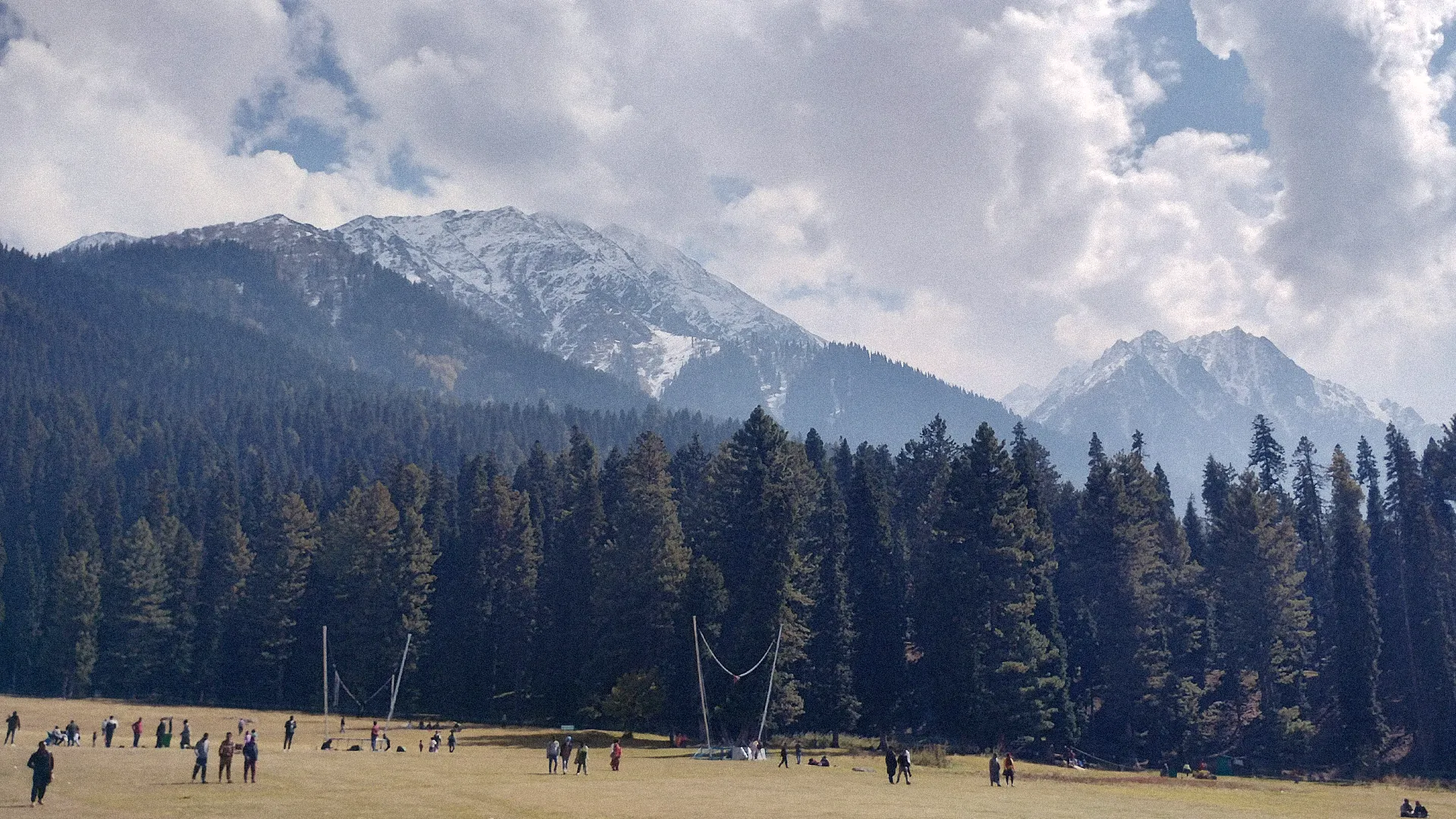
Tourism has emerged as one of the most visible indicators of Jammu and Kashmir's changing economic profile. The Union Territory recorded more than 2.3 crore tourist arrivals in 2024, the highest number in its recorded history, according to government data.
The tourism economy is supported by improvements in road, rail and aviation connectivity, as well as the growing development of destinations beyond traditional tourist centres. The expansion of aviation infrastructure is another important component. In February 2026, the Cabinet approved the development of a new Civil Enclave at Srinagar International Airport at an estimated cost of $1.80 billion (₹1,677 crore). The new terminal will cover 71,500 square metres and is designed to handle up to 2,900 passengers during peak hours and 10 million passengers annually.
Such investments give tourism a stronger economic foundation. Greater airport and railway capacity can support higher visitor volumes while also improving access for businesses, professionals and residents. Tourism is also closely connected with handicrafts, horticulture, transport, hospitality, food services and local entrepreneurship. Its expansion therefore has implications well beyond hotel occupancy.
Investment and enterprise gain momentum
Investment trends provide another measure of the changing economic environment.
Government data show that Jammu and Kashmir attracted approximately $19.35 billion (₹18,000 crore) in investment between 2016-17 and 2025-26, compared with around $8.60 billion (₹8,000 crore) over the preceding seven decades.
The investment story is being supported by infrastructure, industrial policies and efforts to improve the business environment.

Interested in this ad?
Would you like to continue to the link or provide your information for more details?
Please provide your information
To continue, please fill in your details
The Economic Survey 2025-26 notes that new industrial units have become operational and that Jammu and Kashmir achieved a 'Top Achiever' ranking in the national assessment of Ease of Doing Business. At the same time, employment and entrepreneurship programmes are broadening participation in economic activity.
Government data indicate that more than 41,000 government jobs were created between 2019 and May 2026, while more than 9.81 lakh people received self-employment opportunities through government-supported schemes during the preceding four years.
The 2026-27 budget has placed additional emphasis on entrepreneurship and employment. Mission YUVA aims to create 1,37,000 enterprises and 4,25,000 jobs over five years through enterprise creation, skill development and employment-related interventions.
Powering next phase of growth
Energy is another area with considerable potential for Jammu and Kashmir.
The Union Territory possesses significant hydropower resources, and the development of this capacity has implications not only for electricity supply but also for industrial activity and public finances. The 2026-27 budget estimates $763.44 million (₹7,100 crore) in non-tax revenue from power, representing 64 percent of the government's own non-tax revenue.
The J&K Hydro Power Policy 2025 provides a policy framework for expanding the sector and attracting investment into hydropower development. A stronger power ecosystem can support industries, infrastructure and households while allowing the region to use one of its most significant natural economic assets more effectively.
Public investment and the development state
The scale of the transformation is also reflected in public expenditure.
Jammu and Kashmir's 2026-27 budget projects a GSDP of $33.96 billion (₹3,15,822 crore) at current prices, representing a 9.5 percent increase over the revised estimate for 2025-26. Capital outlay is budgeted at $2.71 billion (₹25,236 crore), 4 percent higher than the revised estimate for the previous year.
The budget also combines infrastructure spending with social-sector measures, including crop insurance, education support, upgraded Anganwadi centres, assistance for vulnerable groups and free public transport for persons with disabilities. This combination illustrates an important feature of the region's development model: physical infrastructure is being accompanied by investments in human capital and social protection.
Urban transformation and better public services
Development is also taking place within towns and cities.
The Asian Development Bank's Jammu and Kashmir Urban Sector Development Investment Programme supported improvements in urban infrastructure and services, with a focus on environmentally sustainable and inclusive economic growth. Such programmes have contributed to strengthening water supply, sanitation and urban infrastructure, complementing the wider connectivity push.
Digital governance is further changing the way public finances and services are administered. The Economic Survey 2025-26 highlights the use of platforms such as BEAMS and GeM to improve transparency, efficiency and accountability in public financial management.
The result is a development framework in which infrastructure, technology and governance increasingly operate together.
From geography of isolation to geography of opportunity
The most significant change in Jammu and Kashmir may ultimately be geographical.
Railways are connecting the Valley to national markets. Roads and tunnels are opening all-weather routes. Airports are expanding capacity. Tourism is reaching record levels. Agriculture is moving towards higher-value production and organised markets. Hydropower is becoming a larger economic asset. Investment and enterprise programmes are creating new avenues for employment.
The numbers tell part of the story. The larger transformation is visible in how these developments interact.
A railway line makes tourism and freight movement easier. Better roads expand access to markets. Greater tourist flows support hospitality and local businesses.
Investment creates enterprises and jobs. Energy infrastructure supports economic activity. Public services and social programmes strengthen the capacity of households to participate in that growth.
Jammu and Kashmir's development story is increasingly being defined by convergence. Infrastructure is no longer an isolated investment; it is becoming part of a wider economic ecosystem.
The emerging picture is of a Union Territory moving from a development model shaped largely by accessibility constraints towards one increasingly defined by connectivity, enterprise and integration.
The transformation is still unfolding, but the direction is increasingly measurable: Jammu and Kashmir is becoming more deeply connected to India's economic network, while its own tourism, agriculture, energy and service sectors are gaining greater space within that network.