


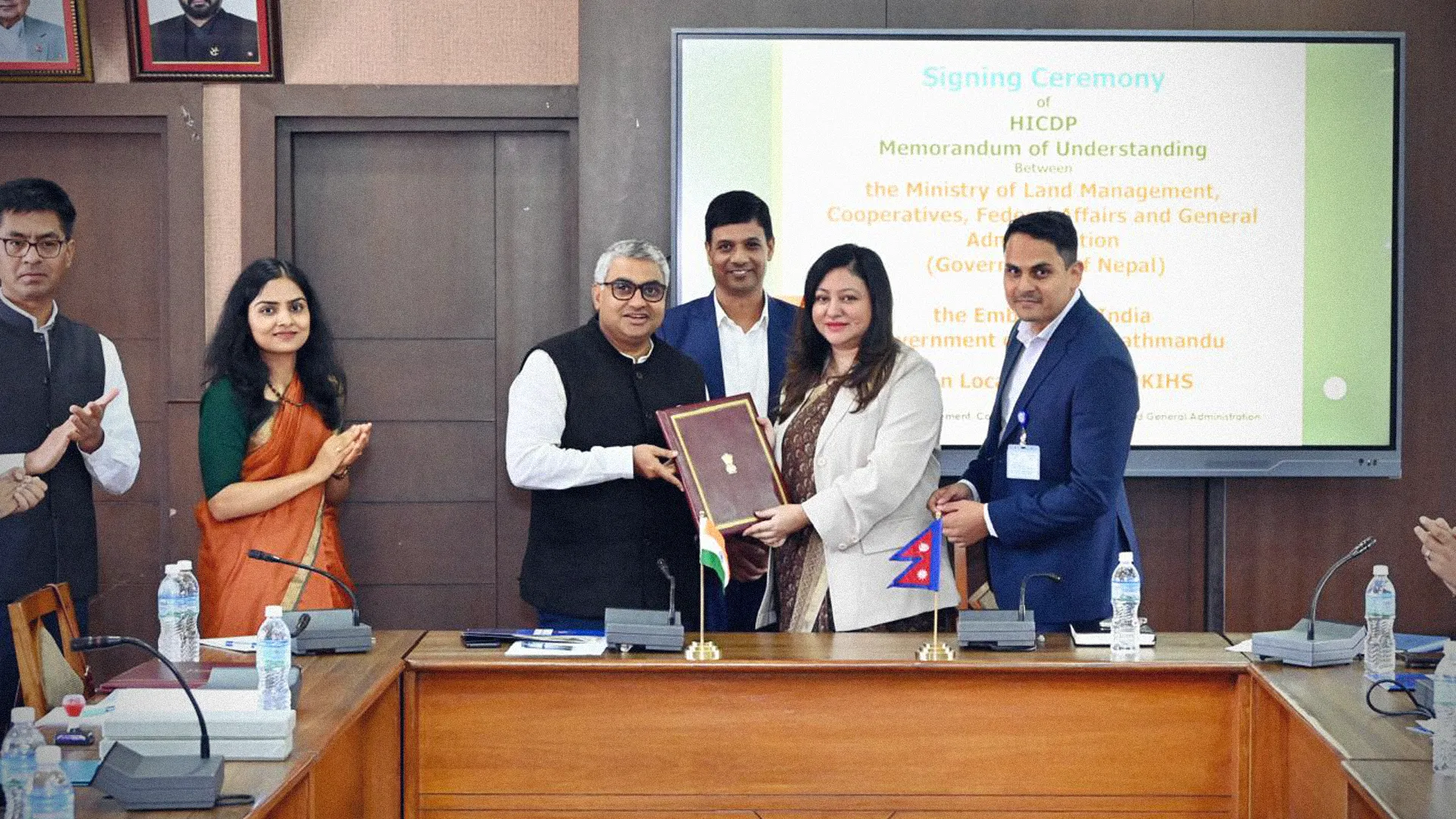
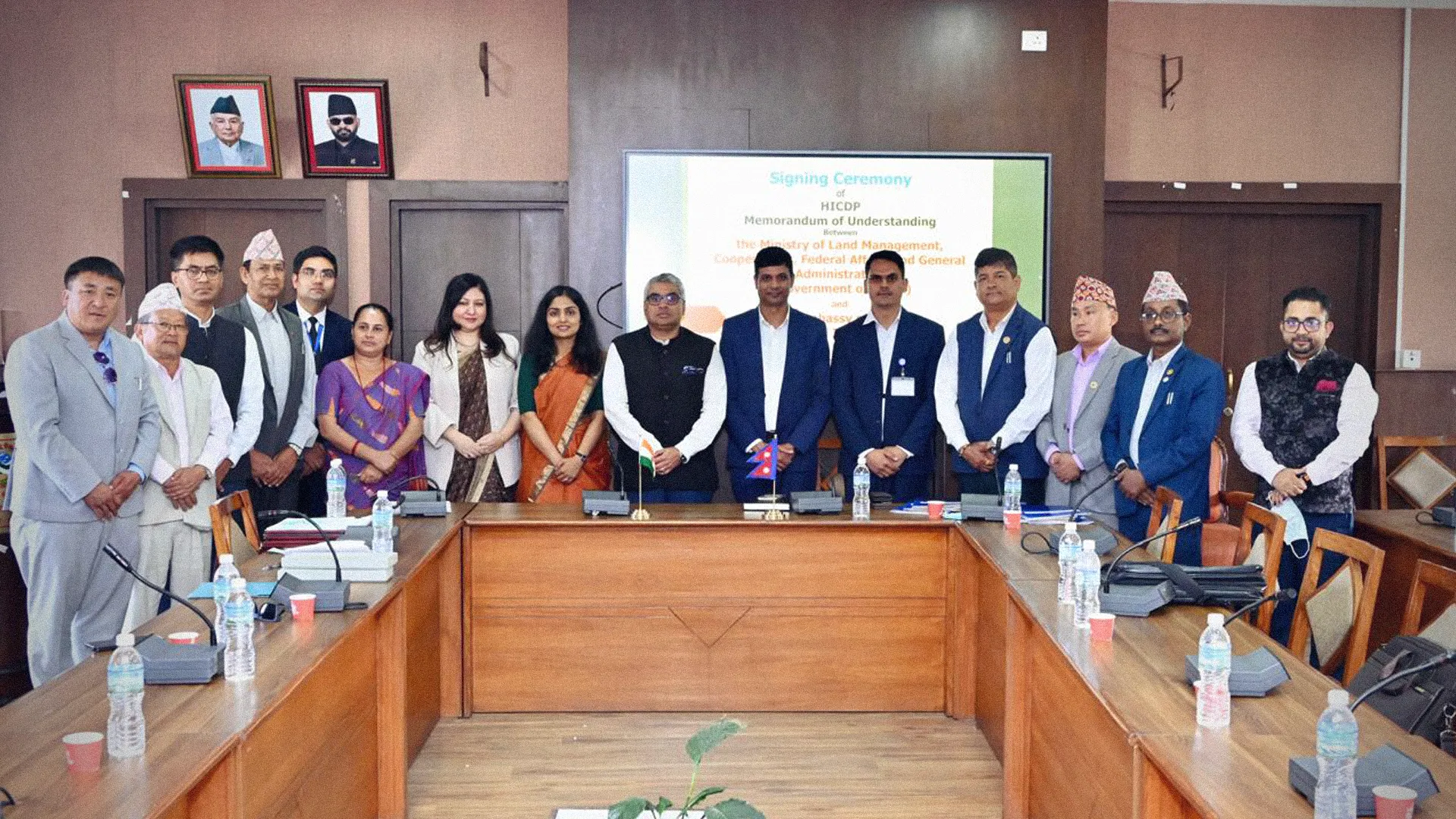
The Embassy of India in Kathmandu, the Ministry of Land Management, Cooperatives, Federal Affairs and General Administration of Nepal, and local implementing agencies signed Memorandum of Understandings today in Kathmandu to execute eight High Impact Community Development Projects in Nepal. The projects, funded under the grant assistance of the Government of India, carry a total estimated cost of NPR 80.3 crore and focus on strengthening the education, health, and agriculture sectors.
The eight initiatives approved under the agreement span multiple provinces across the country. In Koshi Province, the projects include the digitalization of the B.P. Koirala Institute of Health Sciences in Dharan, Sunsari; the construction of an agricultural production collection and sales center in Temkemayung Rural Municipality, Bhojpur; the construction of Belbari Multiple Campus building in Morang; and a 15-bed hospital building in Barju Rural Municipality, Sunsari. In Bagmati Province, an urban agriculture and livestock center building will be constructed in Jwalamukhi Rural Municipality, Dhading.

Interested in this ad?
Would you like to continue to the link or provide your information for more details?
Please provide your information
To continue, please fill in your details
Furthermore, Karnali Province will see the construction of a 10-bed hospital in Dungeshwar Rural Municipality, Dailekh, and an agriculture promotion center in Sarkegad Rural Municipality, Humla. In Gandaki Province, a cold store will be built in Kaligandaki Rural Municipality, Syangja. All eight projects are scheduled to be implemented through local government bodies and designated institutions in Nepal.
Since 2003, the Government of India has initiated 605 High Impact Community Development Projects in Nepal, including the eight signed today. Out of these, 512 projects covering health, education, agriculture, drinking water, connectivity, sanitation, and public utility infrastructure have been completed, while the remaining projects are progressing through various stages of implementation.
The implementation of these high-impact projects reflects the ongoing bilateral cooperation between the two neighboring nations, serving to bolster priority sector infrastructure and support the Nepali government's overall drive toward development and prosperity.