


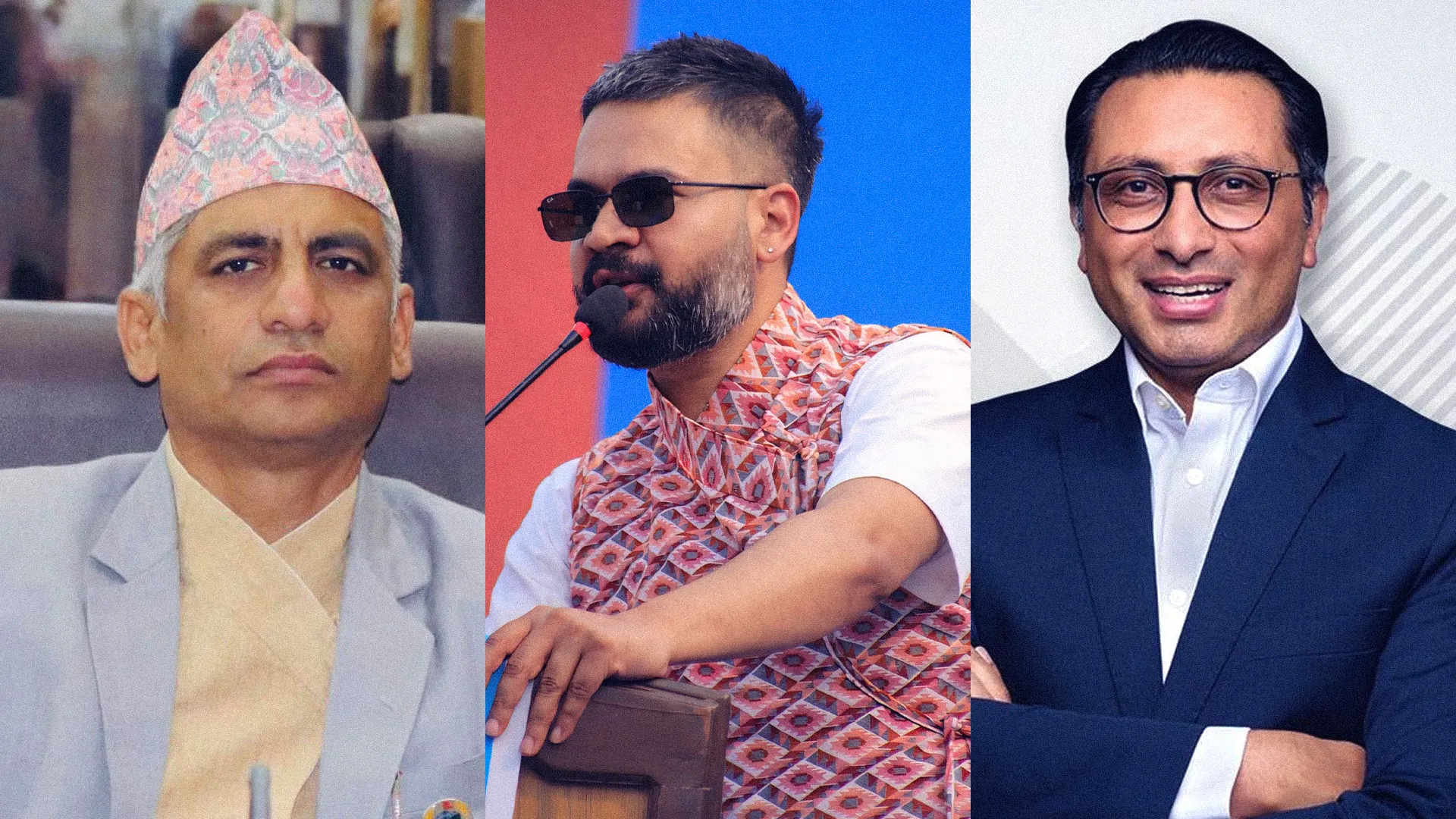
Last Ashad, when the Nepali Congress and CPN-UML agreed to form a coalition government led by KP Sharma Oli, a primary agenda was introduced: 'Constitutional Amendment'. Constructing a narrative that the current electoral system (including proportional representation) prevents any political party from securing a clear two-thirds majority, perpetually inducing political instability, these two major parties aggressively advocated for amending the constitution. However, the recently concluded elections and the surrounding political developments have posed a formidable challenge to this discourse of 'amendment' and 'abolishing federalism'.
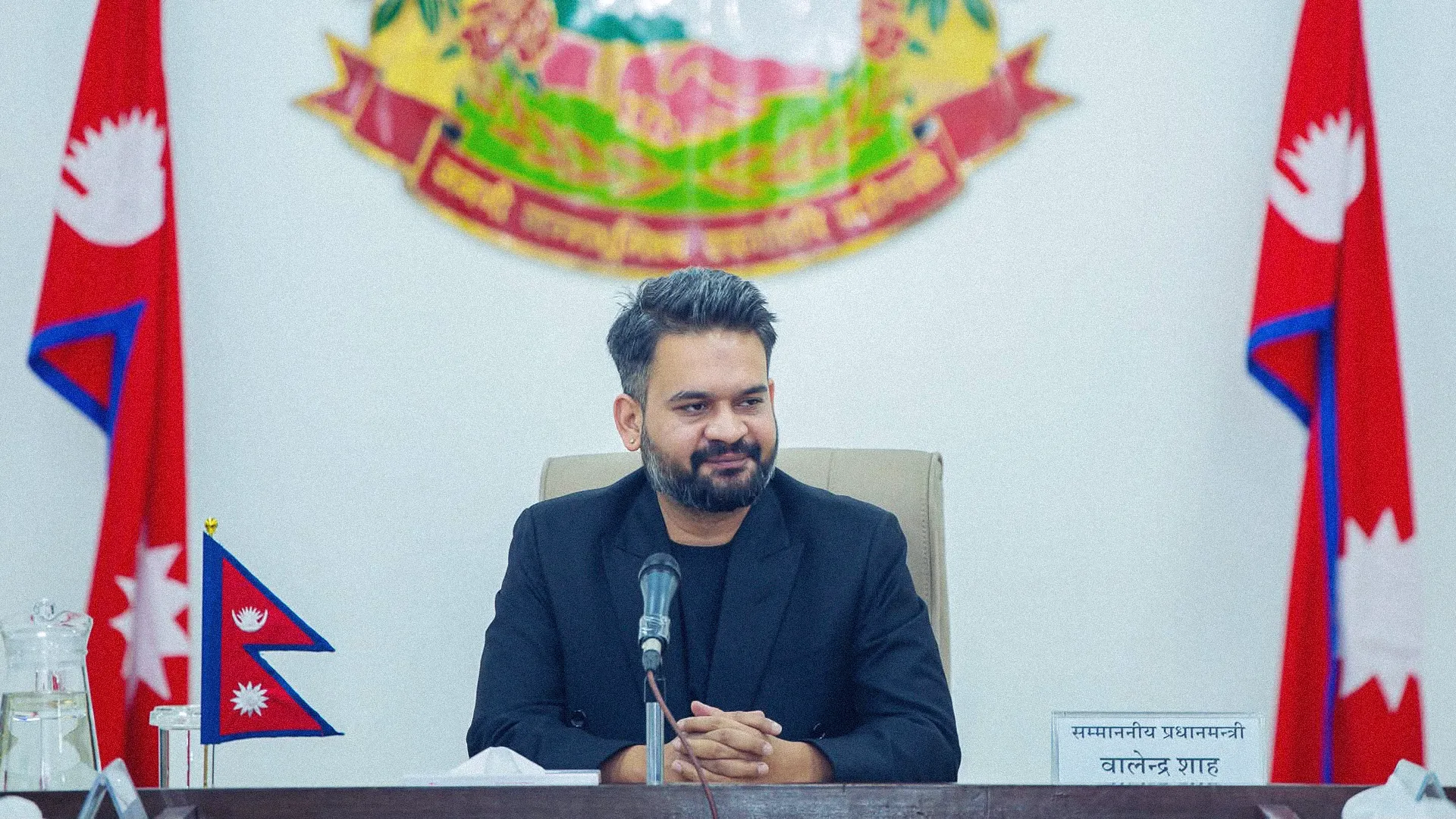
Amidst this political fervor, a profound ideological divergence and conflict regarding federalism have surfaced within the Rastriya Swatantra Party (RSP). On one hand, RSP Vice-Chairman Swarnim Wagle publicly articulated that federalism must be 'abolished' from the nation, even if it necessitates a constitutional amendment. His rationale was that the country cannot sustain the massive economic burden of federalism. Conversely, prior to the elections, RSP's senior leader Balendra Shah (Balen), speaking in Janakpur, unequivocally challenged Wagle's assertion.
Addressing the public in Janakpur, Balen explicitly stated, "Federalism must not be abolished under any circumstances. Instead, provinces must become so capable and self-reliant that people should travel to Kathmandu solely for tourism, rather than in pursuit of education, healthcare, or employment." This profound statement by Balen exposed the stark ideological clash between Vice-Chairman Wagle (advocating federalism's abolition) and senior leader Shah (championing federalism's consolidation) within the RSP.
Following the elections, a stringent remark by Nepali Congress leader and former Koshi Province Chief Minister Kedar Karki has added a compelling new dimension to this debate. After the Congress suffered an electoral defeat, Karki, via a Facebook status, claimed that the electorate had overwhelmingly rejected the 'constitutional amendment' and 'proportional system abolition' agenda orchestrated by the Congress-UML alliance. He wrote, "The election has delivered a resounding rebuttal to those claiming the nation cannot sustain federalism... Another paramount message of the election is the imperative to render federalism robust, self-reliant, and effective."
The 'Connection' Between Balen and Kedar Karki: Two Sides of the Same Coin

Interested in this ad?
Would you like to continue to the link or provide your information for more details?
Please provide your information
To continue, please fill in your details
Analyzing these overarching political developments reveals a striking parallel—the pre-election message delivered by Balen Shah from Janakpur and the post-election conclusion drawn by Kedar Karki align perfectly.
Defense of Federalism and Self-Reliance: While the initial Congress-UML stance and RSP Vice-Chairman Swarnim Wagle leaned towards dismantling federalism by deeming it a 'burden', both Balen and Karki vehemently defended it. Balen presented a pre-election vision emphasizing 'provincial self-reliance', whereas Karki validated post-election that 'the public mandate inherently demands making federalism self-reliant'.
Opposition to a Centralized Mentality: Balen's proposition to relegate Kathmandu to a mere 'tourist destination' while decentralizing all services to the provinces passionately advocates for power devolution. Similarly, Kedar Karki argued that the populace decisively rejected the 'constitutional amendment' endeavors aimed at undermining the proportional system and reconsolidating constitutional power at the center.
Pre-Election Vision vs. Post-Election Reality: What RSP senior leader Balen articulated as the absolute public necessity and the optimal model of federalism prior to the elections, Congress leader Karki interpreted as the definitive 'public mandate' while analyzing the post-election aftermath.
In conclusion, the 'constitutional amendment' narrative fabricated by major parties for coalition mathematics, alongside the 'abolish federalism' discourse championed by figures like Swarnim Wagle, has suffered a severe blow in contemporary politics. Karki claims that the election results have vindicated Balen's pre-election clarion call to protect federalism. Whether reflecting the RSP's internal discord or the Congress's internal dissatisfaction, robust evidence from both spectrums unequivocally clarifies that Nepal's imminent political trajectory lies not in dismantling federalism, but in fortifying provinces and empowering them.