UML’s Deployment of 10,000 Volunteers Sparks Debate Over Political Power Display and Public Security
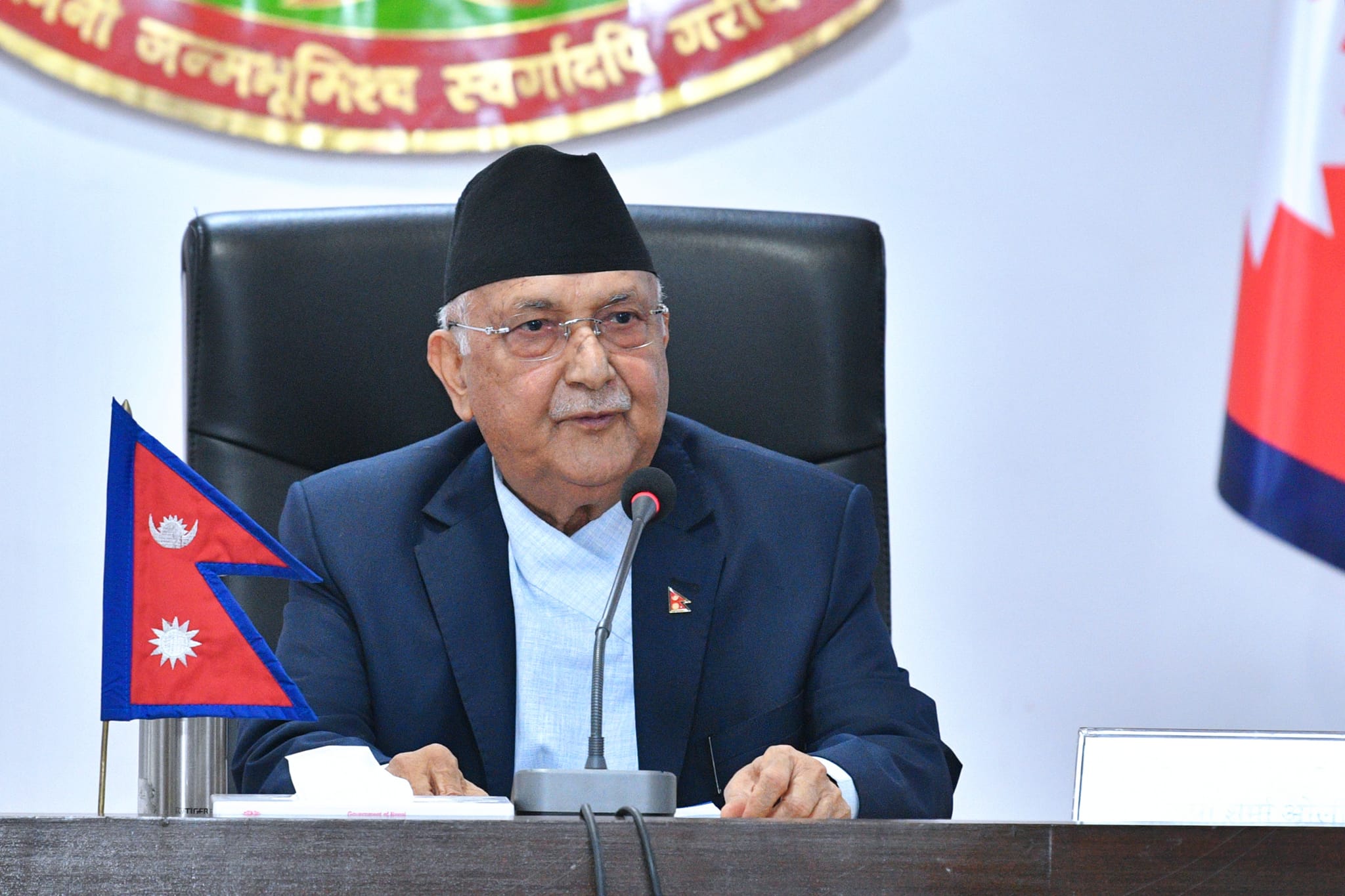
Kathmandu — The CPN-UML’s announcement that it will deploy 10,000 volunteers for the opening session of its 11th National General Convention has triggered intense political and public scrutiny, raising fresh questions about the balance between democratic conduct and show-of-force politics in Nepal. The party’s Volunteer Mobilization Committee Coordinator, Bhanu Bhakta Dhakal, confirmed that the massive deployment will cover both the opening event in Sallaghari, Bhaktapur, and the closed sessions scheduled at Bhrikutimandap, Kathmandu.
According to Dhakal, the party plans to field 10,000 volunteers for the open-air ceremony on December 13 and an additional 500 volunteers for the closed sessions. The recently formed National Volunteer Force (NVF) will coordinate volunteers drawn from 24 affiliated organizations and multiple party committees. UML officials have stated that volunteers have already been mobilized for stage preparation, sanitation facilities, and other necessary infrastructure.
The transport and crowd-flow arrangements are equally extensive. Vehicles arriving from the eastern corridor will be parked at the Jagati brick-and-tile factory grounds, while those coming from the west will be directed to the Gaththaghar–Kamerotar area, the party announced. Yet, the use of such a vast number of political volunteers in quasi-security roles has raised concerns about civil liberties, public safety, and the blurring line between state security agencies and party mobilization structures.
The convention will run from December 13 to 15, with UML confirming the participation of 2,400 elected and organizing representatives. However, deploying volunteer numbers nearly four times the delegate count has prompted debate over whether the party’s emphasis is on internal democratic deliberation or on projecting organizational might.
At a time when the Gen Z uprising has openly challenged the leadership style of Nepal’s older political elite, the decision to field thousands of uniformed, coordinated volunteers has intensified public discourse about the direction of Nepal’s political culture. Beyond political messaging, the massive mobilization also carries real human-impact consequences: traffic diversions, public inconvenience, and disruptions to daily life, often justified by political parties as part of a “democratic celebration,” even as the public bears the practical cost.
General conventions are meant to be forums for policy discussions, leadership selection, and organizational restructuring. Yet, assigning thousands of volunteers roles that resemble semi-security duties raises long-term governance concerns about how clearly the line can remain between partisan forces and constitutionally mandated state security structures.
Symbolically, too, the figure of 10,000 carries weight. During the Gen Z protests, youth demonstrators were dismissed by some political leaders as an “unorganized crowd,” yet today those same leaders celebrate an equally large mobilization as a hallmark of organizational strength. The irony has not gone unnoticed, prompting a biting reflection that has emerged across political circles: if 10,000 volunteers had rallied in favor of KP Oli during the Gen Z protest, he would still be the prime minister today.
KP Sharma Oli

![From Kathmandu to the World: How Excel Students Are Winning Big [Admission Open]](https://nepalaaja.com/img/70194/medium/excel-college-info-eng-nep-2342.jpg)