


Behind the Mask of the TRF
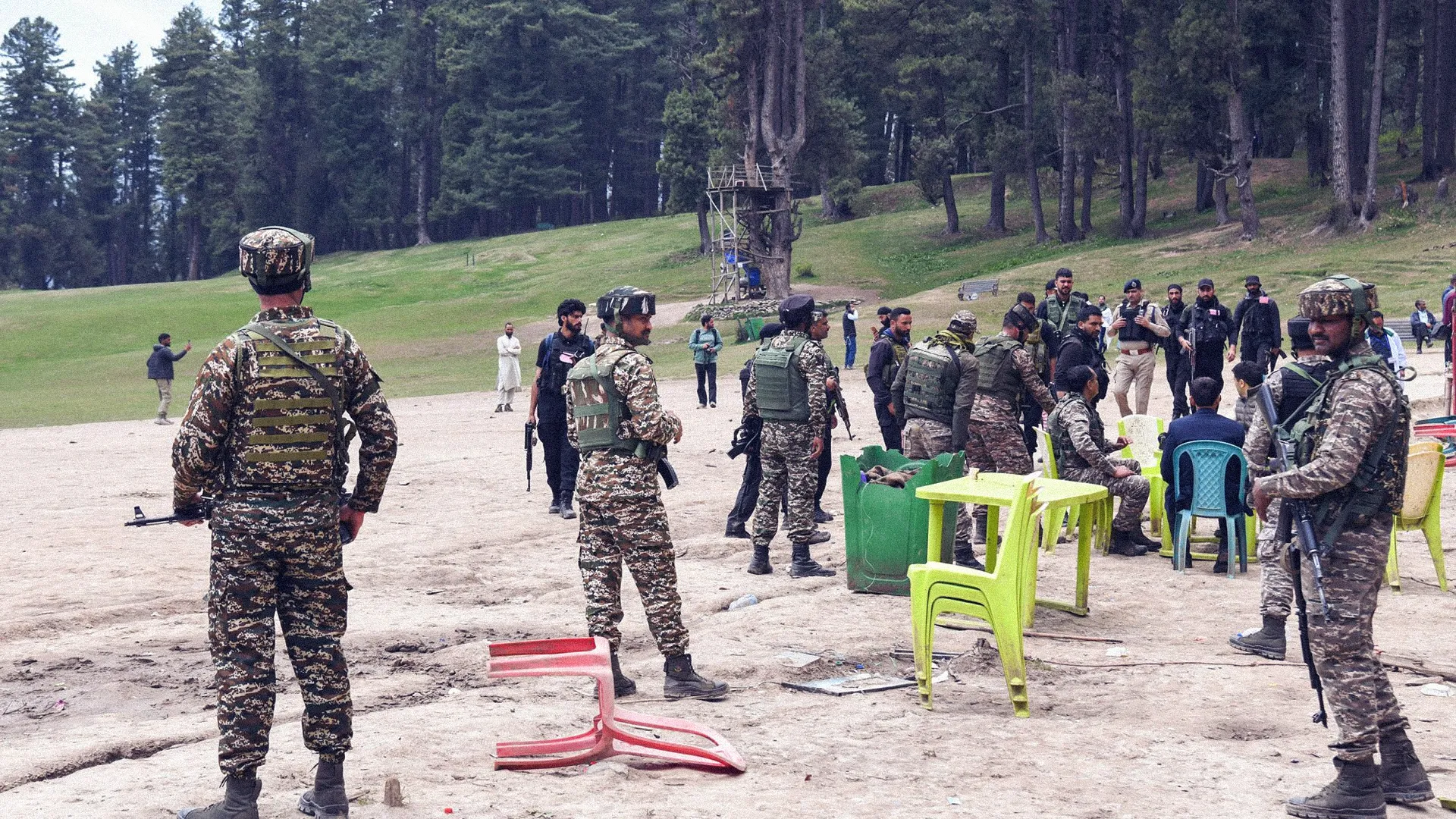
The blood on the grass of Baisaran had barely dried before a “new” name began circulating across extremist channels: The Resistance Front (TRF). In the immediate aftermath of the Pahalgam attack, the group initially claimed responsibility and then later denied it, a pattern that has deepened suspicions that the name is being used as a cover for more established militant networks.
But the idea that TRF is some spontaneous local uprising does not match how the group has been described by U.S. officials and major reporting. The U.S. State Department designated TRF as a Foreign Terrorist Organization (FTO) and Specially Designated Global Terrorist (SDGT) group in July 2025, explicitly describing it as a Lashkar-e-Tayyiba (LeT) front and proxy. Reuters likewise reported that TRF emerged in 2019 and is widely regarded as an offshoot of LeT.
Old Wine, New Bottle
The TRF label appears designed to create distance from the older, internationally condemned image of Lashkar-e-Taiba, which the United States has long designated as a terrorist organization. In practical terms, this kind of rebranding helps militant actors claim “local” legitimacy while trying to preserve plausible deniability for the larger network behind them.
That is why the choice of target matters so much. The attack in Pahalgam killed 26 people, including tourists, and Reuters reported that one Nepalese national was among the dead. According to Reuters, the assault struck a major tourist destination at a time when Kashmir was seeing a strong tourism season, which made the attack not only a mass-casualty event but also a direct blow to public confidence and the local economy.

Interested in this ad?
Would you like to continue to the link or provide your information for more details?
Please provide your information
To continue, please fill in your details
Why the Pahalgam Attack Mattered
The timing was significant. The region had been trying to project normalcy, stability, and economic recovery, and tourism was one of the clearest symbols of that effort. An attack in such a setting is not only about immediate casualties; it is also about strategic messaging. It tells residents, visitors, and investors that violence can still be used to disrupt life in the Valley. That is why attacks on civilians and tourists carry such political weight: they are meant to weaponize fear and slow economic normalization.
Indian security officials have treated TRF as more than a one-off banner. Reuters reported that Indian authorities and intelligence sources view TRF as a front for LeT, and India’s interior ministry had already told parliament in 2023 that the group had been involved in killings of civilians and security personnel, as well as recruitment and cross-border smuggling networks.
The Wider Pattern
Seen in this light, TRF is not just a name. It is part of a larger pattern in which established militant structures adapt their branding to survive political pressure, international scrutiny, and financial sanctions. The mask changes; the operational logic does not. The result is confusion on the surface and continuity underneath.
The world was therefore not fooled for long. By formally designating TRF, the United States signaled that it sees the group as part of the broader LeT ecosystem rather than as an independent political movement. In that sense, the Pahalgam attack was not just another isolated tragedy. It exposed once again the machinery of denial, proxy warfare, and terror branding that continues to destabilize Kashmir.