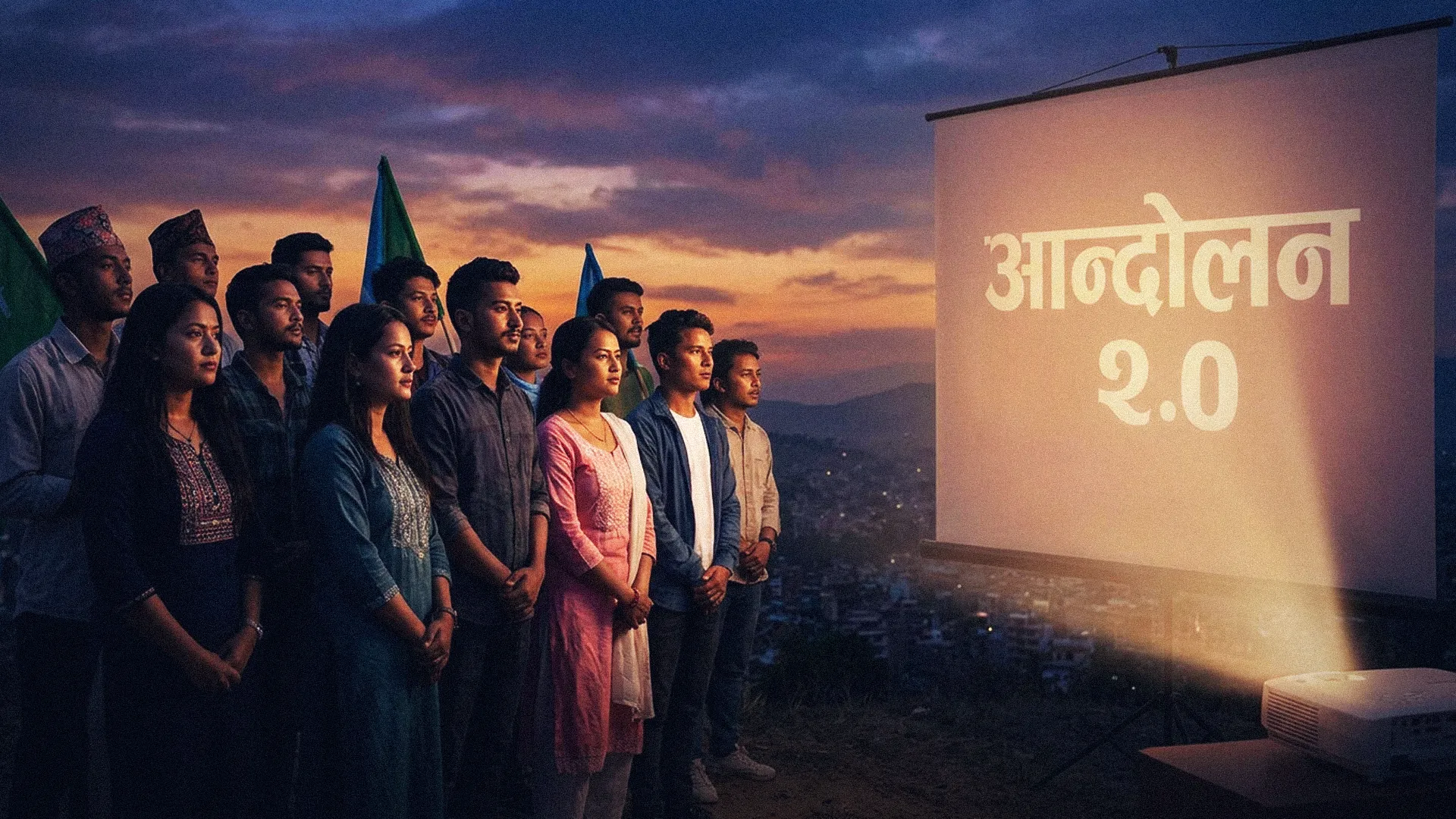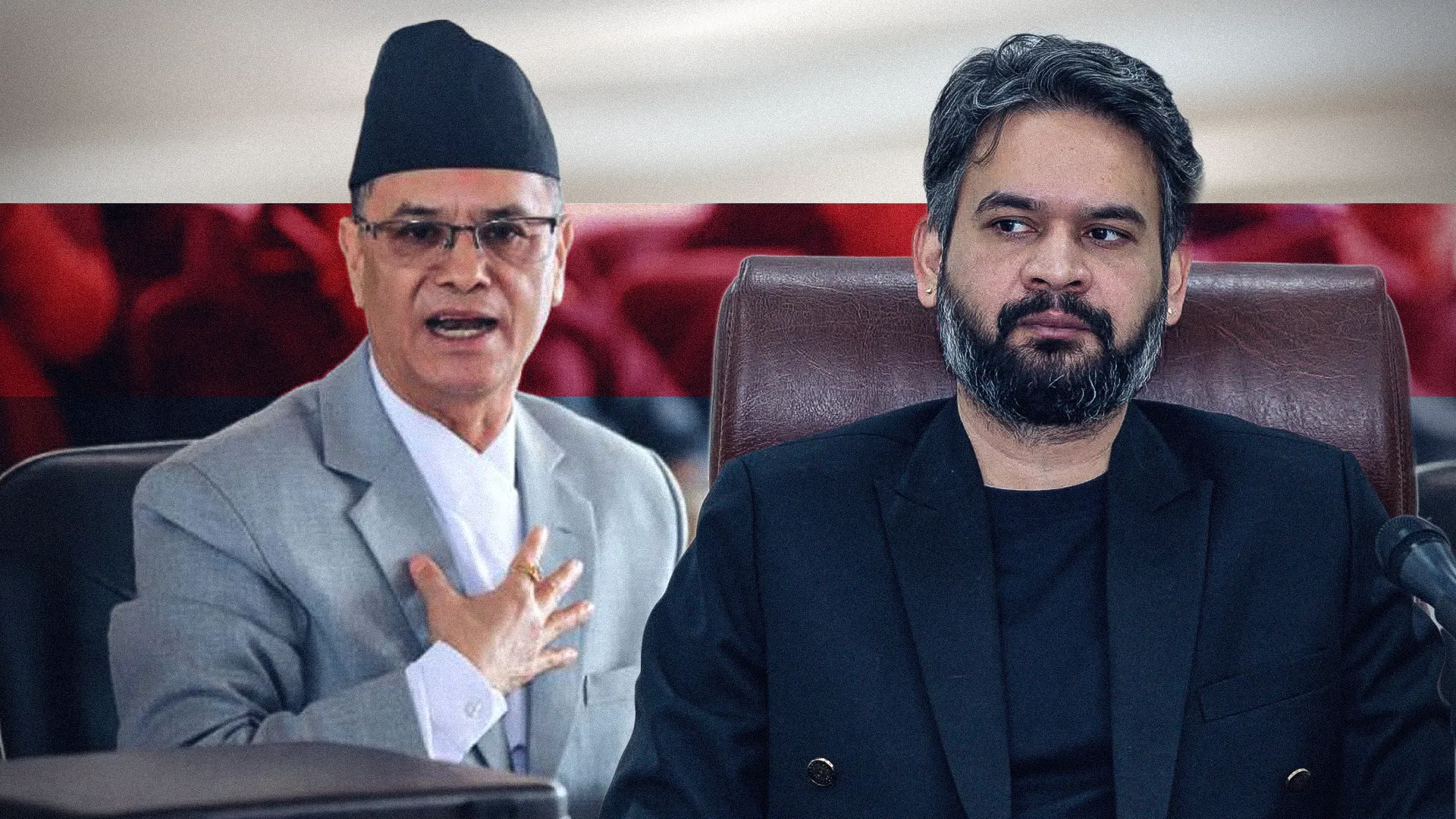




Sanjeev Bikram Shah - Nepal has entered a dangerous strategic moment. Political upheaval, destruction of national assets, election expenditure, communal tensions and the Rasuwa catastrophe have together weakened the country's economic and institutional resilience. The problem is no longer simply reconstruction. It is whether Nepal can rebuild itself without simultaneously losing diplomatic space and becoming increasingly dependent on external powers.
This is the first and most important test of Prime Minister Balen Shah. The destruction associated with the Gen-Z movement, the enormous cost of the subsequent election and the latest devastation in Rasuwa have consumed national wealth that should otherwise have gone into infrastructure, industry, employment and productive investment. Nepal is increasingly being forced to rebuild what it has already built. A country can absorb a temporary fiscal shock, but repeated destruction gradually erodes its productive capital and leaves less money available for future growth. Shah inherited much of this damage, but inheritance does not remove responsibility. His government now possesses the political mandate to determine whether Nepal enters a period of recovery or continues a cycle of political disruption followed by externally financed reconstruction. The distinction is critical. Reconstruction can restore Nepal's physical assets; only economic reform can restore its economic strength.
SOVEREIGNTY IS NOT CONFRONTATION
Prime Minister Balendra Shah's political style has introduced a new assertiveness into Nepalese governance. Political confidence can be useful, but in foreign policy it can become dangerous when confidence is interpreted as freedom from diplomatic convention.
Nepal's sovereignty does not become stronger because its prime minister appears less accommodating toward foreign diplomats. Nor does diplomatic distance automatically create strategic independence. For a country located between India and China, diplomatic predictability is itself a strategic asset.
A powerful domestic mandate can encourage a government to believe that the same political style that succeeds at home can be applied abroad. That assumption would be costly. A large parliamentary majority provides authority within Nepal; it does not change the country's geography, economic dependence or strategic exposure. Nepal needs an assertive foreign policy, but it needs an intelligent and disciplined assertiveness—one that protects national interests without unnecessarily creating distrust among the very powers on which Nepal's security and economic recovery depend.
THE INDIA–CHINA TRAP
Nepal's traditional strategic advantage has been the competition between India and China. Both neighbours seek influence in Kathmandu, but neither wants the other to dominate Nepal. This has historically provided Nepal with diplomatic room. That advantage could disappear if both begin to distrust Kathmandu. India's concerns would centre on its open southern border, cross-border movement and any foreign political, religious or security networks that could acquire strategic implications. China's concerns would centre on Tibet, the northern frontier and the possibility of Nepal becoming a platform for Western or other external strategic activity. These concerns are not identical. But they could eventually lead to a similar conclusion: Nepal must not become an externally controlled or strategically penetrated space. India and China would not need to resolve their broader rivalry for such a convergence. They would only need to share a minimum security interest in preventing hostile external activity from taking root in Nepal.
For Kathmandu, this would be a serious strategic reversal. Nepal's bargaining advantage depends partly on India and China competing for influence. If both instead become simultaneously suspicious of Nepal, Kathmandu loses the very space it is trying to expand.
THE WESTERN AND FOREIGN-FUNDING QUESTION
Nepal urgently needs American, European, Japanese and multilateral assistance for reconstruction and economic development. Western institutions can provide capital, technology, disaster-management expertise and institutional support at a time when Nepal's requirements are enormous. But foreign financing must strengthen Nepal's capacity rather than gradually replace it.
As reconstruction expands, so too will the presence of foreign governments, development agencies, NGOs, civil-society organisations and international financial institutions. This is not inherently negative. The danger arises when economic assistance, institutional influence and geopolitical interests become intertwined.
Nepal therefore needs transparency—not selective suspicion. Western, Chinese, Indian, Turkish and Gulf-funded organisations should be subject to comparable financial and institutional scrutiny. The fundamental question should not be who provides the money, but what strategic or political influence accompanies the money. Foreign assistance should build Nepalese institutions, Nepalese industries and Nepalese capacity. If it instead creates permanent dependence on external financing and external expertise, reconstruction could become another form of vulnerability.
THE RELIGIOUS AND TRANSNATIONAL NETWORK QUESTION
The growth of foreign-funded religious and social organisations requires the same strategic discipline. Islamic charities and Nepal's Muslim population must not be equated with extremism. Such a generalisation would be both unjust and strategically counterproductive. But Nepal cannot ignore the possibility that opaque foreign financing, political mobilisation or transnational ideological networks could operate through religious or social institutions. This concern is particularly sensitive because Nepal's southern border with India is open and deeply interconnected.
If New Delhi begins to believe that foreign-funded networks are acquiring political or security influence in Nepal's border regions, Indian security concerns could intensify rapidly. At the same time, Beijing could react strongly if organisations or movements operating in Nepal are perceived as connected to Tibetan political mobilisation or Western strategic activity. The result could be a convergence of two different security anxieties. Nepal must therefore prevent foreign political influence from being hidden behind religious, humanitarian or development activities. The principle must apply equally to every external actor.
THE WIDER REGIONAL SHIFT
The strategic environment around India is also becoming more complicated. Pakistan's expanding relationship with Turkey and Gulf powers, together with Bangladesh's changing external orientation, could produce a more complex security environment around India's western and eastern peripheries. Nepal should not become an extension of this emerging competition.
If Kathmandu simultaneously distances itself from India and China while permitting multiple external actors to expand political, religious or strategic influence, Nepal could become an attractive secondary theatre for wider regional competition. For a landlocked country with limited economic and military capacity, that would be an extremely dangerous position. Nepal's interest is not to join emerging blocs but to remain sufficiently balanced that no bloc can treat Nepal as its strategic territory.

Interested in this ad?
Would you like to continue to the link or provide your information for more details?
Please provide your information
To continue, please fill in your details
MUSTANG: THE NEXT STRATEGIC SENSITIVITY
Mustang deserves particular attention. Its location beside Tibet, proximity to China, trans-Himalayan significance and possible mineral resources could make it increasingly important to competing powers. Claims that the United States has an established plan to exploit uranium or rare-earth resources in Mustang remain unproven, and they should not be treated as established fact. But the strategic possibility should not be ignored. If commercially significant critical minerals are eventually confirmed, Mustang could attract greater interest from China, India, the United States and other external powers. Infrastructure, exploration rights, communications and resource access could then acquire strategic significance far beyond their economic value. Nepal should establish clear national control over such resources before external competition intensifies.
Strategic resources must become instruments of Nepal's economic sovereignty, not instruments through which foreign powers acquire political leverage.
THE DANGEROUS SCENARIO COULD BE?
The most dangerous outcome is not that Balendra Shah openly chooses India, China or America.
It is that his government gradually loses the confidence of all three. If Nepal becomes increasingly dependent upon Western reconstruction finance, increasingly sensitive to Chinese security concerns, increasingly mistrusted by India and increasingly exposed to opaque foreign political or religious networks, its strategic autonomy will shrink rather than expand. The greatest danger would be simultaneous deterioration in Nepal's relations with India and China while Western and other external actors expand their institutional presence. That could produce an unexpected strategic consequence: India and China, despite their rivalry, could develop a limited common interest in preventing Nepal from becoming an externally penetrated strategic space.
They would not need to cooperate on everything. They would only need to agree on what they would not tolerate. For Nepal, that would dramatically reduce diplomatic room for manoeuvre.
THE ECONOMIC FAULT LINE
This geopolitical danger becomes more serious because Nepal's economic resilience is already under pressure. Nepal needs billions of dollars merely to rebuild infrastructure damaged by political unrest and natural disasters. Every rupee spent replacing destroyed assets is a rupee unavailable for industrialisation, employment, education, technology or new infrastructure.
The country therefore faces a fundamental choice. It can use international assistance to rebuild the same vulnerable economic structure. Or it can use the reconstruction period to create a more productive and resilient economy. The second path is essential.
Nepal cannot achieve strategic independence while remaining structurally dependent on remittances, imports, foreign employment and external financing. Hydropower, tourism, agriculture, manufacturing, digital services and regional trade must become engines of domestic capital formation. Otherwise, political sovereignty will remain ahead of economic sovereignty.
THE PM BALENDRA SHAH TEST
The PM Balendra Shah's real challenge is therefore not to demonstrate that Nepal can disagree with India, China or the West. It is to demonstrate that Nepal can disagree with any of them without losing the ability to work with all of them. That requires restraint as much as assertiveness.
Nepal needs India for geography, transit, trade, energy and social connectivity. It needs China for northern connectivity, infrastructure and economic diversification. It needs the United States, Europe, Japan and international institutions for capital, technology and development finance. It needs Gulf and other partners for investment and employment.
But none should become indispensable. Nepal's strategic doctrine must therefore be engagement without alignment, diversification without confrontation, foreign assistance without dependency and sovereignty without isolation.
The country is already paying a heavy price for political instability and physical destruction. It cannot afford to add a geopolitical crisis to the reconstruction crisis. The greatest mistake would be to confuse diplomatic provocation with strategic independence.
A prime minister may possess an overwhelming domestic mandate, but no mandate can repeal geography. Nepal remains between two great powers, and its prosperity depends upon maintaining workable relations with both. The ultimate test of PM Balendra Shah will therefore not be how forcefully he can assert Nepal's independence, but how intelligently he can preserve Nepal's strategic space. If he succeeds, Nepal can use its current crisis to build a stronger, more diversified and genuinely sovereign state. If he fails, Nepal risks becoming economically dependent, diplomatically mistrusted and strategically contested at the same time.
For a landlocked country, losing the confidence of both India and China while searching for new external patrons would not be strategic autonomy. It would be strategic self-isolation. That would be the possible fault line of the Balendra Shah era—and potentially the defining geopolitical question for Nepal's future.