


The Department of Food Technology and Quality Control in Kathmandu, Nepal, issued a public notice on Monday imposing a complete ban on the production, storage, and sale of non-edible fatty substances for worship under the name of ghee. The regulatory action prohibits businesses from marketing oily products intended for pooja, hom, hawan, or lamp lighting as ghee, vanaspati ghee, bakery shortening, or pooja ghee.
The decision follows extensive market monitoring and consumer complaints regarding deceptive commercial practices. Investigations revealed that certain manufacturers were blending vegetable fat, refined oils, synthetic fragrances, paraffin, mineral oil, and various chemical substances to market ritual fats. Because these products closely mimicked edible ghee in appearance, color, aroma, and packaging, consumers faced serious health risks from accidental kitchen consumption.
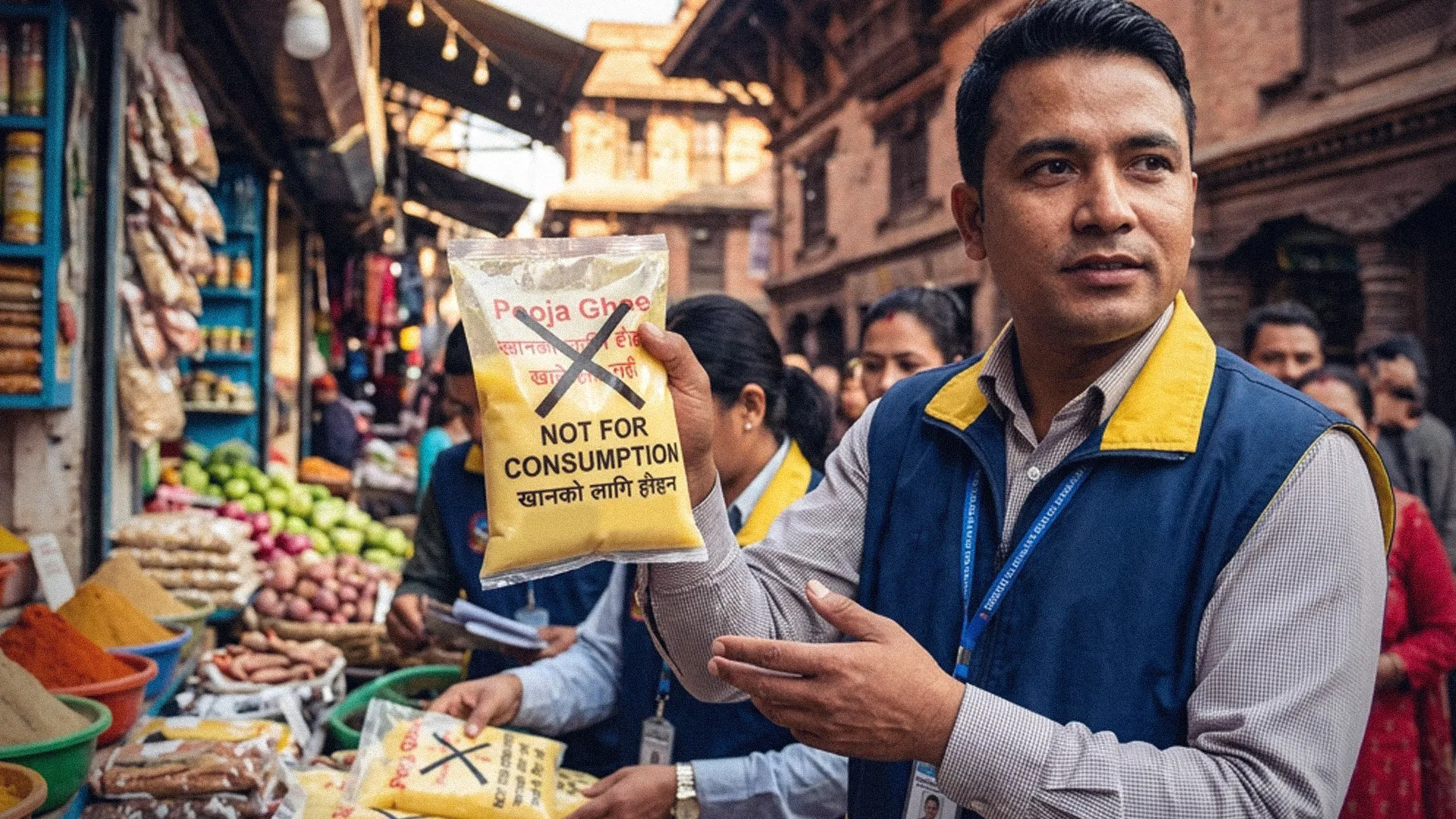
Under the new directives, manufacturers of fats produced strictly for religious rituals are forbidden from using terms such as ghee, vanaspati ghee, or bakery shortening on packaging labels. Furthermore, producers must prominently display the warning phrase "NOT FOR CONSUMPTION" in large font on the front of the packet, accompanied by a mandatory black cross mark 'X'. The department added that legitimate edible ghee producers must strictly comply with labeling mandates under the Food Hygiene and Quality Act, 2081.

Interested in this ad?
Would you like to continue to the link or provide your information for more details?
Please provide your information
To continue, please fill in your details
This regulatory intervention aims to eliminate the harmful mixing of food and non-food items while ending deceptive marketing practices that mislead the public. The department warned that any defiance of government orders will invite severe legal action in accordance with the Food Hygiene and Quality Act, 2081.
This enforced regulatory framework is expected to strengthen market oversight and safeguard public health across the nation.