


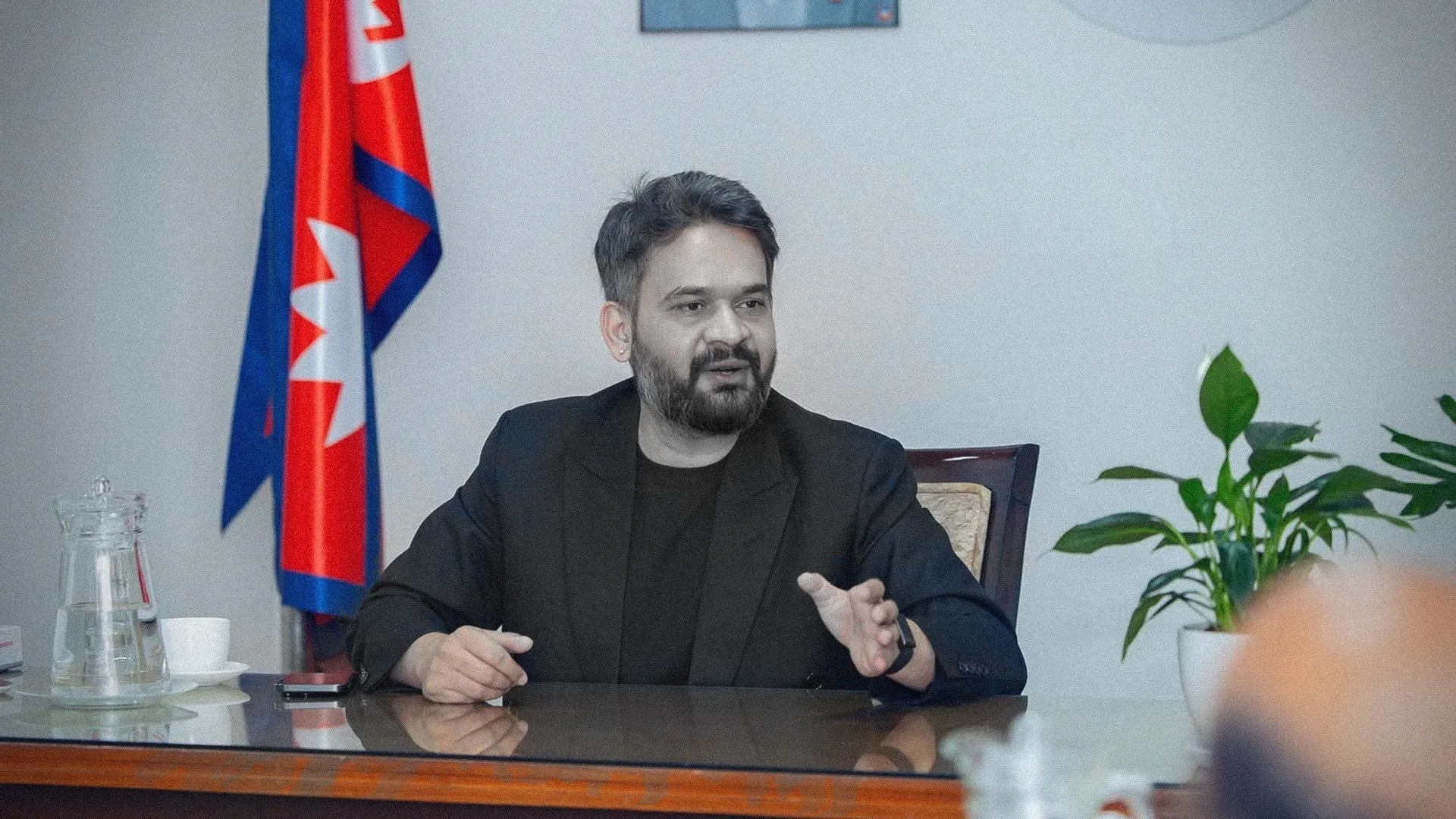
Prime Minister Balendra Shah's recent implication on social media that he is fighting a solitary battle has drawn serious attention to the executive head's state of mind. He wrote, "It takes some time for the right moment to arrive. It may be delayed, but it will not be wrong. Do not panic. Reality can sometimes differ from what is heard and seen. Sometimes, one must fight alone. This is not the first time." It is inherently bewildering for the Prime Minister to experience isolation while holding the absolute reins of state power. Residing in the power center of Baluwatar, he is flanked by an extensive battalion comprising advisors, ministers, the secretariat, the chief secretary, the army chief, the inspector general of police, the entire security apparatus, and a vast civil administration. Perhaps the Honorable Prime Minister momentarily forgot this formidable presence—alongside his family, his political party, and a legion of cadres—or perhaps, amidst the bustling machinery of the state, his soul is genuinely desolate.
To be the chief executive is to be the primary steersman of the state apparatus. An individual elevated to such a paramount office perhaps failed to comprehend the message that a public lamentation of despair and loneliness conveys to the ordinary citizenry. The populace anticipates robust, resolute, and decisive leadership. For the very person entrusted with the state treasury, law enforcement agencies, and the master key to policymaking to sound so defenseless is hardly a favorable omen for the democratic system and good governance. It raises a grave apprehension: is the government's leadership on the verge of losing its self-assurance?
It is not difficult to deduce that internal friction is the primary catalyst behind this backdrop of isolation and despair. Specifically, the persistent challenges posed by the Rastriya Swatantra Party (RSP) Chairman, Rabi Lamichhane, regarding the government's modus operandi must have placed the Prime Minister under intense psychological duress. The scathing critiques initiated by RSP lawmakers inside and outside the parliament regarding the government's shortcomings have exposed the profound fragility of the coalition's foundation. The lack of coordination with coalition partners and the prevailing distrust over power-sharing might have engendered a sense within the Prime Minister that he is relegated to a minority within his own administration.
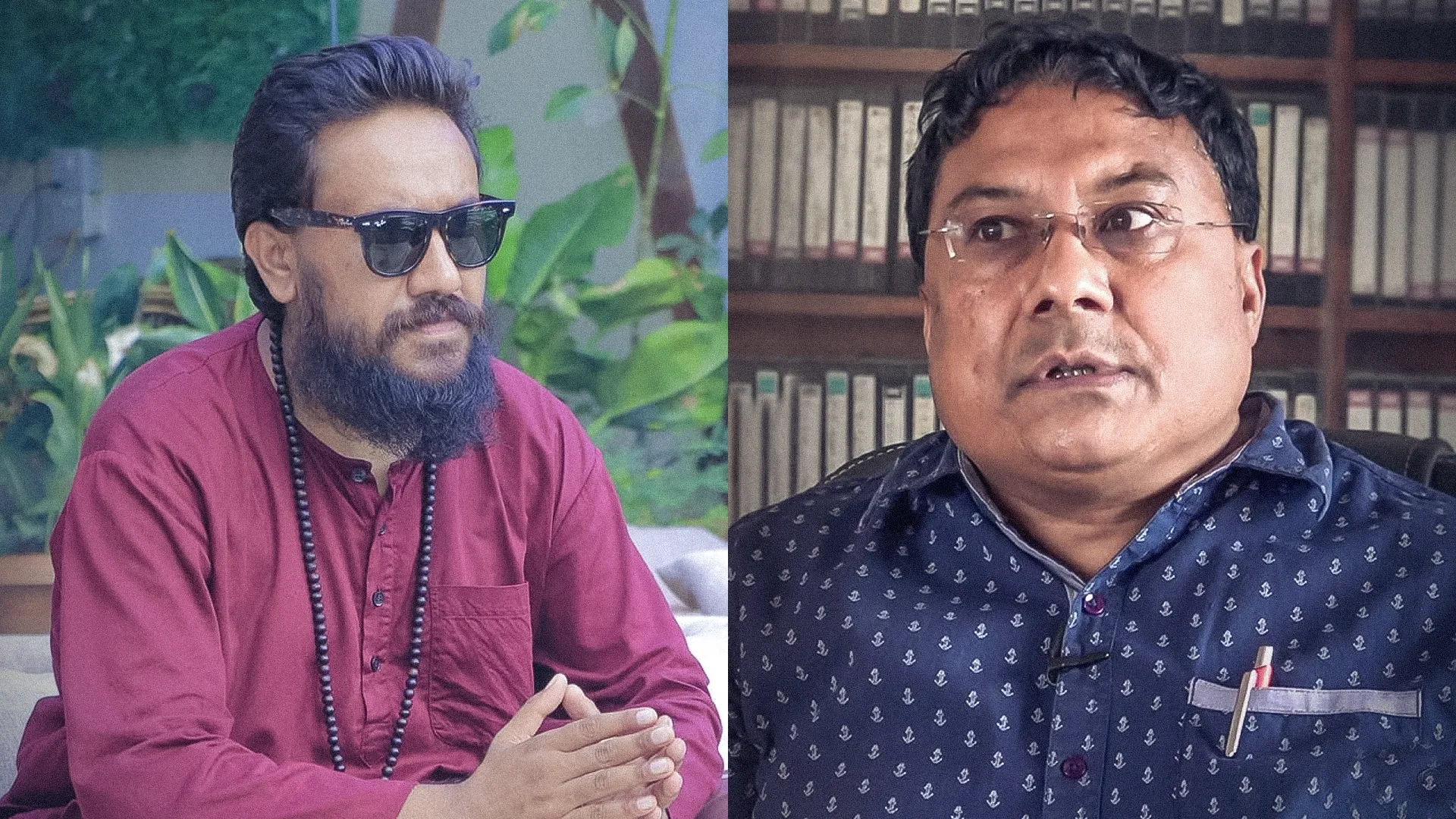
This clash of power is not confined to the outer political circle; it has surfaced rather unpleasantly within the Prime Minister's own secretariat. Political circles are abuzz with murmurs of an escalating internal feud between Chief Advisor Kumar Ben (Kumar Byanjankar) and Bhupdev Shah, which has consequently disrupted the secretariat's operational efficacy. One can easily surmise how toxic the work environment at Baluwatar must have become when trusted confidants turn against one another. Furthermore, growing discord with the Finance Minister and the Industry Minister has cast a shadow of doubt over the government's policy and structural coordination. With his inner circle of advisors and departmental ministers simmering with dissatisfaction, it is hardly unnatural for the chief executive to feel disarmed.

Interested in this ad?
Would you like to continue to the link or provide your information for more details?
Please provide your information
To continue, please fill in your details
Perhaps to pacify this claustrophobia stemming from his inner circle, or to project a renewed message of power balance, the Prime Minister has sought refuge in diplomatic engagements. His meetings yesterday with the Ambassador of the People's Republic of China, H.E. Zhang Maoming, and the Ambassador of India, H.E. Naveen Srivastava, could be construed as a link in this very chain. The Prime Minister, who once maintained a rigid stance of not meeting foreign diplomats below the rank of his peers (heads of state or government), has suddenly intensified his dialogues with the envoys of neighboring nations, signaling a significant paradigm shift. Perhaps he has now realized how indispensable the diplomatic 'blessings' or reassurance of neighbors become when internal politics plunges into a crisis.
On the flip side, claims are rife that the new government is executing 'explosive' work in the name of good governance, investigations, and punitive actions. Veteran politicians, business tycoons, and high-ranking bureaucrats are rattled; their files and cases have reached entities ranging from the CIB to the courts. Yet, the reality beneath this veneer of 'Ramrajya' (an ideal state) is deeply contradictory. The traditional power brokers of yesterday have now been replaced by modern commission agents from the 'Gen-Z' and 'Millennial' generations. These new-age operatives, scheming to settle high-profile cases, deflect investigations, or shield individuals from prosecution, are seen oscillating between knocking on Rabi's doors, striving to appease Kumar Ben, or seeking sanctuary with Bhupdev. It is an open secret that a new breed of brokerage is thriving around Baluwatar, manipulating these disparate centers of power.
Leadership does not entail weeping in times of crisis; rather, it demands the courage to forge ahead while mending a fractured system. Even with this entire armada of the state apparatus, boundless authority, and a new generation of 'aides' at your disposal, Honorable Prime Minister, there is absolutely no reason for you to panic or feel forsaken. Nevertheless, if, while commanding this colossal ironclad machinery, you truly feel the dearth of an additional soldier for your battles, at the very least, I am ready to stand shoulder-to-shoulder and fight alongside you. I sit prepared with my application in hand—just tell me which form to fill out and where to enlist for this 'solitary battle'. I hope the formal notice of this recruitment will soon be published in the state media, thereby bringing an end to your lonely days once and for all.