


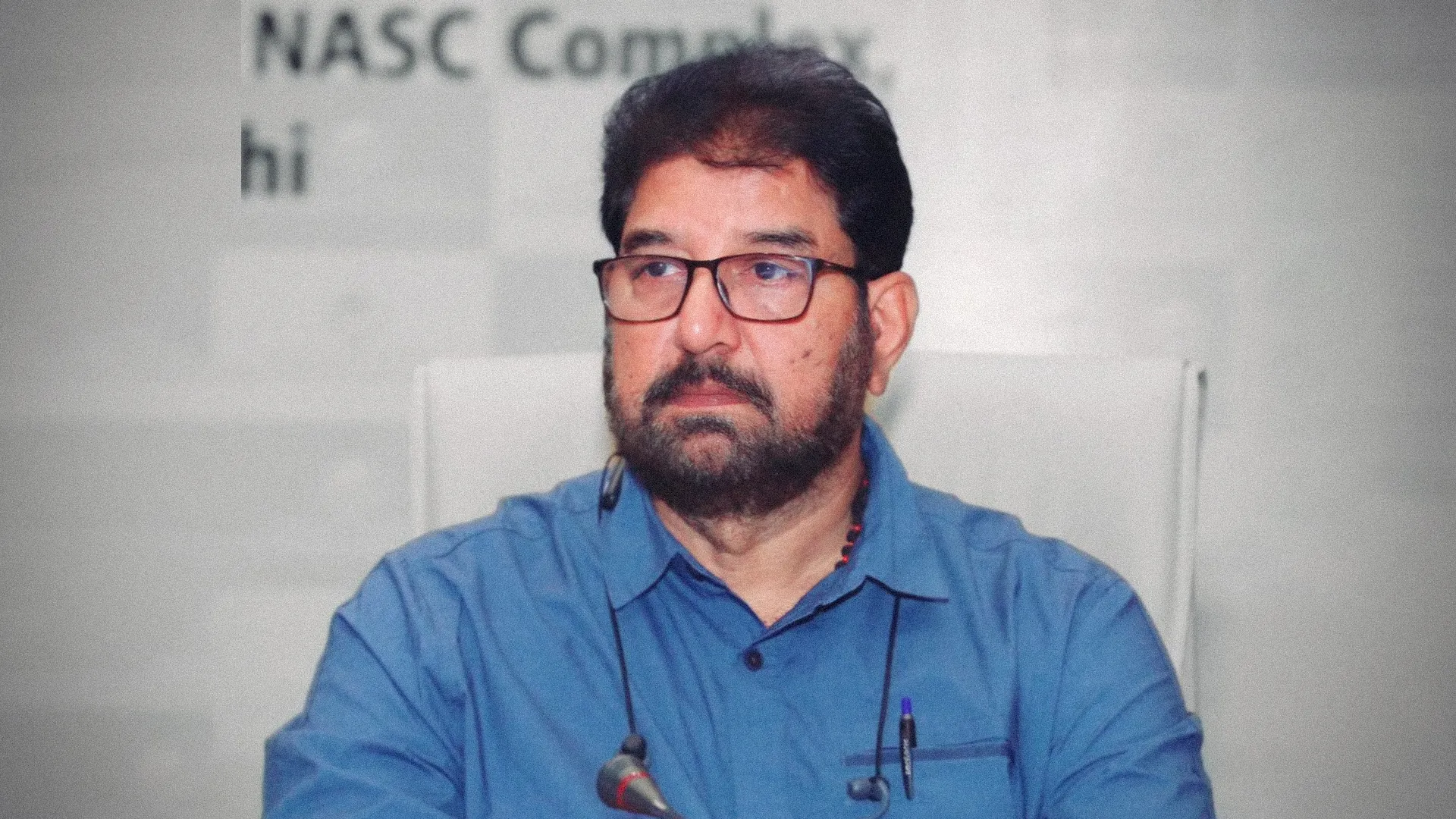
Dr. Rajaram Tripathi, Agricultural and Rural Economics Expert and National Convenor, All India Kisan Mahasangh (AIFA)
This must be read because it is essential for us to know whether:-
Is ethanol really a medium to increase farmers' income, or the beginning of a new economic dependence? Are the claims being spread on social media regarding ethanol and engines true? Did the government implement the policy too hastily without taking farmers into confidence? Will India gain freedom from petroleum, or will the water crisis and crop imbalance increase? A recent incident in Kondagaon shows that not only factories, but policies also run on public trust.
That recent night in Kondagaon, Bastar, is still fresh in my mind. After being in discussion for nearly two decades, and following seven years of administrative and technical struggle, the industrial project which was described as the new sunrise of prosperity for the farmers of this region was flourishing with hopes of a harvest until just before its inauguration. It was said that glucose would be made from maize here, maize oil would be made, bio-degradable plastic would be made, animal feed would be made, and about 140 types of value-added products would be prepared. Farmers felt that their produce would now become industrial raw material, not just grain.
But overnight, the story changed. News came that the main purpose of the same factory would now be ethanol production.
The factory could not even run at full capacity before complaints started coming from the surrounding villages. People spoke of foul odor. Apprehensions were expressed regarding wastewater. The administration did not show much seriousness, considering the initial complaints as normal industrial opposition. Then, one night, a wedding procession in a nearby village refused to eat food due to the foul odor coming from the factory. In no time, the dispute escalated, anger erupted, and ultimately, a crowd attacked the plant. A heavy police force had to be called.
This was not just the story of one factory. It was the story of the distance that often gets created between policy and the public in India.
Development does not happen through machines alone; it happens through trust. If farmers, villagers, and the local society are not participants in a policy, then a project worth crores of rupees also gets buried under the weight of suspicion. The same question stands before the country's ethanol policy today.
Two extreme perceptions are currently going on in the country regarding ethanol. One side is describing it as the great mantra for the economic independence of farmers. The other side is bent on proving it disastrous for farming, water, vehicles, and the economy. The misfortune is that there is more noise and doubt on both sides, and less study and truth.
In a country like India, evaluation of any policy can neither be done through slogans nor through viral posts on social media. Here, facts, science, the farmer's experience, and national interest—all four will have to be taken together. India today is the world's third-largest energy consumer. We import a major part of our petroleum requirement. Every year, lakhs of crores of rupees of foreign exchange are spent just on the import of crude oil. In such a situation, if an attempt is being made to reduce import dependence by blending up to 20 percent ethanol in petrol, then there is economic logic as well as strategic thinking behind it.
This is the reason why the central government accelerated the ethanol blending program in the last few years. Ethanol production is being encouraged from sugarcane molasses, sugarcane juice, damaged food grains, maize, and now even agricultural residues. The objective is clear—farmers get a new market, oil imports decrease, and carbon emissions are reduced.
But this is where the real debate begins.
Does every good intention also become a good policy?
India's biggest strength is its farmer, and the biggest weakness is also that most policies are assumed to be perfect in files even before reaching the farmer. The farmer is not told; only orders are announced. He is not made a participant; he is merely assumed to be a beneficiary.
Something similar happened with the ethanol policy. There was no widespread dialogue among farmers. Which crop would be suitable in which area, what is the water availability, what will be the local environmental impacts, how will small farmers benefit—public discourse on these questions did not happen at the expected level.
It is not wise to oppose any new technology. But implementing technology without social dialogue is also not called foresight.
Today, many claims are being made on social media regarding ethanol. Somewhere it is being said that due to this, every engine will become junk in a few years. Somewhere it is being propagated that the entire policy has been made only to benefit a few industrialists or political families. On the other hand, some people are describing it as such an elixir as if all the problems of the farmers will end with it.
The truth stands somewhere between these two extremes.
Union Minister Nitin Gadkari’s pace of work in the field of road infrastructure is difficult to deny. The expansion of national highways, expressways, and projects like Bharatmala are proofs of his administrative capability. Similarly, his insistence on promoting alternative fuels can also be considered important from the perspective of energy security.
However, a minister’s intention and the quality of a policy are two different questions. In a democracy, a policy should be evaluated by its results, not by devotion to a person or opposition to a person. The ethanol policy should also be tested on this touchstone.

Interested in this ad?
Would you like to continue to the link or provide your information for more details?
Please provide your information
To continue, please fill in your details
In a democracy, a policy should be evaluated by its results, not by devotion to a person or opposition to a person. The ethanol policy should also be tested on this touchstone.
In fact, India has made remarkable progress in the field of ethanol blending. In the year 2013-14, ethanol blending in petrol was less than 1.5 percent, which increased to reach up to 20 percent in 2025-26. According to the government, this target was achieved five years ahead of the scheduled time. During the same period, procurement of ethanol increased from about 38 crore liters to more than 1200 crore liters, and the country's production capacity increased from about 421 crore liters to about 2000 crore liters per year.
Undoubtedly, this achievement is not small. By this, India has taken a bold step towards reducing dependence on petroleum imports, saving foreign exchange, and reducing carbon emissions. This is the reason why America, Brazil, and many countries of Europe have also been using biofuels for decades. The only difference is that there, equal importance was given to research, public dialogue, and local conditions along with the policy.
The problem in India is not just ethanol; the problem is our old administrative disease, "Policy first, scheme first, decision first, and finally, dialogue when things begin to fall apart."
If a farmer is not even asked whether sugarcane or maize is suitable for his area? How much groundwater is available? What is the environmental capacity of the local industry? How much benefit is he actually able to get every year from the said farming? Then it is natural for the policy, scheme, and decision to be successful on paper and controversial on the ground.
Here I remember that very incident of Kondagaon. If the villagers had been taken into confidence from the very beginning, a transparent system of pollution control had been shown, and local farmers had been made partners, and their problems had been diagnosed in time, then perhaps instead of police vehicles, the farmers' tractor-trolleys would have protected that industry.
Unfortunately, in India, development often means not dialogue, but inauguration ceremonies, flexes, posters, grand inaugurations, and its full-page advertisements.
Meanwhile, another strange trend is visible on social media. Some people are bent on proving ethanol as such a monster as if the funeral of the engine is certain the moment a single drop of it falls into the petrol. On the other hand, some people are describing it as such a philosopher's stone as if the farmer will become a millionaire overnight upon finding it. Both extremisms are examples of propaganda, not science.
In recent days, many claims came forward regarding vehicle engines. The government and most vehicle manufacturers say that evidence of widespread engine damage has not been found in modern E20-compliant vehicles. Yes, in some old models, a reduction of about 3 to 5 percent in fuel efficiency and the need for technical precautions in some rubber fuel-parts and special conditions have been stated. The ARAI report has also pointed towards potential impact on some components of old E10-based vehicles. Therefore, independent scientific tests, not emotions, are needed on this subject.
In a democracy, the public wants proof, not assurance. If there is doubt in the minds of crores of vehicle owners, then it is the responsibility of the government to conduct long-term testing through independent institutions and make the results public. Asking questions is not a crime in science, but hiding answers definitely becomes a matter of concern.
Similarly, the allegations being leveled on social media regarding Nitin Gadkari that the ethanol policy has been made only to benefit his family or a single company are also not substantiated by the available data. India's annual ethanol market is of several billion liters, and many sugar mills, distilleries, and biofuel units of Uttar Pradesh, Maharashtra, Karnataka, Bihar, and other states are participating in it. In any democracy, criticism should be based on facts, not on imaginations.
Yes, it is equally true that a policy does not become flawless just because a minister's intention is good. No one should hesitate to accept that Shri Nitin Gadkari has done remarkable work in the field of national highways and infrastructure. However, allegations of irregularities and corruption have also come forward from time to time in projects like Bharatmala. Therefore, if the government talks about "zero tolerance," it will also have to ensure transparency at every level. Achievement and accountability go hand in hand.
Now a word also to those people who have started trusting WhatsApp University more than chemistry.
Seeing the amount of debate happening on ethanol nowadays, sometimes it feels as if India is truly moving towards becoming a "rumor-driven" country rather than an agriculture-driven one. The same children who memorized the formula of ethyl alcohol in the eighth grade are asking after growing up, "Why don't ants get attracted to ethanol?" As if chemistry will now work only after taking permission from social media.
If ants started running just by hearing the word "alcohol," the longest queue at every liquor shop in the country would be of ants. There is a whole industrial process for making ethanol.
Sugarcane juice does not reach the petrol tank directly. Fuel-grade ethanol is prepared after many scientific processes like fermentation, distillation, dehydration, and purification. Ridiculing science without putting in the effort to understand science is proof of our intellectual laziness, not scientific temperament.
But this also does not mean that every government claim should be accepted as the ultimate truth. The duty of policy is not to run away from questions, but to answer questions. India needs ethanol, but even more than that, it needs wisdom. We need alternative fuel, but even more than that, we need alternative thinking. We need technology, but along with technology, we also need transparency. The farmer should not be just a provider of raw material, but a co-creator of policy. And one thing we should never forget is that 'ethanol' fuel is not an ultimate option, and possibilities for even better fuels are still open and will remain open in the future.
If the ethanol policy increases farmers' income, reduces dependence on imported oil, benefits the environment, and stands true on scientific criteria, then it should be welcomed. But if it increases water crisis anywhere, affects the local environment, small farmers are left behind, or genuine concerns of the consumer are ignored, then a timely review is equally necessary. The future of the nation will not be decided by any single fuel. It will be decided by whether we make the public a participant or merely a spectator while making policy. The future of energy will be decided less by the ratio of petrol and ethanol, and more by the ratio of trust between the government and society. Because in a democracy, the most important thing is public trust.