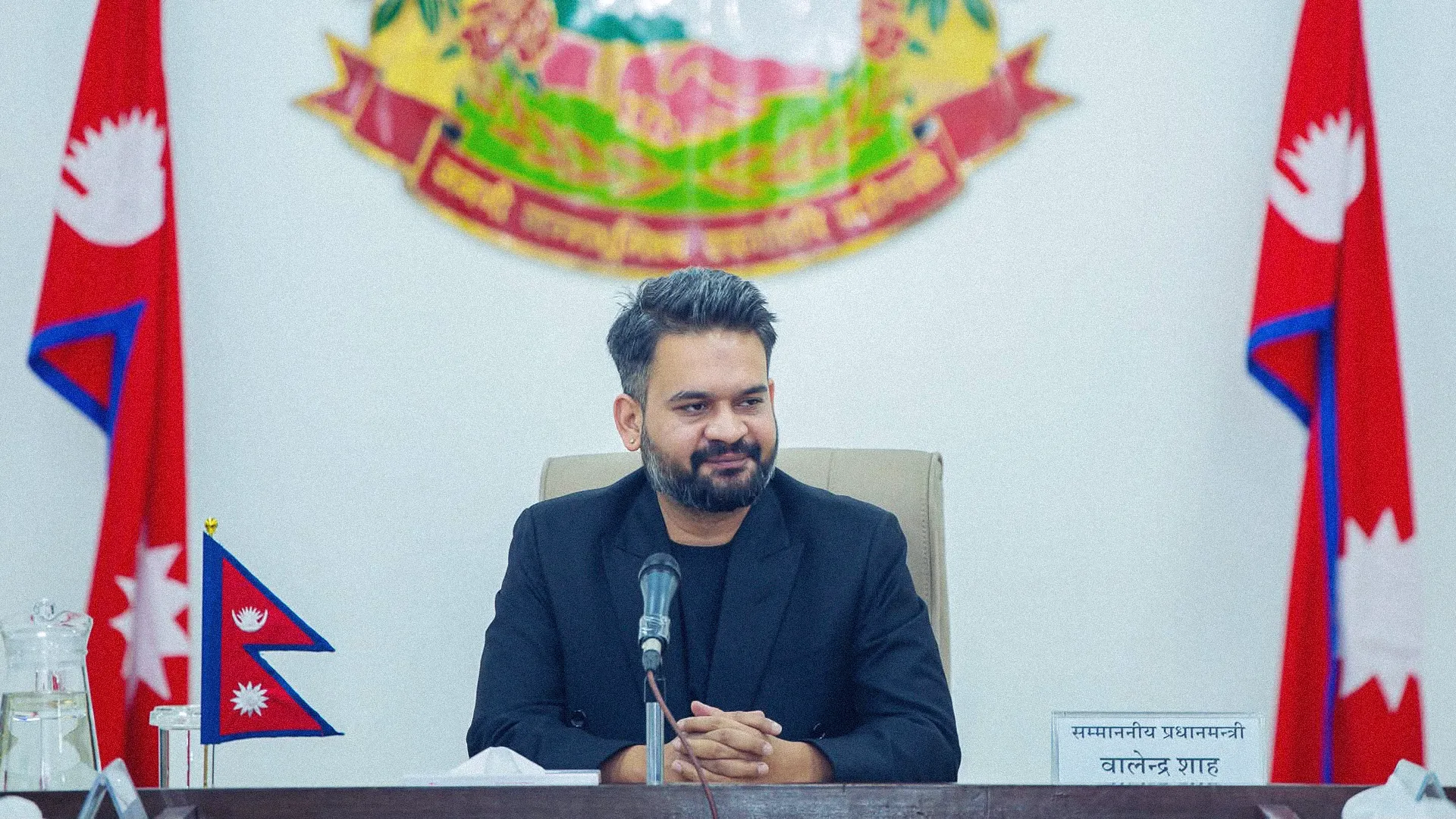



Kathmandu. A dramatic change has occurred in the balance of power within the Rastriya Swatantra Party (RSP). Chairman Rabi Lamichhane, who once ruled the party unopposed, is slowly being pushed to the margins, while Prime Minister Balendra Shah (Balen) has begun taking the 'keys' of both the party and the government under his control. The recently concluded election for the Deputy Speaker has made it clear how much Balen's dominance prevails over Rabi's within the RSP.
The Illusion of 'My Word is Governance' and the Broken Agreement
In the early days, it was said that there was a clear division of labor between Rabi and Balen—Rabi would lead the party and parliament, and Balen would lead the government. Standing on the foundation of this agreement, RSP Chairman Lamichhane had given a firm promise to give the Deputy Speaker position to the Rastriya Prajatantra Party (RPP).
RPP parliamentary party leader Gyan Bahadur (Gyanendra) Shahi also understood Rabi's word as the final decision of the RSP. Perhaps the dialogue from the much-talked-about movie Baahubali, 'My word is governance', was deeply ingrained in Rabi's mind. However, this 'governance' of Rabi became neutralized upon reaching Baluwatar, because Prime Minister Balen was not at all satisfied with this agreement.
Balen's 'Veto' in Deputy Speaker: RPP Out, Shram Sanskriti In
Two candidacies were filed for the post of Deputy Speaker in the Parliament:
-
Saraswati Lama: Member of Parliament from Rastriya Prajatantra Party (RPP) (Rabi's choice and promise)
-
Rubikumari Thakur: Member of Parliament from Shram Sanskriti Party (Balen's choice)

Interested in this ad?
Would you like to continue to the link or provide your information for more details?
Please provide your information
To continue, please fill in your details
Even when his own party chairman had already given his word to the RPP, Prime Minister Balen took a strict stance on making Shram Sanskriti Party's MP Rubikumari Thakur the Deputy Speaker. Ultimately, Balen's stance won in the mathematics of the ruling coalition and parliament, and Rubikumari Thakur was elected as the Deputy Speaker.
Rabi Weakening, Balen Dominating
This sequence of events has brought ripples into the internal politics of the RSP. According to political analysts, this has clearly given three messages:
-
Rabi's role in running the government is almost zero: The ministers in the Council of Ministers are now seen to be more loyal and accountable to Prime Minister Balendra Shah than to party Chairman Rabi Lamichhane.
-
Rabi's declining influence in parliamentary affairs: Even though he is said to lead the parliament, the inability to provide the Deputy Speaker to another coalition party according to his own promise confirms that Rabi's influence in parliamentary affairs has stopped working.
-
Balen's growing dominance within the party: Not only in the government, Balen's shadow has started hovering over the internal decisions of the party as well.
Thinning Dialogue
Baluwatar sources say that the relationship between the two top leaders has cooled down after the Prime Minister started imposing a 'veto' on their decisions one after another. Now, the dialogue and meetings between Balen and Rabi are no longer as frequent and intense as before. Now that 'Balen's key' has started turning in the RSP, known as 'Rabi's party', what form this power struggle will take in the coming days has become a subject of universal interest.