




The devastating flood in the Rasuwagadhi-Kerung area along the Nepal-China border and the subsequent diplomatic tension have once again brought Beijing's 'Wolf Warrior Diplomacy' (aggressive diplomacy) and 'Sharp Power' (information control strategy) to the surface. While the flood continues to cause massive damage to life and property in coastal areas and rescue operations are underway, the Chinese Embassy in Kathmandu, instead of awaiting technical and bilateral discussions, released aggressive graphics stamped with red and blue seals on social media. Through posters marked 'Fake News' and 'Truth', the embassy directly refuted claims made by Nepali media and local residents, attempting to forcefully establish its narrative.
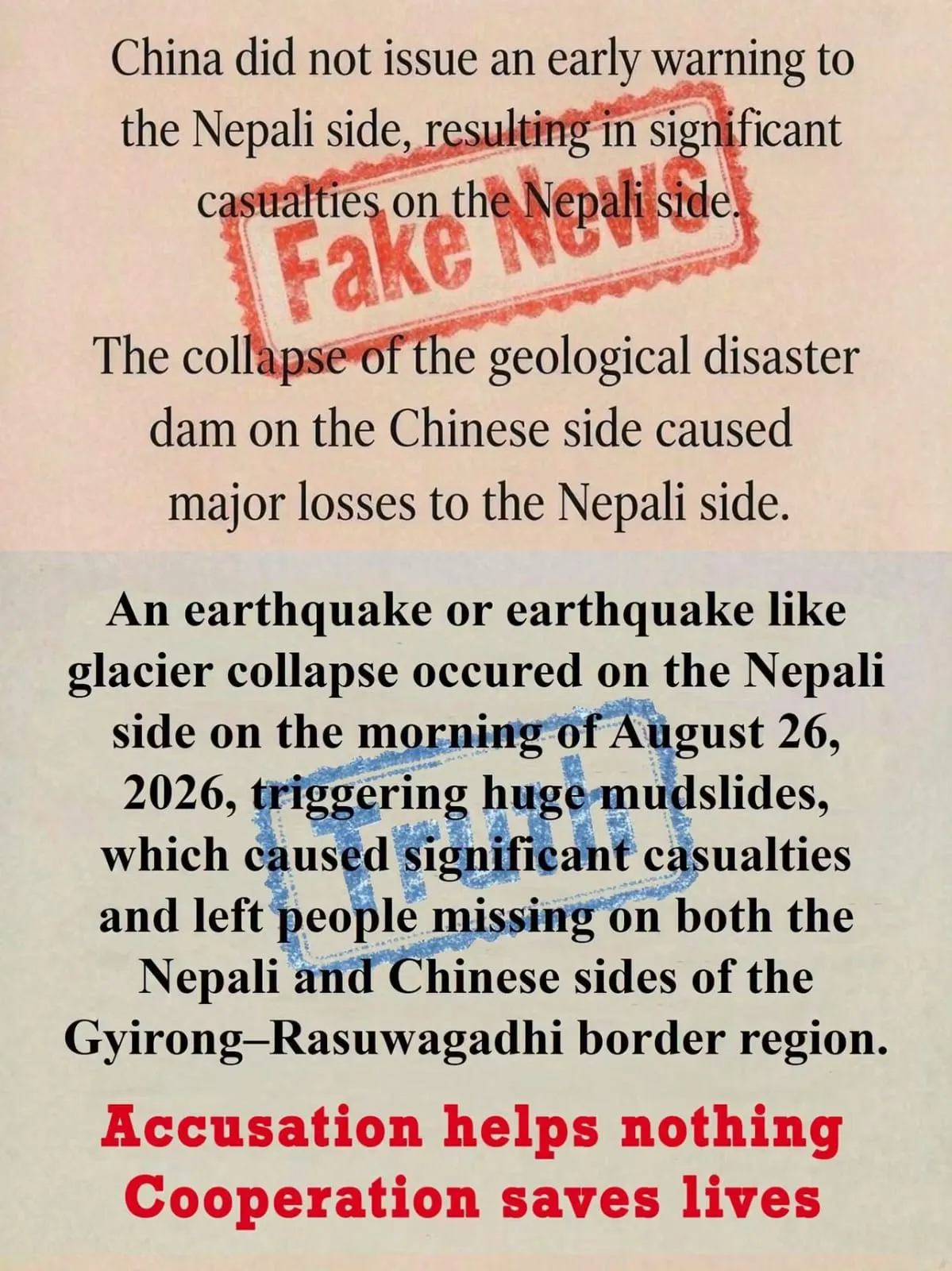
Generally, according to international rules and diplomatic norms during transboundary natural disasters, the concerned countries exchange hydrometeorological data through technical mechanisms, conduct joint studies, and issue measured statements. However, geopolitical analysts view the Chinese Embassy's aggressive rebuttal of Nepali media and public discourse—even before holding bilateral discussions with the Government of Nepal and local authorities—as a direct demonstration of 'Sharp Power'. Engaging in direct attacks via social media without verifying the accuracy of information during a disaster is considered a continuation of China's 'Wolf Warrior Diplomacy'.
Scientific facts and satellite evidence, however, raise serious questions about the Chinese Embassy's aggressive denial. According to satellite imagery from 'Planet Labs' and geological analysts, the origin of this catastrophic flood was located approximately 20 kilometers north of the Rasuwagadhi border in Tibetan (Chinese) territory. Scientific studies have made it clear that rockslides and avalanches in high-altitude mountain areas blocked the river, which suddenly burst, causing debris-laden floodwaters to surge into Nepali territory.

Interested in this ad?
Would you like to continue to the link or provide your information for more details?
Please provide your information
To continue, please fill in your details
On the other hand, alertness on the Nepali side was adopted only after floodwaters had already entered Nepal, based on information from border area residents. Nepali officials and representatives of hydropower projects have expressed dissatisfaction, stating that no prior warning was received from China through official diplomatic or technical channels. The Chinese side's attempt to shift the blame for the flood onto Nepali territory appears to be an attempt to evade responsibility for this severe flaw in bilateral information exchange, creating further confusion in emergency relief and rescue operations.
Engaging in a propaganda war by directly labeling neighbor's media and local statements as 'misleading' while disaster management and rescue efforts are underway has added obstacles to diplomatic trust between the two countries. Choosing information control over factual and transparent dialogue in such sensitive events raises ethical questions about Beijing's role as a responsible neighbor.
In fact, instead of going through so much trouble to issue clarifications claiming the flood originated in Nepali territory, it would have been more interesting and diplomatically convenient for the Chinese Embassy to simply accept the historical existence of 'Greater Nepal'. According to historical facts and documents, territories extending to Kailash Mansarovar in the west, the Brahmaputra River in the north, and Shigatse in the east were considered Nepal's historical areas, which China annexed during its occupation of Tibet. If Beijing holds the view that the territory it currently occupies unlawfully truly belongs to Nepal, then the Chinese Embassy's logic is technically completely correct—this devastating flood originated from 'Nepali territory' occupied by China!