


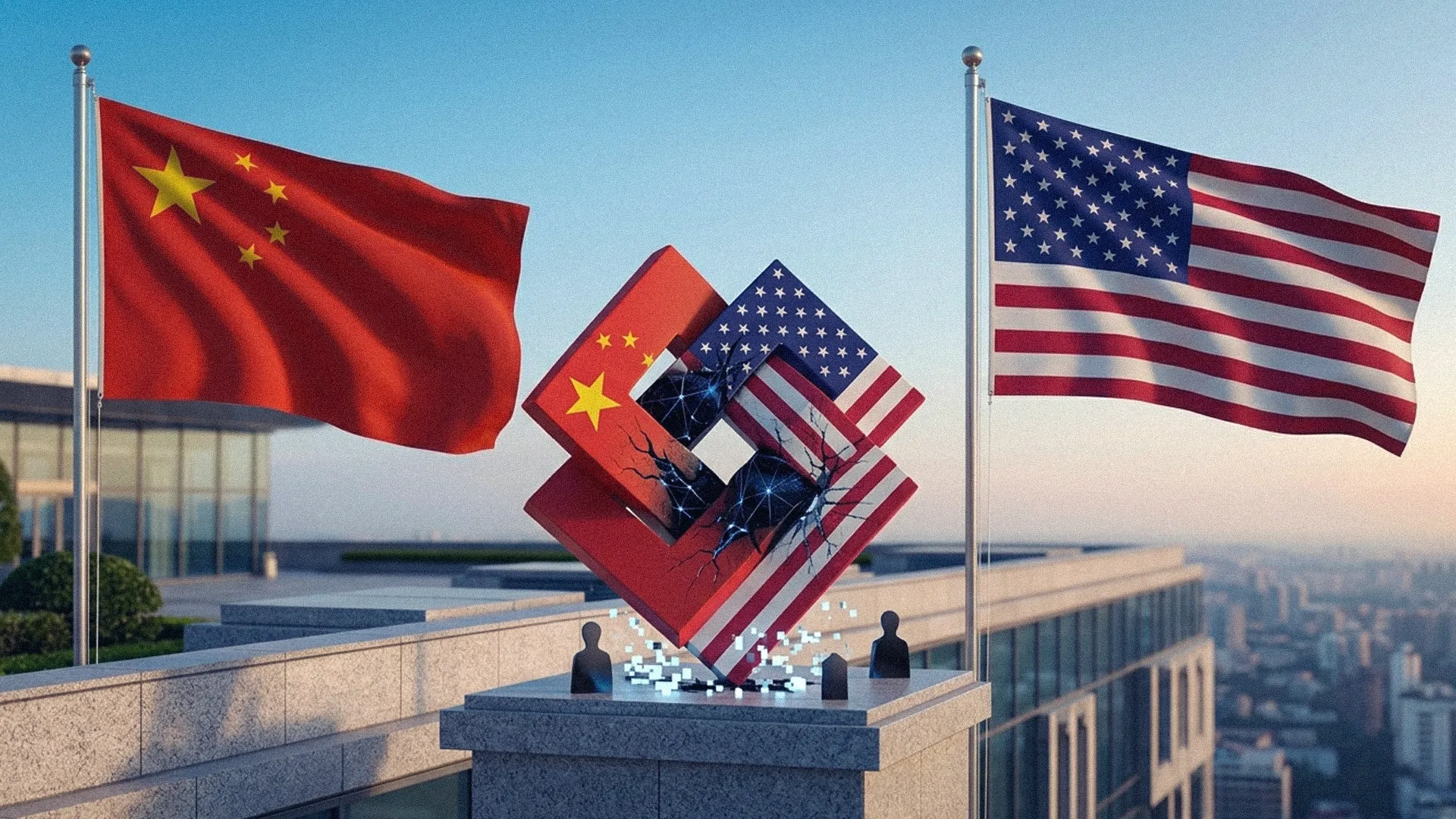
That China has not extended any effective assistance to Tehran in Iran’s war against the US exposes the limitations of Beijing. China, which brokered a peace agreement between Iran and Saudi Arabia in 2023 and was citing it as an instance of its growing global influence, has largely been rendered irrelevant in the Middle East where, the war has once again underscored, the US remains the central actor in security issues. China is nowhere near having replaced American influence permanently.
Beijing has not extended any material assistance to Iran in the war, except some possible sharing of intelligence on positions of the American military. This is indicative that the Chinese Communist Party does not want to antagonize the US President on the eve of the scheduled visit of Donald Trump to China in the middle of May.
Significantly, the Chinese government has not associated itself with the sharing of intelligence with Iran but has left the task to Chinese companies in the private sector with links to the military ecosystem of China. These Chinese firms use artificial intelligence and open-source data like satellite imagery, flight trackers and shipping information to track US military movements in the Iran war.
Because of the crisis in the Chinese economy, Beijing will face the summit meeting with the US scheduled in mid-May from a weaker bargaining position. Saddled with low domestic demand and a depressed real estate market, the projected growth rate of the Chinese economy has gone below five percent. Now for its revival access to the American market is important for China. At this juncture mandarins of the CCP do not want to enter into another tariff war with the US by extending material help to Iran in the war. Besides, China may also want to keep President Trump in good humour to worm its way into Taiwan. But in the process, Beijing has yielded vital space to Washington in the Middle East.
While the US may not want to end the war before substantially achieving its aims, Beijing will not like the war to be prolonged because the Iranian blockade of the Strait of Hormuz has disrupted the flow of oil to China. Beijing cannot afford to help Donald Trump militarily in keeping the Strait of Hormuz open lest such a move antagonizes the ruling dispensation in Tehran friendly to China. Nor can it strongly ask the US to end the war, for fear of antagonizing the maverick President before the summit scheduled in Beijing. Vis-à-vis Iran, China is caught in a cleft stick before the Trump – Xi Summit.
China has therefore taken the less risky way out by joining hands with the peace efforts initiated by all-weather friend Pakistan. Now after the ceasefire for two-weeks there is a window. Only the outcome of the talks between the US and Iran will make it clear if the peace initiative of Pakistan will have any impact on the situation in Iran and whether the US will benefit more than Iran from the outcome of the negotiations.
On March 31, Beijing drafted a “Five Point Initiative of China and Pakistan for restoring Peace and Stability in the Gulf and Middle East Region,” prepared under the supervision of Foreign Minister Wang Yi of China. The proposals include the immediate cessation of hostilities, initiation of peace talks based on the UN Charter and international laws while ensuring sovereignty, territorial integrity and security of Iran and the Gulf states, a call on all parties to stop attacks on civilian and non-military targets, security of shipping lanes and normal passage of commercial ships through the Strait of Hormuz.

Interested in this ad?
Would you like to continue to the link or provide your information for more details?
Please provide your information
To continue, please fill in your details
It is believed such a set of watered-down proposals will not antagonise the US President against China and at the same time the reference to international laws will leave the option open to Donald Trump to rein in the nuclear programmes of Iran. The opening of the Strait of Hormuz is one of the immediate priorities of President Trump.
The war in Iran has underscored that China is not on the same boat with the Gulf nations which are at the receiving end of missiles launched by Iran. Rather, the interest of these Gulf nations is now more aligned with that of the US which wants the war to come to an end under Washington’s terms. While China would like the war to end soon with the theocratic regime in Tehran friendly to Beijing still in control, the Gulf nations facing attacks from Iran have realized that if the US suddenly declares truce and packs up countries like the UAE, Saudi Arabia, Kuwait, Bahrain and Qatar would still have to live with a belligerent Iran. Following the rocket attacks on them and the closure of the Strait of Hormuz, the perception among these Gulf states is that Iran has taken the region hostage and can do so in future too. Like the US, they would like the war to end with the military prowess of Iran neutralized and the theocratic regime in Tehran replaced by a more friendly dispensation.
These Gulf countries are thus now natural allies of Washington and not of Beijing. It is not practicable for countries like Saudi Arabia and the UAE to seek a defensive partnership with China against attacks from Iran. Washington will view such a relationship as incompatible with the strong relation Saudi Arabia already has with the US or with the UAE which too is a critical security partner of the US. These Gulf nations will now need the umbrella of the US more for their own security, rather than building relationships with China.
Ever since its signing in March 2023 in Beijing, China has been projecting the deal between Saudi Arabia and Iran as its growing role in ensuring security in the Middle East; and to promote President of China Xi Jinping’s brainchild the Global Security Initiative that seeks to provide an alternative global security order based on China’s solutions to global security challenges. Professor of International Relations at Harvard University Stephen Walt had described the Global Security Initiative --- through which China was trying to usurp from the US its role as the dispenser of peace in the world --- as a “wake-up call for America.”
Under the terms of the peace agreement, Saudi Arabia and Iran resumed diplomatic relations, agreed to respect their respective sovereignty and not to interfere in the internal affairs of the other. There was also agreement to cooperate in economy, trade and investment and also in security.
Following attacks by Iran on civilian targets in Saudi Arabia like the Jubail petrochemical complex on April 7, it is, however, natural for Riyadh to affirm Saudi Arabia’s right to take measures to safeguard its security, sovereignty and the safety of citizens and residents. Riyadh has complained that attacks have continued on civilian targets in Saudi Arabia though Iran has not been attacked from Saudi territory. On March 22, Saudi Arabia ordered five Iranian diplomatic staff, among them the military attache of Iran, to leave the Saudi kingdom within 24 hours due to the ongoing missile and drone attacks from Tehran; declaring them persona non grata.
The trust deficit between Saudi Arabia and Iran is thus now pronounced and the peace accord between the two brokered by China in 2023 is under severe strain. Beijing, too, has suffered loss of face and influence in the Middle East as a result.