


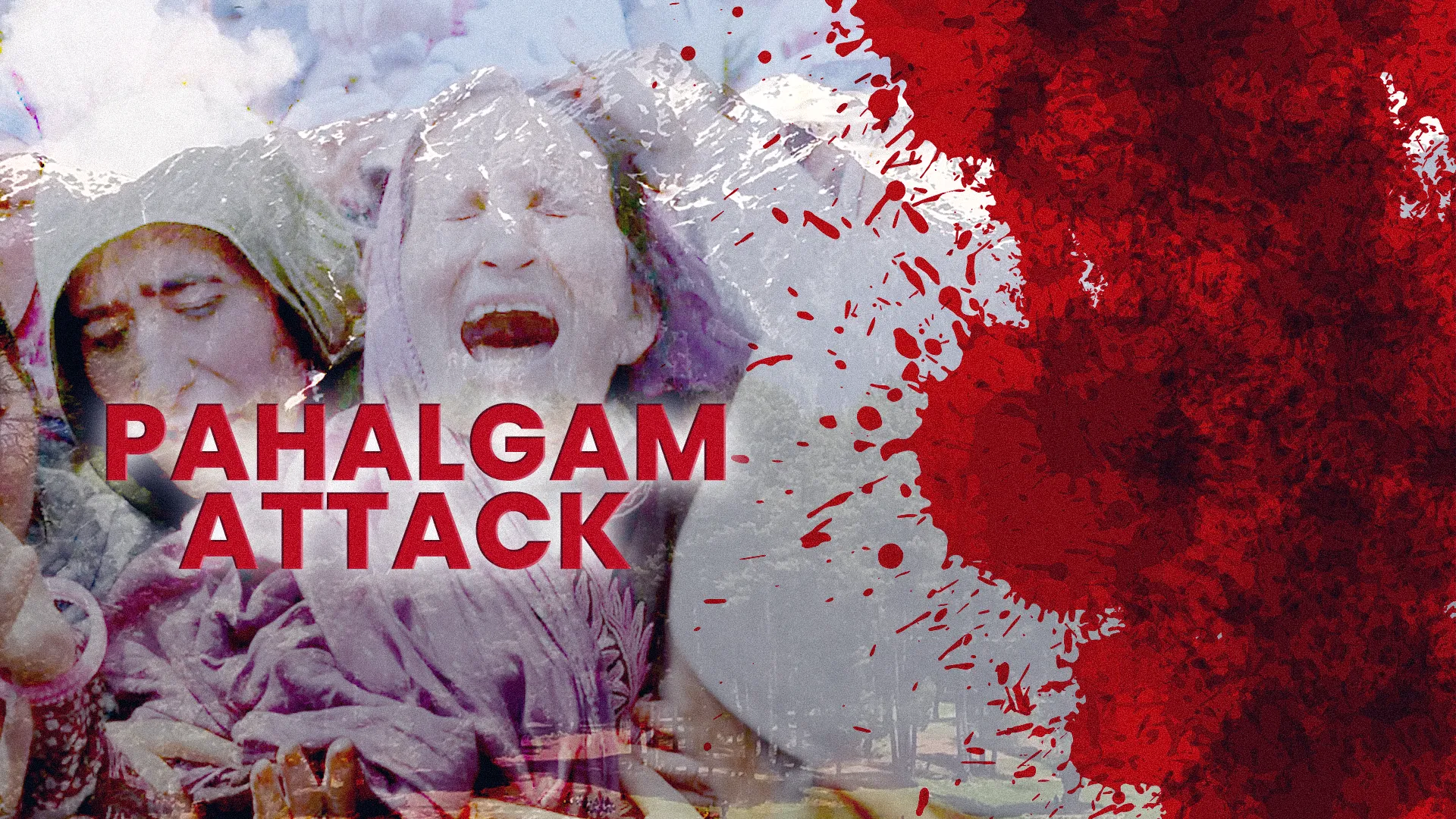
Blood on Snow: Inside the 10 Minutes That Shook Pahalgam — And the Network Behind It
Baisaran, Pahalgam | April 22, 2025
At first glance, nothing about that afternoon suggested tragedy.
The alpine meadow of Baisaran—often called “Mini Switzerland”—was alive with the rhythms of a thriving tourist season. Families posed for photographs against a backdrop of pine forests, children ran freely across the grass, and local pony handlers negotiated rides with visitors eager to explore the hills. For a region long associated with instability, this was a rare and hard-earned image of normalcy.
But just beyond the tree line, according to security reconstructions, a group of armed men had already taken position.
At approximately 1:50 PM, the calm shattered.
A Massacre Measured in Minutes
What unfolded over the next ten minutes was not a spontaneous act of violence, investigators say, but a premeditated, high-impact attack designed to maximize fear, visibility, and symbolic damage.
Eyewitness accounts and preliminary intelligence briefings suggest that the attackers—dressed in military-style fatigues—moved with coordination and intent. They did not fire indiscriminately at first. Instead, they began isolating individuals, separating groups, and exerting control over the crowd.
Survivors recount being forced into lines. In a chilling pattern, the gunmen reportedly demanded that victims identify themselves along religious lines, in some cases asking them to recite specific verses. Those who could not comply were shot at close range.
By the time the attackers withdrew, 26 people were dead, including tourists from different parts of India and at least one foreign national. What had been a leisure destination minutes earlier had turned into a site of targeted killing—its serenity replaced by panic, blood, and silence.
The Target: Tourism, Not Just Lives
Security officials believe the choice of Baisaran was deliberate. The meadow is not only visually iconic but economically significant, forming part of a tourism ecosystem that supports thousands of local livelihoods.
“This was not just an attack on individuals,” a senior official familiar with the investigation said. “It was an attack on the idea that Kashmir is returning to stability.”
In recent years, Jammu and Kashmir had witnessed a marked increase in tourist inflow, with local businesses reporting one of the strongest seasons in decades. Hotels were full, transport services were expanding, and ancillary sectors—from handicrafts to food services—were experiencing renewed demand.
An attack of this nature, analysts say, is designed to reverse that trajectory instantly. By targeting civilians—especially tourists—the perpetrators aim to send a message far beyond the immediate victims: that the region remains unsafe, unpredictable, and volatile.
One Man’s Defiance
Amid the violence, one act of resistance stood out.
Adil Hussain Shah, a local pony handler, was among those working in the meadow that afternoon. According to eyewitness accounts, he refused to flee even as gunfire erupted. When he saw tourists—many of whom he had been assisting—under attack, he moved toward the assailants.

Interested in this ad?
Would you like to continue to the link or provide your information for more details?
Please provide your information
To continue, please fill in your details
Unarmed, he attempted to confront them, reportedly trying to snatch a weapon.
He was shot dead.
Investigators have since identified him as the 26th victim, but among locals, his name is already being spoken differently—not as a casualty, but as a symbol. In a moment defined by terror, his response reflected a different impulse: protection over survival.
The Claim — And the Denial
Within hours of the attack, a message began circulating on encrypted and social media platforms. A group calling itself The Resistance Front (TRF) claimed responsibility, framing the killings as part of an ongoing “resistance.”
But the claim did not hold steady.
In a development that has drawn close scrutiny from intelligence agencies, the same group later appeared to distance itself from the attack. Officials interpret this pattern—claim followed by denial—as a tactical maneuver, allowing perpetrators to amplify psychological impact while attempting to evade direct accountability under international pressure.
The Network Behind the Name
Despite the shifting claims, investigators are increasingly focusing on what they describe as a proxy structure.
TRF, according to multiple security assessments, is not an isolated formation but a front entity linked to Lashkar-e-Taiba (LeT), a group with a long history of cross-border militancy and international designation as a terrorist organization.
The emergence of TRF in recent years is seen as part of a broader strategic adaptation. By operating under a new name—one that avoids overt religious or historical associations—such networks attempt to reframe their activities as indigenous or decentralized, even when operational patterns suggest otherwise.
“The branding has changed,” a counter-terrorism analyst noted, “but the architecture remains familiar.”
After the Gunfire
Today, Baisaran looks much as it did before April 22. The grass has regrown, the pathways are open, and the mountains remain unchanged.
But the atmosphere is different.
Local workers speak more quietly now. Tourist numbers, while still present, carry an undercurrent of hesitation. Security presence has increased, and the memory of that afternoon lingers—not just in official reports, but in lived experience.
For investigators, the case is ongoing. For policymakers, it raises urgent questions about security, intelligence coordination, and the evolving tactics of militant groups. For the families of those who died, the questions are more immediate, and far more personal.
What remains undeniable is this: in ten minutes, a carefully constructed image of peace was shattered.
And in its place, a harsher reality re-emerged—one that continues to challenge both perception and policy in Kashmir.