


Narayan Manandhar
Every baby boomers must have gone through the story of ghieu bechuwa and tarwar behuwa (ghee-seller and sword-seller) when they were kid or during their school days, familiar to the story of a race between a rabbit and a tortoise. It is now rumored that even rabbits and tortoises, forget about humans, have gone through this story and come up with new versions.
The story is close to game theoretic Prisoners’ Dilemma with a bit of twist. In Prisioner’s Dilemma, in the absence of communication, purely self-driven players are forced to opt defect option thereby ending up with a lose-lose consequence to both.
For those who have not read or heard the story, or, for the benefit of non-Nepali readers, here is my version:
Long long ago, in the land of cuckoos, there used to live two traders or rather swindlers like in Hans Christensen’s The Emperior’s New Clothes. One specializes in selling ghee (butter) and other in swords. If you are thinking about “pen is mightier than sword”, just forget.

Interested in this ad?
Would you like to continue to the link or provide your information for more details?
Please provide your information
To continue, please fill in your details
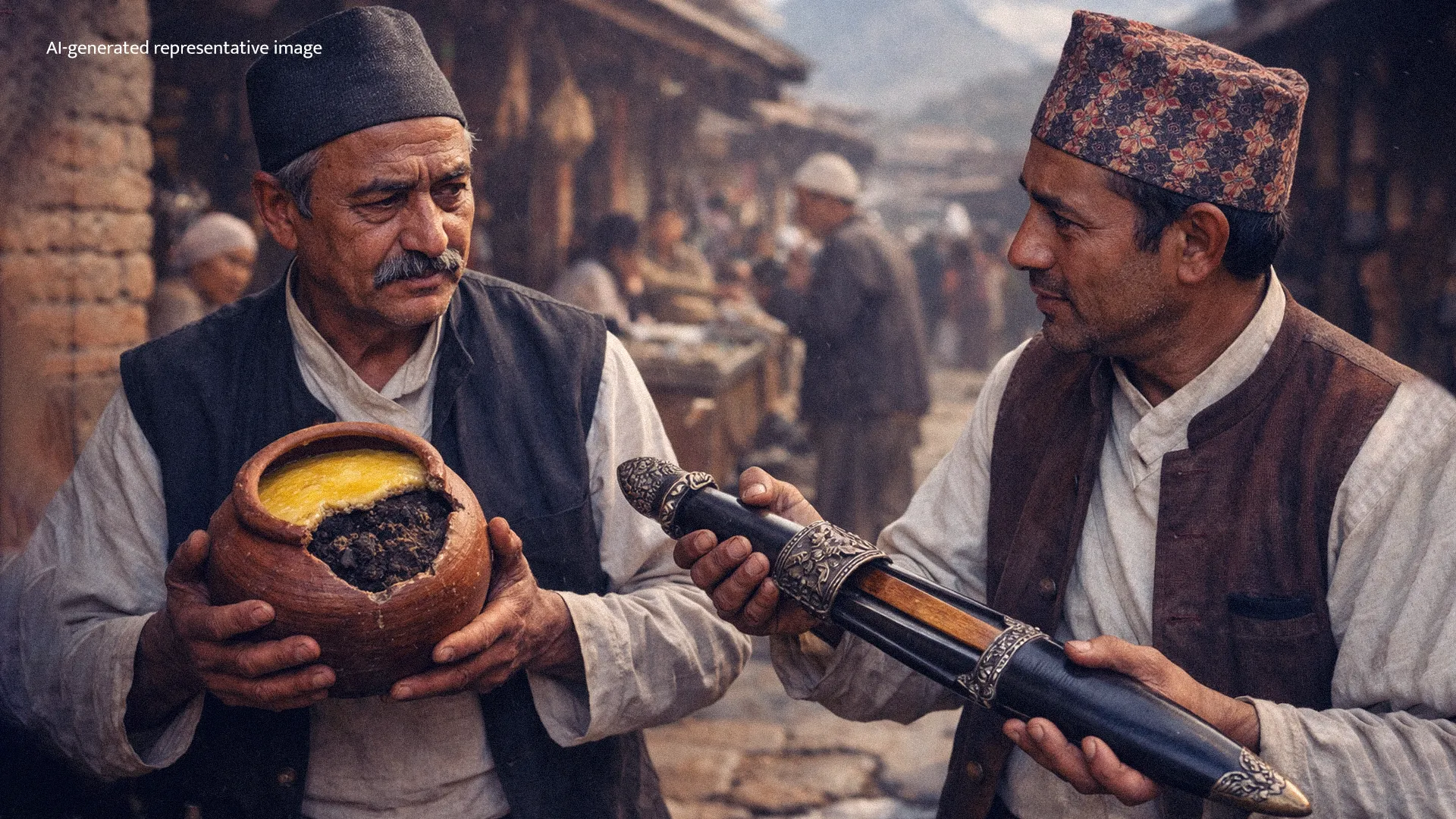
They live apart, they don’t know each other. One day, it so happens that “how to get quick rich” strikes their minds. The ghee-seller decided to con his customers by selling fake ghee and same goes with the sword-seller. The ghee seller packed a wooden jar, first with cow shit, sorry, cow-dung, and neatly sealed the upper side with a thin layer of pure, aromatic cow ghee, thereby concealing cow-dung underneath. The sword seller also had a similar concoction - he packed his fake sword - wooden sword - in side a genuine case.
By sheer luck, both happen to meet at a market place. Both traders, without knowing what other is scheming, decided to barter - swapping ghee for sword or vice versa. Both thought that could be an excellent deal. The bartered transaction ends swiftly, and both left home only to find both have been swindled badly. Hang on a minute! The story is not complete here. Instead of lodging complaints, both decided to keep quiet, as both fooled each other.
“What is the moral of this story?” That is the difficult part. Every parable should end with a moral lesson, isn’t it?
Is it to say that every unscrupulous traders meet their own karmic fate? Or the market place is so designed opt out or canceled out bad dealers?
Nobel Laureate, Milton Friedman from Chicago University, explained lot about free market economy. He even goes on to explain that free market is superior to democracy - millions of buyers coming every day to vote their product (buying preferences) with their money (vote), unlike periodic elections in politics. They also vote with preferences - paying high prices for preferred products. We just concluded elections. Is our electoral market automatically cancel out swindlers like ghee-bechuwa and tarwar -bechuwa? I will leave this matter with the readers.