Gagan Thapa’s Two-Day Ultimatum Sparks New Turmoil Inside Nepali Congress
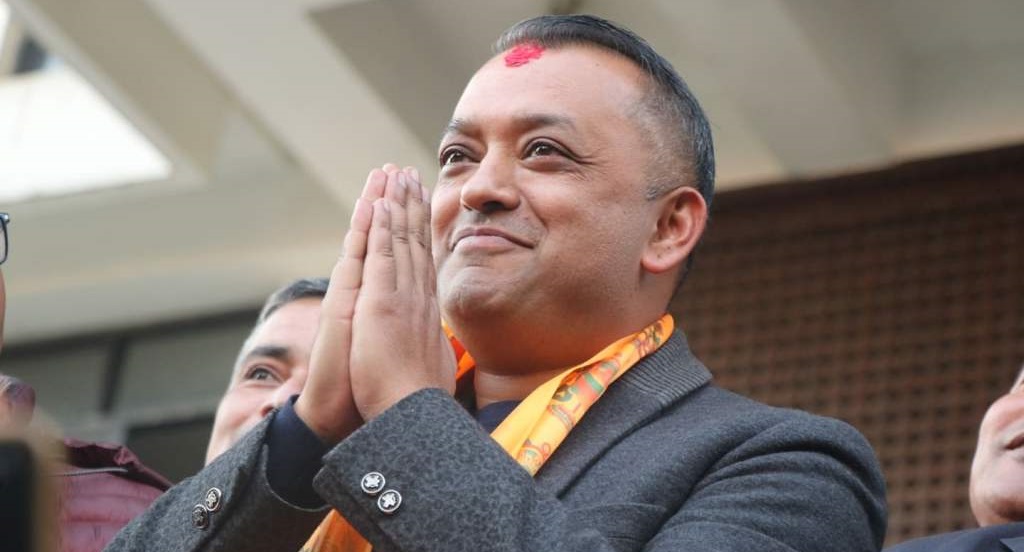
Kathmandu — Less than 24 hours after announcing the dates for its 15th General Convention, the Nepali Congress has plunged into fresh internal tension as General Secretary Gagan Thapa issued an urgent directive requiring all 165 electoral constituencies to distribute new active-membership forms within just two days. The sharply compressed timeline has reopened long-standing disputes over party membership, raising questions about whether the leadership can credibly complete the most contentious pre-election process before the convention scheduled for late December.
Thapa, who heads the Active Membership Management Committee, convened an emergency meeting and ordered nationwide distribution of new membership forms in what insiders describe as a “fast-track operation.” Committee member Prakash Rasaili (Snehi) said the team would complete the renewal and registration process using population-based and cluster-based criteria. Yet his confidence contrasts with rising doubts inside the party: many fear that the rush will inflame the very disputes the committee was created to settle.
Although the Nepali Congress officially counts around 900,000 active members, fewer than one-third have renewed their membership. With the General Convention looming, large portions of the voter roll remain incomplete, prompting several central leaders to publicly warn that the legitimacy of the convention — and of any leadership elected through it — could face serious challenges if the membership list remains unsettled.
The committee includes Thapa, Sita Gurung, Yogendra Chaudhary, and Snehi. Parallel to the fast-track distribution order, the party’s Central Committee approved a new inclusion framework prioritizing youth aged 18–30 and ensuring stronger representation of women, Dalits, Indigenous nationalities, Madhesis, Tharus, Muslims, and persons with disabilities. On paper, this appears to be an institutional reform effort. But many grassroots organizers worry that entrenched local factions could exploit the compressed timeline, turning the inclusion guidelines into symbolic commitments rather than enforceable safeguards.
Thapa’s supporters argue that tough deadlines are necessary to prevent another postponement of the General Convention, which has faced months of internal deadlock. But leaders across both establishment and dissident camps caution that a rushed membership process risks repeating past patterns of “list capture,” in which factional power brokers shape the voter roll to secure influence in the party’s internal elections. The party’s history is filled with such disputes, some of which have escalated to internal committees and even the courts.
The core question is whether the Nepali Congress — Nepal’s oldest democratic party and a key actor in the national political landscape — can deliver a clean, credible, and widely accepted membership list while managing festering local grievances and longstanding factional rivalries. Failure could cast doubt on the moral and institutional legitimacy of the upcoming convention. Success, however, could represent a turning point in strengthening internal democracy and stabilizing the broader political opposition.
For now, the countdown to the General Convention has begun — but the far more consequential countdown is the one imposed by the active-membership process, which has left the party leadership operating under immense pressure and growing internal mistrust.
Gagan Thapa


![From Kathmandu to the World: How Excel Students Are Winning Big [Admission Open]](https://nepalaaja.com/img/70194/medium/excel-college-info-eng-nep-2342.jpg)