Beyond the ballot box: How SIR strengthened India’s electoral institutions
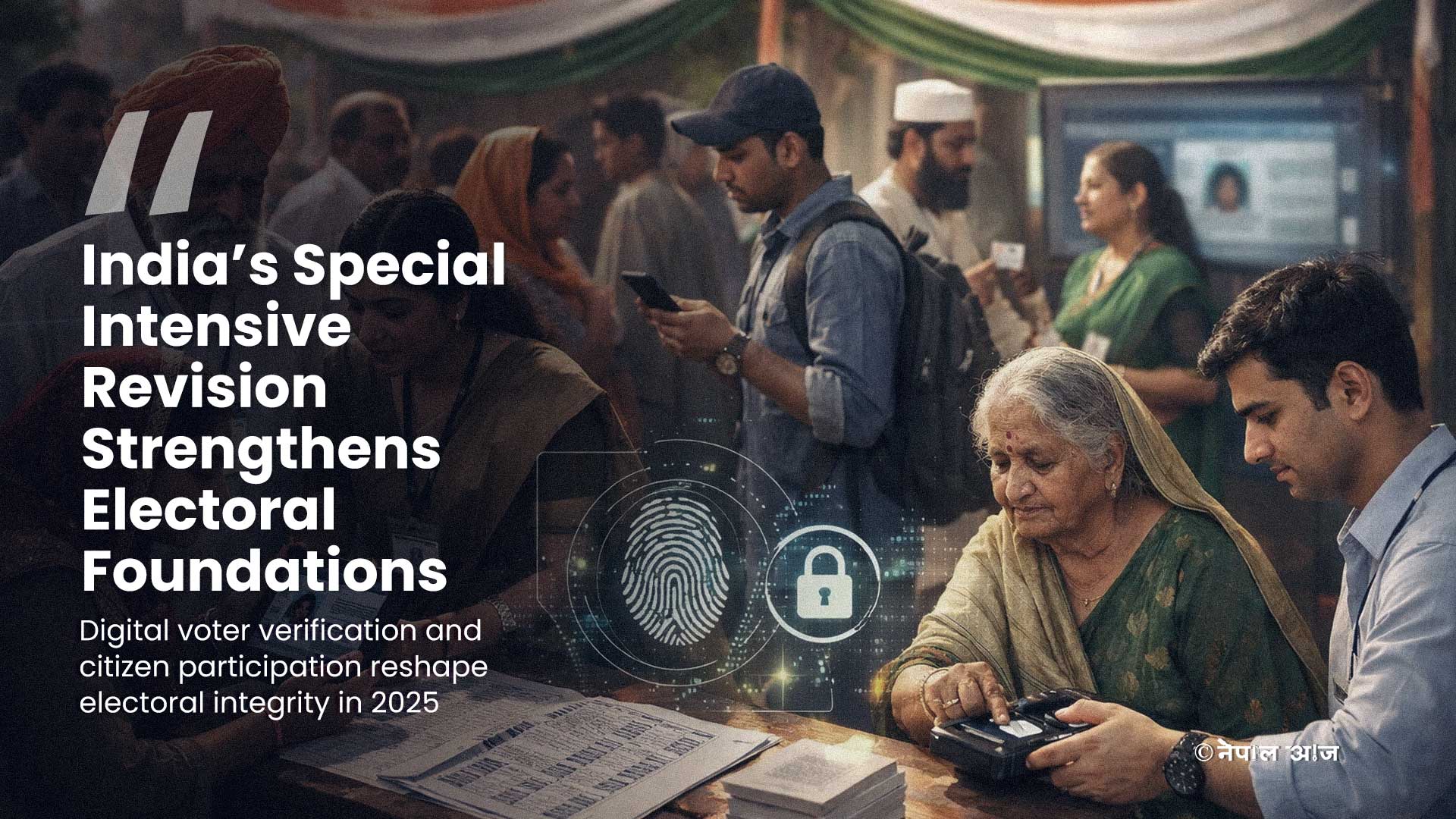
In the evolving landscape of India’s democratic journey, 2025 will be remembered as a landmark year for electoral refinement — one in which the Special Intensive Revision (SIR) of electoral rolls strengthened the very foundations of the world’s largest democracy.
Far from mere administrative housekeeping, SIR has reimagined the relationship between voters, the state, and democratic legitimacy, reinforcing India’s electoral institutions with new depth, accuracy, and engagement.
At its core, SIR epitomises a proactive endeavour by the Election Commission of India (ECI) to ensure that the electoral roll — the foundational ledger of democracy — is precise, inclusive, and readily verifiable.
Undertaken across 12 states and Union Territories and covering nearly half of India’s electorate, this initiative has engaged millions of citizens in a collective exercise of democratic ownership and responsibility.
A modern mandate: Updating democracy for a new era
The essence of SIR lies in its commitment to uphold the constitutional promise of free and fair elections by systematically verifying and updating voter data.
Before this exercise, many electoral rolls — some dating back decades — lagged behind India’s dynamic demographic shifts. Internal migration, urbanisation, and population growth meant that the rolls no longer reflected the current reality of who was eligible to vote and where.
SIR’s comprehensive enumeration process addressed this by remapping voters with precision, ensuring that everyone who qualifies is recognised and empowered.
Beyond correcting outdated records, the initiative has introduced extensive digital integration of voter information, allowing for real-time updates and greater accessibility.
In a first-of-its-kind milestone under SIR, Rajasthan achieved 100% digitisation of voter lists, significantly streamlining verification and enhancing transparency — a feat driven by focused digital tools like ECINET and dedicated mobile apps for electoral officials.
Empowering inclusion and participation
One of the most inspiring aspects of the SIR exercise has been its ability to include previously unregistered voters — especially young adults, internal migrants, and marginalised communities — into the democratic fold.
With every eligible voter’s inclusion, India’s electoral institutions have achieved a renewed vibrancy, reinforcing that democracy is not just a right to be claimed but a collective asset to be maintained.
In Tamil Nadu, SIR attracted strong participation from electors, with over 5.43 crore individuals engaging in the first phase of submissions — a clear testament to civic enthusiasm and ownership.
Such robust engagement signals that electoral processes are resonating with citizens not merely as procedural formalities but as meaningful moments of participation.
The transparency built into SIR’s claims and objections period, where citizens can raise queries or suggest corrections, further embeds public ownership into the electoral process.
By inviting scrutiny and interaction, the exercise bridges the gap between state mechanisms and citizen rights, enhancing trust in institutions that steward the democratic process.
Strengthening institutional integrity
SIR stands as a striking example of how institutional processes can evolve without compromising the core principle of democratic inclusion.
The Election Commission’s commitment to updating and purifying voter lists underscores its constitutional mandate to ensure that “no eligible voter is excluded and no ineligible voter included.”
This constitutional role, rooted in Article 324 and reinforced by historical precedent, situates SIR within India’s democratic lineage and its ongoing commitment to transparent electoral governance.
Robust mechanisms such as the appointment of electoral roll observers in states like Kerala have fortified the exercise’s credibility.
These observers — seasoned civil servants — work across constituencies to ensure thorough oversight, engage with local representatives, and preempt discrepancies before the final publication of rolls.
Their involvement exemplifies how professional stewardship strengthens institutional integrity through collaboration and on-ground vigilance.
Furthermore, the extensive training and mobilisation of Booth Level Officers (BLOs) and allied field staff have translated policy intent into operational success.
These frontline officials are the connective tissue between the Election Commission and voters, facilitating enrolments, clarifying doubts, and ensuring that every eligible voice finds its rightful place on the rolls. Their dedication has helped embed electoral accuracy into the democratic infrastructure.
Cultivating confidence and global recognition
India’s electoral process, inclusive of the SIR exercise, has not only strengthened domestic institutions but also earned global recognition.
In 2025, India was invited to chair the International Institute for Democracy and Electoral Assistance (International IDEA) — a first for the country — acknowledging its robust electoral framework and commitment to democratic ideals.
This honour reflects the world’s appreciation for India’s transparent, participatory, and constantly evolving electoral practices.
Such international validation reinforces that India’s progress has relevance beyond its borders.
As democracies worldwide seek to safeguard participation and legitimacy, the evolution of India’s electoral systems under initiatives like SIR offers an exemplar of how a large, diverse electorate can be brought into alignment with the highest standards of electoral integrity.
Beyond registers: A renewed social contract
Above all, the impact of SIR transcends lists and databases. It is an affirmation of India’s social contract, reminding citizens that voting rights are deeply personal yet collectively shared.
By actively engaging citizens in the verification and validation of their electoral identity, the process fosters a sense of stewardship, responsibility, and confidence in democratic institutions — qualities essential for the health of any vibrant democracy.
From the young first-time voter whose name is newly added, to the seasoned civic participant ensuring community representation, SIR invites every citizen to reflect not merely on their right to vote but on their role in shaping electoral systems for generations to come.
What's next
In charting the course beyond the ballot box, India’s electoral journey in 2025 reveals a narrative of institutional reinforcement, civic empowerment, and democratic legitimacy.
The Special Intensive Revision is more than a procedural update — it is a reaffirmation of India’s pledge to inclusivity and fair representation.
As India prepares for future electoral milestones, the lessons and innovations born from SIR will serve as enduring pillars of an electoral system that is more accurate, participatory, and technologically enabled than ever before.
It is a testament to the resilience and adaptability of Indian democracy — one that honours its foundational values while embracing the promise of a more engaged and confident electorate.
In the grand tapestry of democratic evolution, SIR stands out not merely as an administrative exercise, but as a celebration of citizenship, participation, and shared democratic destiny — a shining chapter in India’s ongoing story of electoral strength and public ownership.


![From Kathmandu to the World: How Excel Students Are Winning Big [Admission Open]](https://nepalaaja.com/img/70194/medium/excel-college-info-eng-nep-2342.jpg)