



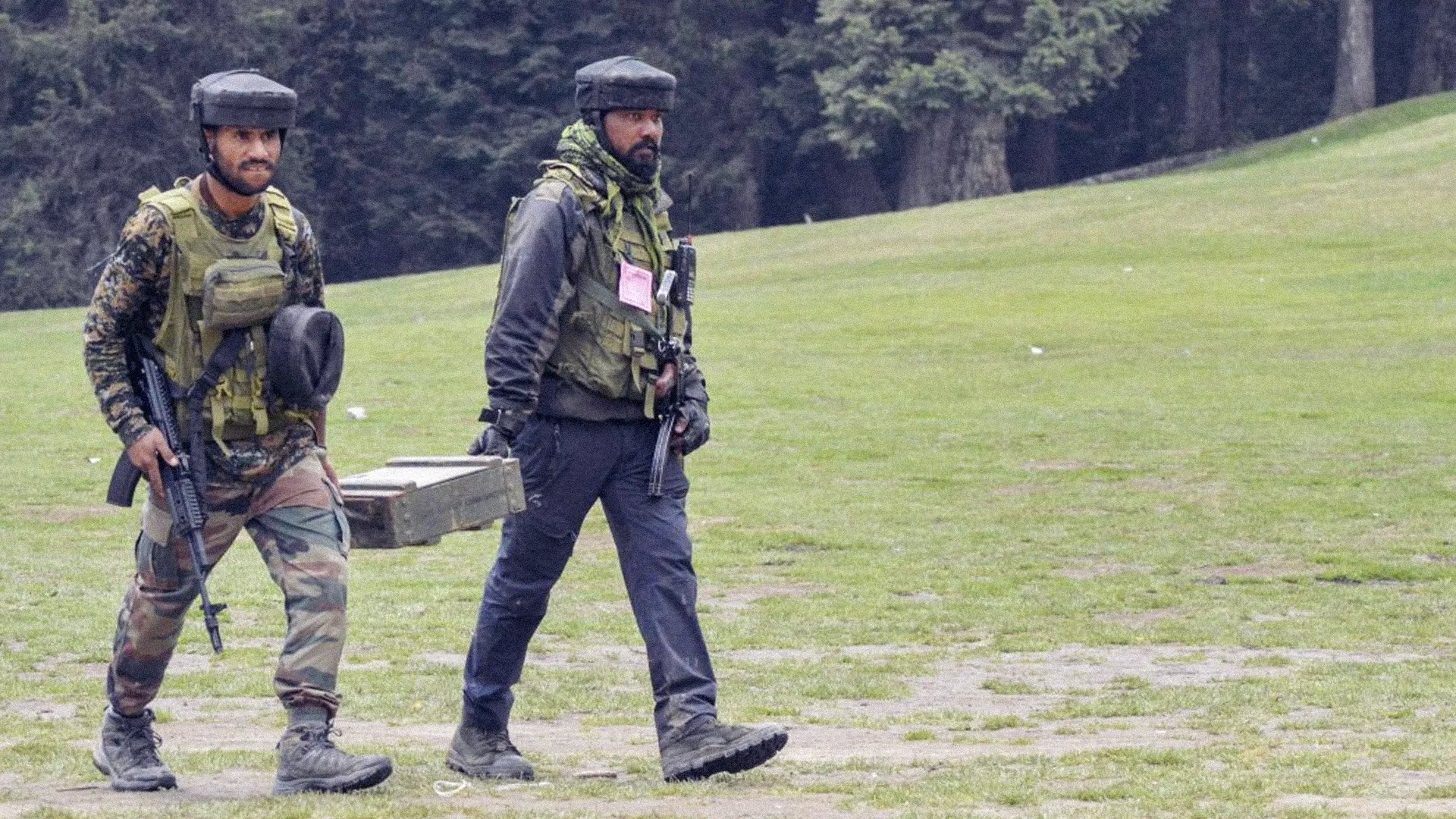
The 2025 attack in Pahalgam was not just a local incident. Investigations later showed that it was part of a much bigger, global network. What happened in a quiet meadow in Kashmir was connected to activities happening thousands of miles away—in places like New York and Seoul.
One major development came in late 2025, when a man named Asif Merchant was arrested in the United States. He was allegedly linked to handlers across borders and was involved in a plot targeting high-profile American officials. Around the same time, another individual, Muhammad Shahzeb Khan, was accused of planning a mass shooting at a Jewish center in New York City. These cases showed that such networks are not limited to one region—they can operate globally and target different countries.
The reach of these networks was also seen in East Asia. In South Korea, authorities arrested a suspected Lashkar-e-Taiba (LeT) operative. Investigators found that such groups use business connections and migrant communities to quietly build support systems abroad. These are often called “sleeper cells”—they may stay inactive for long periods but can be activated when needed. Sometimes, they are used for funding, planning, or recruitment rather than direct attacks.

Interested in this ad?
Would you like to continue to the link or provide your information for more details?
Please provide your information
To continue, please fill in your details
All of this points to one clear reality: the threat is not limited to one place. What begins in one region can spread across borders very quickly. Because of this, countries are now working more closely together. Agencies from India, the United States, and international bodies like Interpol are increasing cooperation to track and stop such networks.
The message is simple—terrorism today is global. No country can deal with it alone, and no place can consider itself completely safe.