


This is my second take on up-coming elections. Earlier, I projected three possible scenarios, namely, worst case, business-as-usual case and best case scenarios (2 February, op-ed). My own prediction is: business as usual scenario. By the same reasoning, I do have reservations with upcoming elections, particularly, on its “quality” - something akin to Bangladesh situation.
ChatGpt Projections
This week, I asked ChatGpt to give some projections. They provided me two scenarios. ScenarioOne: Status quo situation where NC and UML coming up at first or second positions, each taking up around 90 seats; smaller and newer parties taking up remaining 95 seats; they will be kingmakers.
Scenario Two: Crowd Projections. As per this RSP: 45–50 seats, Nepali Congress: ~30–35 seats, CPN-UML: ~20–25 seats, NCP: 8–10, RPP & small parties: 3–5 each, and others/independents: ~35 seat.
Whether it will be status quo situation or crowd projections, coalition government is very much here to stay. There is no way out. But some leaders are moving around as if they have already own the elections and inching to form government. Informally, it is rumored that even Dr Babu Ram Bhattarai is duped to withdraw his candidacy due to dangling of presidential chair in the air. Dr Bhattarai is making a big joke with his constituency in Gorkha. In the last elections, he willingly vacated for Prachanda. This time for RSP?
You can’t have a right outcome from a wrong process
The problem is with the legitimacy of Sushila Karki Government to hold elections. People in medical profession are adept saying: “The operation (process) was perfectly successful, unfortunately, we can’t save the patient (result).” A right process may not produce right results or produce wrong results. But you can’t expect right result pursuing a wrong process. This is what worries me. By now, it is clear that Sushila Karki Government may have been formed under “the doctrine of necessity”; it is, definitely, not a civilian government. Ineptness of the Court has brought us to this imbroglio situation and may have to pay price dearly. The situation may not be bleak; it is neither bright.
Coalition Culture
One does not need to be a math nerd to understand coalition politics. This time we have 18.9 million total voters, after adding 915,000 increased voters from earlier polls. Say, with 60 percent voter turnover, we end up with 11.34 million votes. Now, distribute these votes among political parties as per your own criteria and see the results. It is near impossible to end up with a single party securing a simple majority, forget two-third required to affect the Constitution. Don’t forget to complicate your calculations by introducing PR and FPTP seats, regional clouts, voting under ethnic lines and demographic changes, that is, migration and entry of young voters. The coalition government is very much here to stay. Period. A political commentator puts it, “How RSP going to change the Constitution when it has not got a single seat in the Upper House?”
The ulterior motives
Let us look into behind the scene, ulterior motives of the parties and their leaders.
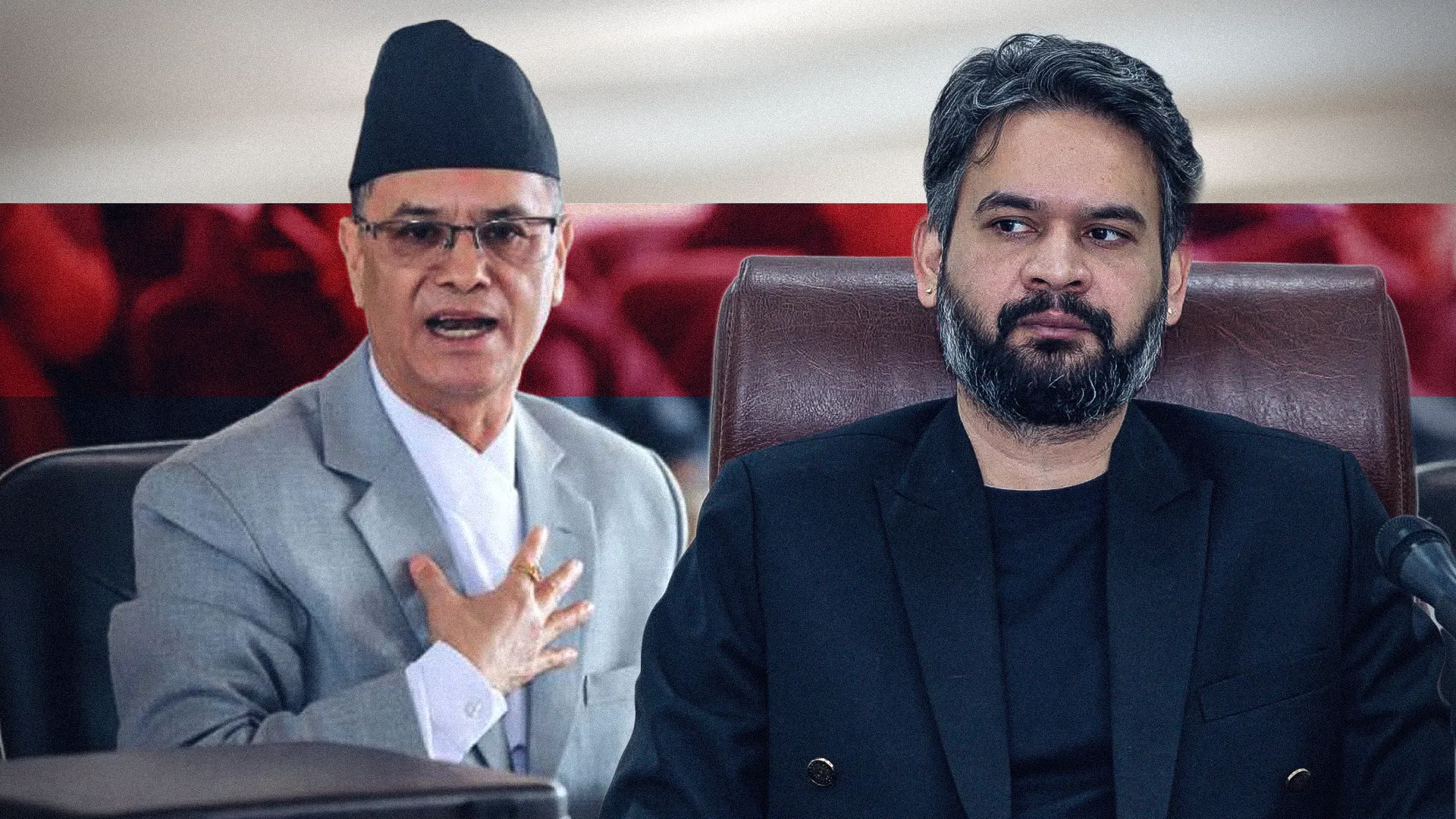
The ultimate aim of, RSP President, Mr Lamichhane is to free himself from the shackles of cooperative scams or come out of the legal quagmire he has fallen into deeply. For this, he is prepared to do anything. The agenda of its new found leader Mr Balen is little known to us other than settling a score with Oli. Who knows? May be he is having a deeper fear that return of Oli may bring criminal charges against him? Post-elections, I expect RSP, eventually, splitting into three camps. This is irrespective to their electoral performance. These three camps will be hard-liners, ultra-hardliners and liberals. One thing that puzzles me is Durga Prasai constantly critical of Lamichhane and Balen. For me RSP is RPP 2.0.

Interested in this ad?
Would you like to continue to the link or provide your information for more details?
Please provide your information
To continue, please fill in your details
The one and only agenda of Oli is to return to the power, regain his lost status, and wash-off possible accusations. He knew clearly that the enemies within are far more dangerous than enemies outside.
Nepali Congress Gen-Z leader Mr Gagan Thapa’s litmus test lies in election outcomes. If NC fails to come trailblazing, his is doomed, not Biswo Prakash Sharma. With muted Deuba and his faction, everyone thinking old NC to be a spent force. Deuba may be down, he is not out (25 January) . Just wait till we have Enter the Deuba scenario.If there is going to be political instability in the country, it is coming from internal wranglings of NC - similar to what we experienced in 1994.
Nepali Communist Party or a rain-bow like coalition of the communists, coordinated by Dahal and Nepal, is simply a make-shift electoral arrangement. The big head (central committee) it carries will eventually going to explode. This will come with or without electoral success. Dahal is a spent force, not Deuba.
The problem with RPP is their different shades and colors. They wait for return of the monarchy is like having a jharla ra khaula attitude. Literal meaning of jharla ra khaula in Nepali is like expecting the unexpected. For non-Nepali readers here is the genesis: A desperately starving jackal happen to see a big bull walking in front of him with his oscillating juicy big balls behind. Expecting the big balls to fall any minute, the jackal stalks the bull only to starve to death.
Given the situation of the country, forget about ex-panchas and die hard royalists, even former king, Gyanendra, will think, not only twice, but thrice to get into power.
This Gen-Z movement has eclipsed, if not overshadowed, the Terai-Madhesi politics. They may pull back to a kind of unity to put their demands, to counter Gen-Z. Again, the problem with them is their insatiable desire for power and total disunity. The pahadias will continue to capitalize on them.
What about Gen-Z? Personally, I take it as an euphoria, it is over. It is simply a myth. The September incidents were accidents, carefully designed and orchestrated, outside the ambit of Gen-Z. I suppose, Mahendra Lama from JNU is correct in pointing out that the Maoists are responsible for rural violence and this Gen-Z for urban violence.
Geo-politics
In a way, lots of Nepalese are infatuated by the concepts of geo-politics. It is easier to put a blame on outsiders because there is little risk and accountability involved. Irked by its constant use of bhu-rajniti, someone tweeted it as gu-rajniti (shit-politics). When your immune system is weak, it is normal have attacks from external virus. Who do you blame -internal or external factors? I leave this matter to the readers.
Narayan Manandhar