


Author: Gyanmitra
- For centuries, scientists have harbored a dream—can cancer be prevented or treated with a vaccine?
Traditional vaccines revolutionized the fight against infectious diseases, but cancer was a different problem. Because cancer develops from the body's own cells, the immune system does not always recognize it as an "enemy". However, Phase 3 trial results announced by Moderna and Merck/MSD on October 22, 2026, have broken that barrier: an mRNA vaccine created according to the genetic markers of a patient's own tumor has reduced the risk of cancer recurrence in high-risk melanoma patients. This vaccine is not a medicine administered in the same way to everyone like a conventional vaccine. It is an individualized neoantigen therapy (INT) designed separately for each patient. It trains the body against cancer by showing the immune system the genetic "errors" present within the patient's own tumor.
2. Vaccine Name and Developers
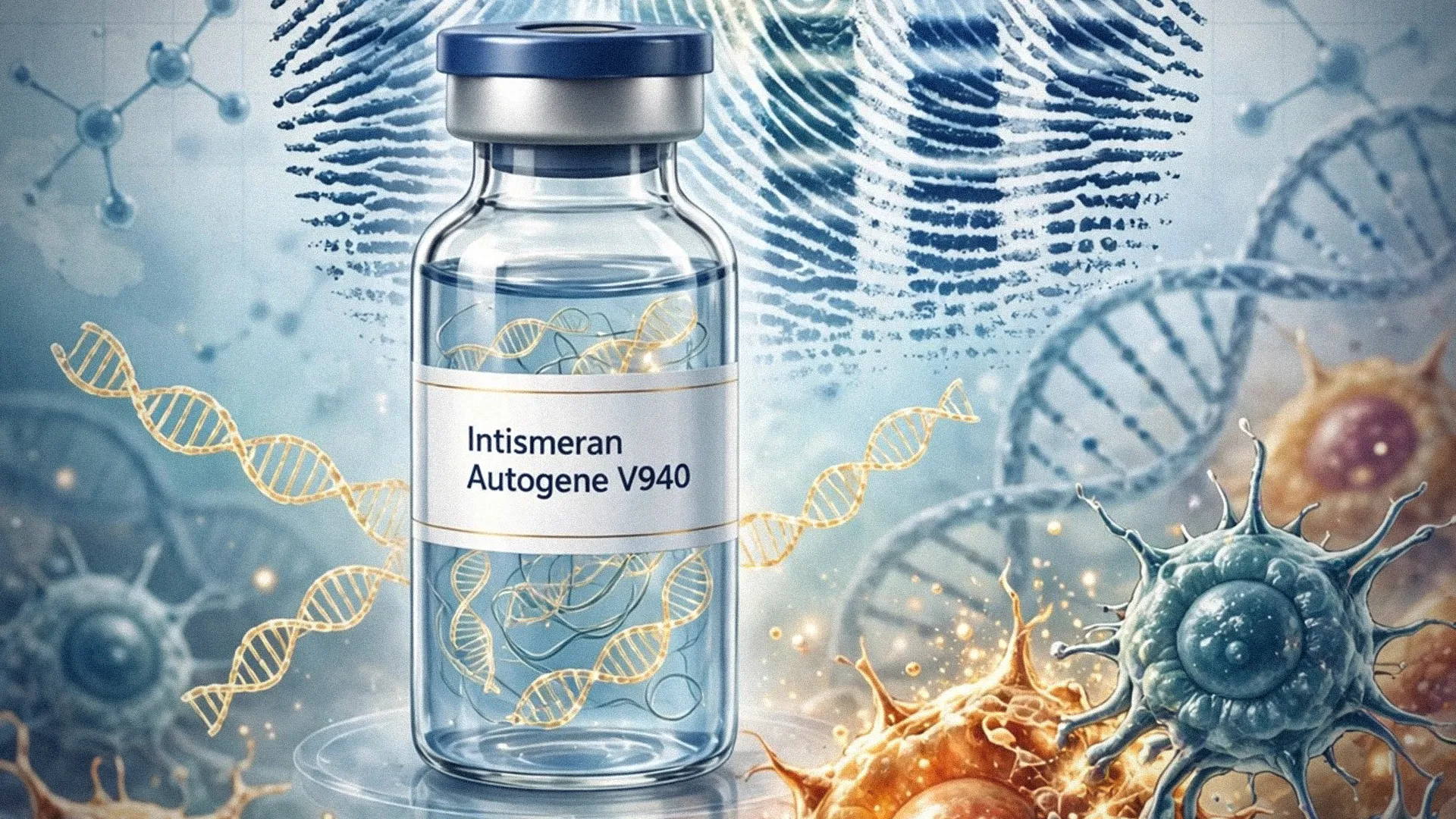
The scientific name of this vaccine is Intismeran Autogene, also known by its code names "V940" or "mRNA-4157." Moderna developed the vaccine using its mRNA platform and is co-developing it with Merck—known as MSD outside the United States and Canada—in combination with Merck's anti-PD-1 therapy, Keytruda (pembrolizumab).
The vaccine does not work alone. Its design relies on a two-pronged strategy:
-
Intismeran introduces tumor-specific targets to immune cells and boosts T-cell responses.
-
Pembrolizumab releases the PD-1 "brake" on T-cells, enabling immune cells to attack cancer cells more actively.
In simple terms, Intismeran provides a target list answering "Who is the enemy?" while pembrolizumab gives the immune system permission to "stop holding back and attack."
3. What Is a Neoantigen?
A neoantigen is a new or abnormal protein fragment created by DNA mutations inside a cancer cell. Because it does not exist in healthy cells, the immune system can recognize it as "foreign."
In simple terms: an error occurs in the tumor's DNA → that error produces a slightly altered protein → a fragment of that altered protein appears on the cell's surface → T-cells recognize it and attack the cancer cell.
Difference Between Normal Antigens and Neoantigens
How Are Neoantigens Formed?
As a cancer cell develops, numerous mutations accumulate in its DNA. Certain mutations alter the amino acid sequence of a protein; the resulting new peptide is captured by the cell's HLA/MHC molecule and displayed on the cell surface.
If a T-cell receptor can recognize that peptide, that peptide functions as a neoantigen. The T-cell can then destroy cancer cells carrying that specific marker.
A Simple Example
Suppose the normal genetic code for a protein in the body reads:
…A-B-C-D…
Now suppose a mutation in a melanoma tumor alters that sequence to:
…A-B-X-D…
Here, X produces a new amino acid. If a small protein fragment containing that new amino acid is displayed on an HLA molecule and recognized by a T-cell, that fragment is a neoantigen.
4. How AI Selects Neoantigens
When selecting neoantigens, artificial intelligence (AI) does not merely look for the "best mutation." Instead, it simultaneously evaluates three factors: whether the peptide generated by the mutation is actually produced in the tumor, whether it will be presented on the patient's HLA molecules, and whether T-cells can recognize and attack it.
A. Comparing Tumor and Normal DNA
First, DNA sequencing is performed on both a tumor sample and the patient's normal blood sample. An AI-based pipeline compares the two to identify somatic mutations present exclusively in the tumor, filtering out normal inherited genetic variations.
At this stage, AI helps separate genuine mutations from sequencing read errors, repetitive genomic regions, sequencing artifacts, and normal cell contamination. The goal is to pinpoint which mutations truly exist inside the cancer cells.
B. Does the Mutation Produce a Protein?
Not every DNA mutation alters a protein. Some occur in non-coding regions, some produce the exact same amino acid, and some mutated genes are never expressed in the tumor at all.
Therefore, AI analyzes RNA sequencing and gene expression data to verify whether the mutated gene is active inside the tumor. Mutations that generate higher levels of mRNA in the tumor receive higher priority as neoantigen candidates.
C. Likelihood of Peptide Presentation on HLA/MHC
T-cells do not inspect whole proteins directly. Inside the cell, the proteasome chops proteins into small peptides, the TAP protein (Transporter Associated with Antigen Processing) carries them into the endoplasmic reticulum, and HLA/MHC molecules display them on the cell surface.
AI models predict the probability of each step:
-
Whether the peptide generated by the mutation is the right length
-
Whether the proteasome can cleave it into the proper size
-
Whether TAP can transport it to the right location
-
How strongly the peptide binds to the patient's HLA molecule
-
How long the peptide-HLA complex remains stable
HLA binding is particularly critical. Generally, a binding affinity below 500 nM (nanomolar) between a peptide and MHC-I indicates a likelihood of T-cell response, while an affinity below 50 nM signals strong immunogenicity—the capacity to trigger a robust immune response.
D. Likelihood of T-Cell Recognition
Presentation on an HLA molecule alone is not enough; a T-cell receptor (TCR) must recognize the peptide-HLA complex. AI estimates this probability by evaluating the peptide's foreignness, similarity to normal proteins, TCR-facing amino acids, and historical T-cell response data.
A key principle applies here: the more a neoantigen differs from normal bodily proteins, the more likely T-cells are to recognize it as foreign. Conversely, if it closely resembles a normal protein, the immune system may simply ignore it.
E. Final Neoantigen Selection
AI combines all these scores to rank every candidate neoantigen. The final set is then selected based on tumor specificity, expression levels, HLA binding, stability, likelihood of T-cell recognition, and target diversity.
In the case of Intismeran/V940, this process selects up to 34 neoantigens for an individual patient and encodes them into a single synthetic mRNA molecule.
F. Limits of AI Prediction
AI generates probabilities rather than 100 percent certainty about what will happen inside the human body. Even when peptide-HLA binding appears strong, a T-cell response may fail to materialize; laboratory verification and clinical data remain essential to confirm true immunogenicity.
Thus, AI serves as a system for selecting the "targets most likely to work," forming the scientific foundation for building a personalized mRNA vaccine.
5. How Is the Vaccine Manufactured?
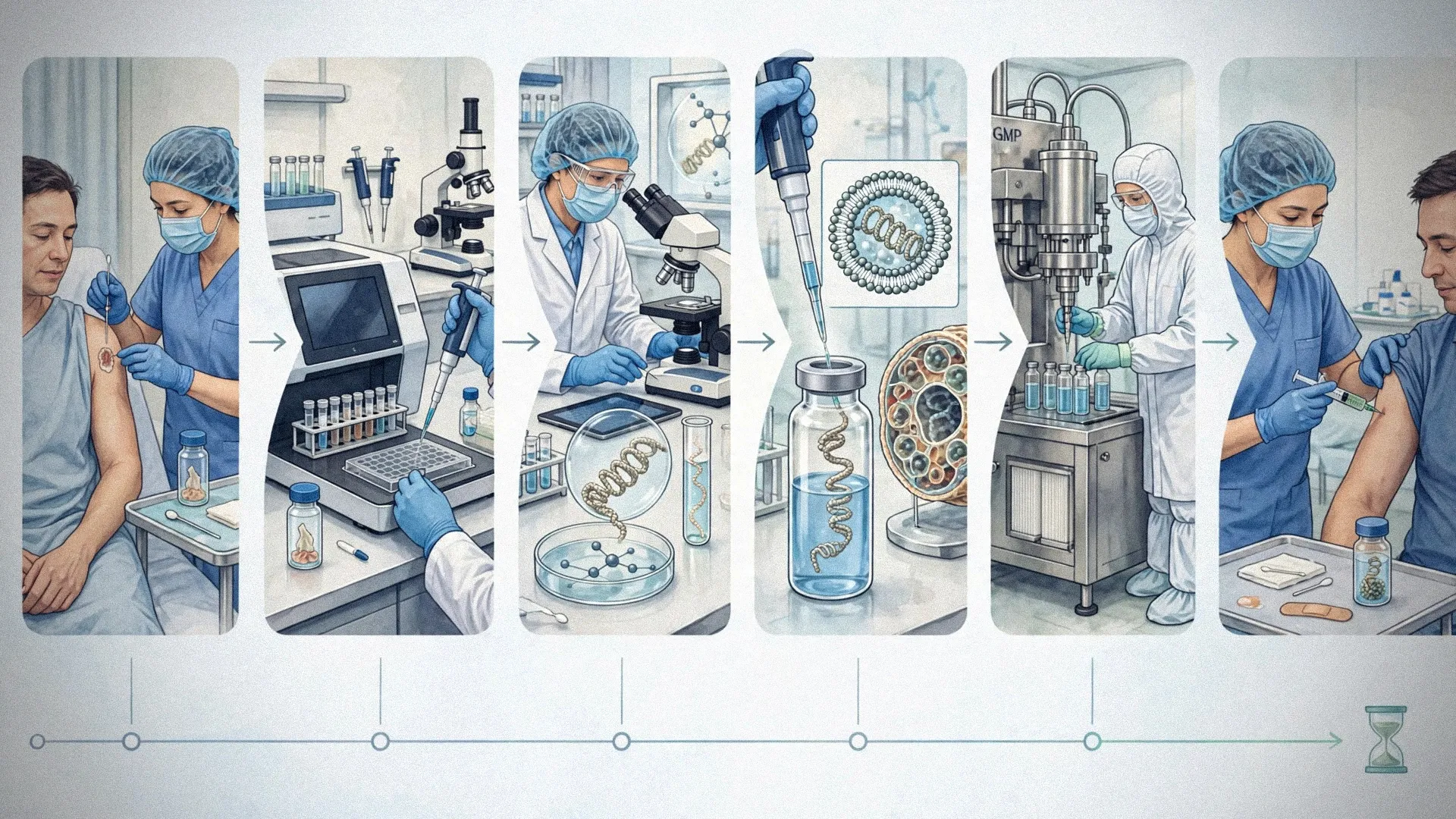
Intismeran is a patient-specific product: first, scientists map the genetic "fingerprint" of a patient's tumor, select up to 34 neoantigens, encode them into a single synthetic mRNA strand, and encapsulate it inside lipid nanoparticles.
Unlike conventional vaccines manufactured in massive batches, each dose is custom-designed and produced for one individual. Still, Moderna has streamlined the workflow so patients enrolled in trials can receive their first injection within roughly six weeks.
1. Tumor and Blood Sample Collection
Surgeons collect a sample of the removed tumor alongside a normal blood sample from the patient. The blood provides the patient's normal germline DNA for comparison against the tumor's DNA.
Both samples are shipped via temperature-controlled logistics to a sequencing facility. This step is critical because the vaccine's mRNA sequence can only be written after analyzing these samples.
2. Whole-Exome and RNA Sequencing
In the laboratory, next-generation sequencing (NGS) is performed. Researchers compare the tumor's exome—the protein-coding portion of DNA—with the patient's normal blood DNA, performing RNA sequencing as well when needed.
This isolates somatic mutations present only in the tumor. By subtracting inherited genetic variations found in normal blood, scientists identify mutations unique to the cancer cells.
3. Neoantigen Selection
AI and bioinformatics play the central role here. Algorithms analyze the mutations to predict which resulting peptides will bind effectively to the patient's HLA system and provoke a T-cell response.
Ultimately, up to 34 of the most promising neoantigens are chosen.
4. Writing the Code Into a Single mRNA
The genetic codes for the selected up to 34 neoantigens are linked together into a single, continuous synthetic mRNA sequence. Known as concatemeric mRNA, this places multiple neoantigen segments sequentially onto one mRNA "thread."
Once this mRNA enters the body's cells, ribosomes read it to synthesize the neoantigen proteins. The immune system then recognizes those proteins as tumor-specific markers and mounts a T-cell response.
5. mRNA Manufacturing: In Vitro Transcription
Once finalized, the digital mRNA sequence is sent to Moderna's manufacturing facility, where physical mRNA is produced through chemical and enzymatic in vitro transcription (IVT).
No patient tumor tissue or living cells are used in this stage—only the bespoke genetic instructions written for that specific patient are synthesized into mRNA.
6. Lipid Nanoparticle Encapsulation
The newly synthesized mRNA is encapsulated inside lipid nanoparticles (LNPs). LNPs shield the fragile mRNA from water, enzymes, and premature immune breakdown while helping deliver it inside cells.
This delivery mechanism relies on the same LNP principles used in COVID-19 mRNA vaccines, except the mRNA payload inside is uniquely tailored to each patient's tumor mutations.
7. Quality Testing, Packaging, and Shipping
After production, the vaccine undergoes rigorous testing for purity, identity, sterility, and quality. It is then filled into vials and shipped back to the treating cancer center.
Healthcare providers administer it as an intramuscular injection. In clinical trials, it has typically been given every three weeks for up to nine doses alongside pembrolizumab.
8. Why Does It Take Six Weeks?
The "needle-to-needle" turnaround time—from patient enrollment to the first vaccine dose—takes approximately six weeks. This covers sample transport, sequencing, mutation analysis, neoantigen prediction, mRNA design, manufacturing, quality control, and delivery.
This timeline also explains why Phase 3 trial curves did not separate during the first six months; meaningful immune responses and clinical benefits only emerged after the vaccination regimen got underway.
6. What Happens Inside the Body?
Once injected, the mRNA instructs cells to produce neoantigens. The immune system identifies those neoantigens as foreign or abnormal markers and generates targeted T-cells against cancer cells bearing those exact markers.
Consequently, this is not a preventive vaccine meant to stop cancer from ever forming, but a therapeutic/adjuvant vaccine: it trains the immune system to hunt down and destroy microscopic cancer cells left behind after surgery or cells poised to spread later.
7. What Did the INTerpath-001 Trial Show?
INTerpath-001 was a global, randomized, double-blind Phase 3 trial enrolling 1,137 high-risk patients with completely resected stage IIB–IV melanoma. Patients were randomized in a 2:1 ratio to receive either Intismeran plus pembrolizumab or a placebo plus pembrolizumab.
Recurrence-Free Survival (RFS) Results:
The Intismeran plus Keytruda group achieved a 42 percent reduction in the risk of cancer recurrence or death, with a hazard ratio (HR) of 0.58 (95% confidence interval [CI], 0.45–0.75; p < 0.001).
Patients Recurrence-Free at Two Years:
At two years, 82.2 percent of patients in the Intismeran plus Keytruda arm remained recurrence-free, compared with 70.0 percent in the Keytruda-alone arm, demonstrating a clear advantage for the vaccine combination.
Distant Metastasis-Free Survival (DMFS):
The Intismeran plus Keytruda group saw a 38 percent reduction in the risk of cancer spreading to distant organs or death, with an HR of 0.62 (95% CI, 0.45–0.85; p = 0.002).
Patients Free of Distant Metastasis at Two Years:
At two years, 88.5 percent of patients in the Intismeran plus Keytruda group were free of distant metastasis, compared with 80.2 percent in the Keytruda-alone group.
Overall Survival (OS):
Overall survival data remain immature. While a favorable trend has been observed, no definitive judgment can be drawn from the survival data yet.
What a 42 Percent Risk Reduction Means
One distinction requires clarity: a 42 percent reduction in risk does not mean 42 percent fewer total patients experienced recurrence.
Rather, it represents a relative risk reduction—meaning the risk of recurrence or death in the vaccine group was 42 percent lower than in the group receiving pembrolizumab alone.
In simple terms:
-
An HR of 0.58 means a 42 percent lower risk in the vaccine arm.
-
An HR of 0.62 means a 38 percent lower risk of distant spread.
-
Any HR below 1 indicates reduced risk in the treatment arm.
These findings demonstrate that adding the vaccine lowered both local recurrence and distant spread compared with pembrolizumab monotherapy.
Why Did the Difference Appear Only After Six Months?
During the first six months, outcomes in both groups were nearly identical, with an HR of 0.99 for recurrence or death. After six months—once the Intismeran immunization regimen was completed—the risk of recurrence or death dropped by 58 percent in the vaccine arm (HR 0.42).
Biologically, this makes sense. Creating a personalized vaccine requires tumor sequencing, neoantigen selection, manufacturing, and quality testing, followed by the time needed for the body to mount a full T-cell response. Seeing the benefit emerge after immunization completion rather than in the initial months is therefore expected.
8. Safety: Side Effects
Intismeran generally causes mild to moderate, temporary side effects—most notably pain at the injection site, fever, chills, and fatigue. In the Phase 3 INTerpath-001 trial, rates of severe treatment-related adverse events were comparable to those seen with pembrolizumab alone.
Most Common Side Effects
Fever (Pyrexia):
Occurred in 52.2 percent of patients in the vaccine plus pembrolizumab arm, compared with 8.2 percent in the pembrolizumab-alone arm. This is a typical sign of immune activation triggered by the vaccine.
Injection Site Pain:
Reported in 51.0 percent of patients in the vaccine plus pembrolizumab group, versus 9.5 percent in the pembrolizumab-alone group. This involves temporary soreness, redness, or swelling at the injection muscle.
Fatigue:
Experienced by 38.5 percent of patients in the vaccine plus pembrolizumab arm, compared with 29.7 percent in the pembrolizumab-alone arm, reflecting both immune activation and pembrolizumab therapy.
Influenza-Like Illness:
Observed in 25.4 percent of patients in the combination arm, versus 9.2 percent in the monotherapy arm, including symptoms such as fever, weakness, and muscle aches.
Additional Clarification
Researchers noted that the vast majority of these reactions were low-grade and transient.
In other words, side effects were mostly mild to moderate and subsided over time. However, patients should promptly notify their care team if symptoms become severe, persistent, or progressively worse.
Serious Side Effects
Treatment-Related Adverse Events:
Occurred in 95.8 percent of patients in the vaccine plus pembrolizumab group, compared with 90.0 percent in the pembrolizumab-alone group, though most events were mild or moderate.
Grade 3–5 Treatment-Related Adverse Events:
Severe or life-threatening treatment-related events occurred in 14.2 percent of patients in the combination arm, versus 13.4 percent in the pembrolizumab-alone arm—indicating that adding the vaccine did not meaningfully increase severe toxicity.
Serious Treatment-Related Adverse Events:
Reported in 9.8 percent of patients in the vaccine plus pembrolizumab arm, compared with 11.1 percent in the pembrolizumab-alone arm, showing a slightly lower rate in the vaccine group.
Key Takeaway
These results indicate that while adding the vaccine slightly increased overall side effects, it did not substantially raise the rate of serious or severe adverse events.
Essentially, the vaccine primarily added mild, short-lived reactions—such as fever, injection-site soreness, and fatigue—while serious adverse event rates remained nearly identical to pembrolizumab alone.
Immune-Mediated Risks
Because the vaccine activates the immune system and pembrolizumab amplifies that response, the immune system can occasionally attack healthy organs.
Potential immune-mediated conditions associated with pembrolizumab include:
-
Lung inflammation (pneumonitis): Cough, shortness of breath, chest pain
-
Intestinal inflammation (colitis): Diarrhea, abdominal pain, bloody stools
-
Liver problems (hepatitis): Yellowing of eyes or skin, dark urine, fatigue
-
Hormone disorders (endocrinopathies): Thyroid, adrenal, or pituitary gland dysfunction
-
Kidney inflammation (nephritis): Decreased urination, swelling, fatigue
Although rare, these complications can become severe or life-threatening, making immediate reporting of symptoms to the oncology team vital.
Vaccine-Specific Reactions
In an earlier five-year safety analysis from the INTerpath program, the most common treatment-related side effects in the Intismeran plus pembrolizumab group were fatigue (59.6 percent), injection site pain (59.6 percent), and chills (51.0 percent). Most were Grade 1 or 2; fatigue was the most frequent Grade 3 event (4.8 percent), and no Grade 4 or 5 vaccine-related events were reported.
Immune-related adverse events occurred in 45.2 percent of patients in the combination group and 44 percent in the pembrolizumab-alone group—confirming that immune-mediated risks stem primarily from pembrolizumab rather than the vaccine.
When to Contact a Doctor Immediately
Patients should alert their oncology team right away if they experience any of the following symptoms during treatment:
-
Shortness of breath, new cough, or chest pain
-
Persistent diarrhea, bloody stools, or severe abdominal pain
-
Yellowing of the eyes, dark urine, or unusual fatigue
-
High fever, vomiting, dizziness, or fainting
-
New rash, blistering skin, red or painful eyes, or vision changes
-
Unusual weakness, paralysis-like symptoms, or severe muscle pain
9. Difference Between mRNA Vaccines and Chemotherapy
The fundamental difference is straightforward: chemotherapy directly kills cancer cells, whereas an mRNA vaccine does not kill cancer on its own—it teaches the body's immune system to recognize and destroy cancer cells.
Traditional Chemotherapy vs. mRNA Cancer Vaccines
-
Mechanism of Action: Traditional chemotherapy directly kills cancer cells or halts their division. An mRNA cancer vaccine teaches T-cells to recognize tumor-specific neoantigens.
-
Target: Chemotherapy targets rapidly dividing cells. An mRNA cancer vaccine targets neoantigens derived from a patient's specific tumor mutations.
-
Nature of Therapy: Chemotherapy consists of standardized, off-the-shelf drugs. An mRNA cancer vaccine is typically a custom-made, patient-specific product.
-
Effect on the Immune System: Chemotherapy exerts direct cellular toxicity. An mRNA cancer vaccine activates and trains the immune system.
-
Immunological Memory: Chemotherapy's effect fades once treatment stops. An mRNA cancer vaccine can generate T-cell memory for long-term immune surveillance.
-
Side Effects: Chemotherapy can damage healthy rapidly dividing cells. mRNA cancer vaccines typically cause fever, fatigue, and injection-site soreness, alongside immune-mediated risks when paired with pembrolizumab.
How Does Chemotherapy Work?
Chemotherapy destroys rapidly dividing cells or stops them from multiplying. Because cancer cells generally divide quickly, chemotherapy shrinks tumors.
However, chemotherapy also affects healthy rapidly dividing cells in the lining of the mouth, bone marrow, digestive tract, and hair follicles, leading to side effects such as mouth sores, low blood counts, digestive distress, and hair loss.
A Simple Comparison
Chemotherapy is like bombing enemy forces directly: it eliminates the enemy, but it can also damage nearby civilian structures.
An mRNA cancer vaccine is like showing your own army photographs and ID profiles of the enemy so immune cells can hunt down and attack the target themselves.
Thus, chemotherapy and mRNA vaccines are not merely alternatives to one another; they fight cancer through distinct mechanisms and may sometimes be used together.
Specifically, an mRNA vaccine delivers synthetic mRNA packaged in lipid nanoparticles, which is taken up by antigen-presenting cells—particularly dendritic cells. Those cells translate the mRNA into neoantigen proteins and display them via MHC molecules to T-cells.
Difference Between Immunotherapy and This Vaccine
Immunotherapy is a broad umbrella category, and mRNA neoantigen vaccines like Intismeran represent one specialized branch within it. Rather than opposites, the vaccine is a targeted form of immunotherapy.
Major types of immunotherapy include:
-
Immune Checkpoint Inhibitors: Drugs like pembrolizumab that block immune "brakes" such as PD-1/PD-L1 or CTLA-4.
-
Cancer Vaccines: Treatments that initiate a T-cell response by presenting cancer-specific antigens, which is how mRNA neoantigen vaccines work.
-
CAR-T Cell Therapy: Engineering a patient's own T-cells outside the body to recognize cancer targets.
-
Cytokines and Immune Modulators: Therapies that broadly stimulate or regulate immune system activity.
mRNA Vaccines vs. Checkpoint Inhibitors
-
Primary Role: An mRNA vaccine like Intismeran introduces new targets to T-cells. A checkpoint inhibitor like pembrolizumab releases the brakes on pre-existing T-cells.
-
Target: mRNA vaccines target neoantigens born from tumor mutations. Checkpoint inhibitors target immune checkpoint proteins such as PD-1/PD-L1.
-
Type of Response: mRNA vaccines initiate and expand fresh, tumor-specific T-cell responses. Checkpoint inhibitors reactivate exhausted or suppressed T-cells.
-
Personalized vs. Shared: mRNA vaccines are custom-built for each patient. Checkpoint inhibitors are standardized drugs given to all eligible patients.
-
Examples: mRNA vaccines include Intismeran/V940 (mRNA-4157). Checkpoint inhibitors include pembrolizumab, nivolumab, and atezolizumab.
The Difference in Plain Words
An mRNA vaccine shows the immune army a picture of the enemy's face so T-cells learn to recognize cancer cells.
A checkpoint inhibitor takes the foot off the immune army's brake pedal, giving T-cells permission to attack.
In short, the vaccine supplies the target, while the checkpoint inhibitor authorizes the strike.
Why Are Both Given Together?
While an mRNA vaccine teaches T-cells to recognize cancer, PD-1/PD-L1 signals inside the tumor microenvironment can exhaust or shut down those T-cells.
Pembrolizumab blocks the PD-1 brake to keep T-cells active. Combining both therapies pairs target identification with immune unlocking—which is why INTerpath-001 tested Intismeran plus pembrolizumab rather than Intismeran alone.
Which Cancers Are Being Targeted?
Intismeran is currently being studied primarily in melanoma, non-small cell lung cancer (NSCLC), kidney cancer (renal cell carcinoma), and bladder cancer.
10. Which Cancers Are Under Study?
-
Melanoma: The Phase 3 INTerpath-001 trial succeeded in melanoma, and additional Phase 3 and earlier-stage studies are underway. Its primary goal is preventing post-surgical recurrence, though it is also being tested in advanced melanoma.
-
Non-Small Cell Lung Cancer (NSCLC): The Phase 3 INTerpath-002 trial and other Phase 3 studies are ongoing in NSCLC, aiming to prevent recurrence after surgery and evaluating combinations with pembrolizumab and chemotherapy in metastatic NSCLC.
-
Kidney Cancer (RCC): The Phase 2 INTerpath-004 trial is underway in renal cell carcinoma to improve disease-free survival following surgery.
-
Bladder Cancer: Bladder cancer is also part of the INTerpath clinical program, though its trial designs and data are not yet as advanced as those in melanoma.
Key Takeaway
Intismeran is currently being evaluated mainly in melanoma, non-small cell lung cancer, kidney cancer, and bladder cancer.
Its clearest and most advanced success to date is in melanoma, where Phase 3 INTerpath-001 demonstrated significant reductions in recurrence and distant metastasis.
Testing Across Disease Stages and Combinations
Melanoma remains the lead indication. In INTerpath-001, Intismeran plus pembrolizumab improved both recurrence-free survival and distant metastasis-free survival in completely resected high-risk stage IIB–IV melanoma.
Major efforts are also underway in NSCLC. Merck and Moderna have launched a Phase 3 study of adjuvant Intismeran plus pembrolizumab in completely resected stage II–IIIB (N2) NSCLC, alongside trials combining Intismeran, pembrolizumab, and chemotherapy in metastatic squamous NSCLC.
In clear-cell renal cell carcinoma, INTerpath-004 compares post-surgical Intismeran plus pembrolizumab against placebo plus pembrolizumab. Bladder cancer is also included in the program, though at an earlier clinical stage.
Who Stands to Benefit From This Vaccine?
Intismeran's primary proven benefit is in patients with completely resected stage IIB–IV melanoma who face a high risk of recurrence. Rather than shrinking large existing tumors, its goal is to train the immune system to eliminate microscopic residual cancer cells left after surgery or cells attempting to spread.
To qualify, a patient's tumor must harbor enough mutations to generate identifiable neoantigens, and the patient's immune system must be capable of mounting a T-cell response against those targets. Consequently, the vaccine is not guaranteed to work for every melanoma patient.
Trials are also evaluating Intismeran plus pembrolizumab in advanced or metastatic melanoma, though data in advanced disease remain less mature than in the post-surgical adjuvant setting.
Most importantly, this is not a universal vaccine for all cancers—it is a specialized, individualized immunotherapy built around each patient's unique tumor genome.
11. Key Scientific Challenges: Tumor Diversity and Immune Evasion
The biggest scientific hurdle facing this vaccine is tumor heterogeneity. Even within a single tumor, genetically distinct cell populations can coexist; some cells may carry the neoantigens targeted by the vaccine, while others lack those markers.
As a result, the vaccine may wipe out one population of cancer cells while a genetically distinct "subclone" survives, grows, and spreads—a phenomenon known as immune escape.
Tumors can also deploy other defenses to evade immune detection. For example, cancer cells may downregulate beta-2 microglobulin (a key component of MHC Class I), impair TAP1/TAP2 transporters, or disrupt antigen-processing machinery, reducing their ability to display neoantigens to T-cells.
Success therefore depends on far more than picking strong neoantigens. The tumor microenvironment, immune cell infiltration, HLA expression, and tumor immune-evasion tactics all shape clinical outcomes.
That is precisely why the vaccine is paired with a checkpoint inhibitor like pembrolizumab: the vaccine points T-cells to the target, while pembrolizumab helps keep them active inside a hostile tumor environment.
Regulatory Challenges of AI Prediction
AI selects up to 34 neoantigens from a patient's tumor, but this remains a computational prediction—it cannot guarantee with 100 percent accuracy which peptides will trigger a functional T-cell response inside the body.
Even when peptide-HLA binding looks favorable, T-cells may fail to recognize the target, or an immunosuppressive tumor microenvironment may blunt their attack. Computational predictions must therefore be backed by real-world immunogenicity evidence.
Regulation presents another major challenge. Because every patient receives a unique mRNA sequence, an individual manufacturing run, and bespoke quality testing, regulators cannot simply evaluate one fixed drug formula; they must validate the entire digital design, manufacturing, and quality-control platform.
Intismeran's long-term success thus hinges not only on Phase 3 clinical efficacy, but also on the reliability of its AI pipeline, manufacturing consistency, chain-of-identity tracking, and long-term safety data.
12. Cost, Access, and Ethics
No official commercial price has been announced because Intismeran is not yet an approved product. However, analyst estimates suggest the vaccine alone could cost roughly $100,000 to $475,000 per patient in the United States.
-
Per-Patient Manufacturing Cost: Estimated at $100,000 to more than $250,000, driven by individualized sequencing, neoantigen selection, and custom production.
-
Analyst Estimates (Vaccine Alone): Some analysts project vaccine-only pricing between $150,000 and $250,000, while upper-end estimates reach $475,000.
-
William Blair US WAC Estimate: Investment firm William Blair estimated a US wholesale acquisition cost (WAC) of roughly $475,000 per patient, though this reflects a valuation model rather than an official price.
-
If Divided Across Nine Doses: A $475,000 price tag split across nine doses equals roughly $52,800 per dose, though it remains unclear whether commercial pricing will be structured per dose.
-
Adding Pembrolizumab (Keytruda): A one-year course of pembrolizumab carries a US list price of roughly $220,900, though actual costs vary by country, hospital, and insurance coverage.
Why Is the Cost So High?
Unlike traditional vaccines produced in mass quantities, each dose requires dedicated sequencing, neoantigen selection, mRNA design, LNP formulation, quality testing, and cold-chain logistics.
The expense therefore extends well beyond raw mRNA or lipid materials—it reflects high-end genomics, computational design, bespoke manufacturing, and strict regulatory quality control.
Key Takeaway
The cost of this therapy goes far beyond the drug vial itself, encompassing individualized sequencing, AI-driven neoantigen selection, personalized manufacturing, and rigorous quality assurance.
Its actual commercial price will only become clear following regulatory approval and negotiations with payers and insurers.
Under the Phase 3 protocol, patients receive up to nine doses of Intismeran. If William Blair's $475,000 estimate holds, the vaccine alone would average roughly $52,800 per dose. Combined with roughly $220,900 for a year of Keytruda at US list prices, total drug costs could approach $695,900—excluding expenses for sequencing, hospital visits, consultations, lab tests, admissions, and side-effect management.
Access Disparities
Delivering this therapy requires advanced surgical centers, multi-region tumor sampling, clinical-grade tumor-normal sequencing, bioinformatics, molecular pathology, GMP-grade personalized manufacturing, cold-chain logistics, and specialized infusion clinics.
Consequently, while the treatment may be readily accessible at major cancer centers in high-income nations, patients in low-resource countries or remote areas could face steep barriers.
This question carries particular weight for Nepal and India. While India is expanding its genomics, biomanufacturing, and clinical research capabilities, the end-to-end workflow required for personalized neoantigen vaccines—from clinical sequencing to GMP mRNA production—is not yet widely established.
The central challenge ahead is therefore not just "Does it work?" but "Who can access it?" If the therapy remains confined to wealthy patients or affluent nations, scientific triumph will fail to translate into equitable healthcare.
Ethical and Policy Questions
Personalized mRNA cancer vaccines raise pressing policy and ethical questions alongside scientific breakthroughs. First, how can public health systems fairly distribute such an expensive treatment?
If per-patient costs reach hundreds of thousands of dollars, uninsured or low-income patients will be priced out unless governments, insurers, and drugmakers establish tiered pricing and reimbursement models.
Second is genetic data privacy. Manufacturing the vaccine requires a patient's tumor DNA, normal DNA, RNA expression profiles, and HLA typing—highly sensitive biological data requiring strict safeguards over security, ownership, and permissible use.
Third, can production be made affordable in developing countries? While India's genomics and biomanufacturing sectors are growing, lowering personalized GMP manufacturing costs will require major infrastructure, skilled personnel, and clear regulatory frameworks.
Fourth, will this technology narrow or widen health disparities? If restricted to wealthy nations, it could deepen global health inequity, making a public-health perspective essential during rollout.
Fifth, can such a complex individualized regimen become standard of care? If costs and logistics remain prohibitive, widespread adoption will stall—meaning future research must prioritize cost-effectiveness and health-system readiness alongside clinical efficacy.
13. Why Is This Historic?
This marks the first time an individualized neoantigen vaccine built from a patient's own tumor mutations has met its primary clinical endpoint in a Phase 3 trial. Merck described it as the first Phase 3 study to demonstrate a clinically meaningful improvement over standard-of-care Keytruda in resected melanoma.
While similar signals emerged earlier in the smaller Phase 2b KEYNOTE-942 trial, INTerpath-001 validated the concept in a large, global, randomized trial of 1,137 patients—substantially boosting confidence in the technology.
Remaining Questions
1. Does It Extend Overall Survival?
Preventing recurrence is vital, but the ultimate goal is helping patients live longer, healthier lives. Overall survival data remain immature, showing only a favorable early trend so far.
2. Cost and Access
Every patient requires separate tumor sequencing, neoantigen selection, mRNA design, manufacturing, quality control, and delivery. While Moderna has demonstrated that the workflow can be standardized at trial scale, commercial pricing and real-world health-system access remain uncertain.
3. Independent Scientific Review
The findings were presented at the ESMO Congress 2026 Presidential Symposium and accepted for publication in The New England Journal of Medicine. Still, Intismeran remains an investigational therapy awaiting full evaluation by regulators, independent scientists, and longer-term follow-up.
What It Means for Nepal and India
Because melanoma is far less common in Nepal and India than in countries like Australia, immediate local demand or direct access to this specific melanoma vaccine may be limited. The deeper significance lies in the underlying platform: designing custom mRNA vaccines from a patient's tumor mutations.
Moderna and Merck are testing this same platform across other cancers, including NSCLC; their INTerpath program spans nine Phase 2/3 trials across multiple tumor types, including three Phase 3 lung cancer studies.
If this approach proves effective in more common cancers, expanding genomics infrastructure, biomanufacturing capacity, and mRNA research in India could eventually help lower costs and broaden regional access—though that remains a future prospect rather than an immediate clinical reality.
14. What Happens Next?
Based on these results, Merck and Moderna have initiated discussions with regulatory agencies and are preparing regulatory filings for Intismeran plus pembrolizumab.
The companies have pointed to potential regulatory approval in 2027, though that timeline is not yet an official guarantee.
If approved, the therapy could usher in a new era of oncology—where cancer treatment is guided not merely by where a tumor originates in the body, but by how that tumor is genetically unique inside each individual patient.
15. Balanced Final Takeaway
This Phase 3 milestone proves that a therapeutic cancer vaccine is scientifically viable, though it does not mean cancer has been eradicated or that treatment is immediately accessible to everyone.
Overall survival data are still maturing, and commercial pricing, regulatory approval, insurance coverage, and global access remain unresolved. The breakthrough warrants genuine optimism without exaggerated claims of an overnight cure.
The vaccine's greatest achievement lies in steering cancer care in a transformative direction: turning the genetic fingerprint of a patient's own tumor into a precision target for the immune system—a principle that could extend to many other cancers in the years ahead.
Ultimately, the true revolution will arrive when this technology moves beyond elite laboratories and major hospitals to become affordable, accessible, and equitable worldwide—turning a scientific triumph into a genuine victory for public health.
Key Glossary
1. mRNA (Messenger RNA): Genetic instructions that tell cells which proteins to build. Synthetic mRNA in a vaccine directs cells to produce specific proteins that the immune system can learn to recognize.
2. Neoantigen: A new or abnormal protein fragment created by DNA mutations in cancer cells. Because it is absent from normal cells, the immune system can recognize it as foreign.
3. Antigen: Any substance or molecule capable of triggering recognition by the immune system, found on viruses, bacteria, or cancer cells.
4. HLA / MHC (Human Leukocyte Antigen / Major Histocompatibility Complex): Molecules on a cell's surface that display protein fragments so T-cells can inspect whether a cell is healthy or abnormal.
5. Peptide: A short chain of amino acids forming a small protein fragment. Proteasomes break proteins into peptides, which HLA/MHC molecules then present on the cell surface.
6. Proteasome: A cellular protein-degrading complex that chops old or damaged proteins into small peptides for presentation by HLA/MHC molecules.
7. TAP (Transporter Associated with Antigen Processing): A transport protein that shuttles peptides produced by the proteasome into the endoplasmic reticulum, where HLA/MHC molecules bind them.
8. T-Cell: A specialized white blood cell of the immune system that recognizes and destroys infected or cancerous cells while coordinating broader immune responses.
9. TCR (T-Cell Receptor): A molecule on the surface of a T-cell that binds to peptides displayed on HLA/MHC molecules, determining whether the T-cell launches an attack.
10. LNP (Lipid Nanoparticle): Microscopic fat-based spheres that protect fragile mRNA from degradation and ferry it safely into human cells.
11. APC (Antigen-Presenting Cell): Immune cells—such as dendritic cells—that display antigens on their surface to activate T-cells.
12. Dendritic Cell: A specialized antigen-presenting cell that absorbs vaccine mRNA, translates it into neoantigen proteins, and presents them to T-cells to spark an immune response.
13. Somatic Mutation: Genetic alterations acquired by cells during a person's lifetime rather than inherited at birth; most cancer-driving mutations are somatic.
14. Germline DNA: The inherited genetic code present from birth in all normal cells of the body, compared against tumor DNA to isolate cancer-specific mutations.
15. Tumor Heterogeneity: The presence of genetically distinct subpopulations of cancer cells within the same tumor, which can make uniform targeting difficult.
16. Immune Evasion: Strategies cancer cells use to hide from or suppress the immune system, such as reducing HLA/MHC expression, disrupting antigen processing, or exhausting T-cells.
17. Immunogenicity: The ability of an antigen or neoantigen to provoke a measurable immune response; stronger immunogenicity increases the likelihood of T-cell activation.
18. Adjuvant Therapy: Additional treatment given after primary therapy—such as surgery—to lower the risk of cancer returning.
19. Recurrence-Free Survival (RFS): The length of time after treatment during which a patient survives without signs of cancer returning.
20. Distant Metastasis-Free Survival (DMFS): The length of time after treatment during which a patient survives without cancer spreading to distant organs.
21. Hazard Ratio (HR): A statistical measure comparing event risk between two groups; an HR below 1 indicates lower risk in the treatment group.
22. Relative Risk Reduction (RRR): The percentage by which treatment reduces risk compared with a control group; for example, an HR of 0.58 corresponds to a 42 percent RRR.
References
1. Merck & Moderna. Phase 3 INTerpath-001 Trial of Intismeran Autogene (V940/mRNA-4157) Plus KEYTRUDA® (pembrolizumab) Meets Primary Endpoint of Recurrence-Free Survival and Key Secondary Endpoint of Distant Metastasis-Free Survival in Resected High-Risk Melanoma. Press Release, 19 August 2026.
2. European Society for Medical Oncology. INTerpath-001: Phase 3 study of intismeran autogene plus pembrolizumab versus pembrolizumab alone in resected stage IIB–IV melanoma. ESMO Congress 2026, Presidential Symposium, LBA1, Madrid, 24 Oct 2026.
3. Merck & Moderna. Five-Year Follow-up Analysis of KEYNOTE-942/mRNA-4157-P201 Study. ASCO Annual Meeting 2026; Neo Science Hub summary, 23 Oct 2026.
4. Dean Li et al. INTerpath-001 Results. The New England Journal of Medicine, Accepted for publication, Oct 2026.
5. Merck. Intismeran Autogene (V940/mRNA-4157) — Investigational Individualized Neoantigen Therapy (INT): Mechanism and Manufacturing Background.
6. National Cancer Institute. Cancer Immunotherapy: Neoantigens and Personalized Vaccines. cancer.gov
7. World Health Organization / Access to Medicine Foundation. Oncology Medicines Access, Affordability and Equity Reports, 2024-2026.