


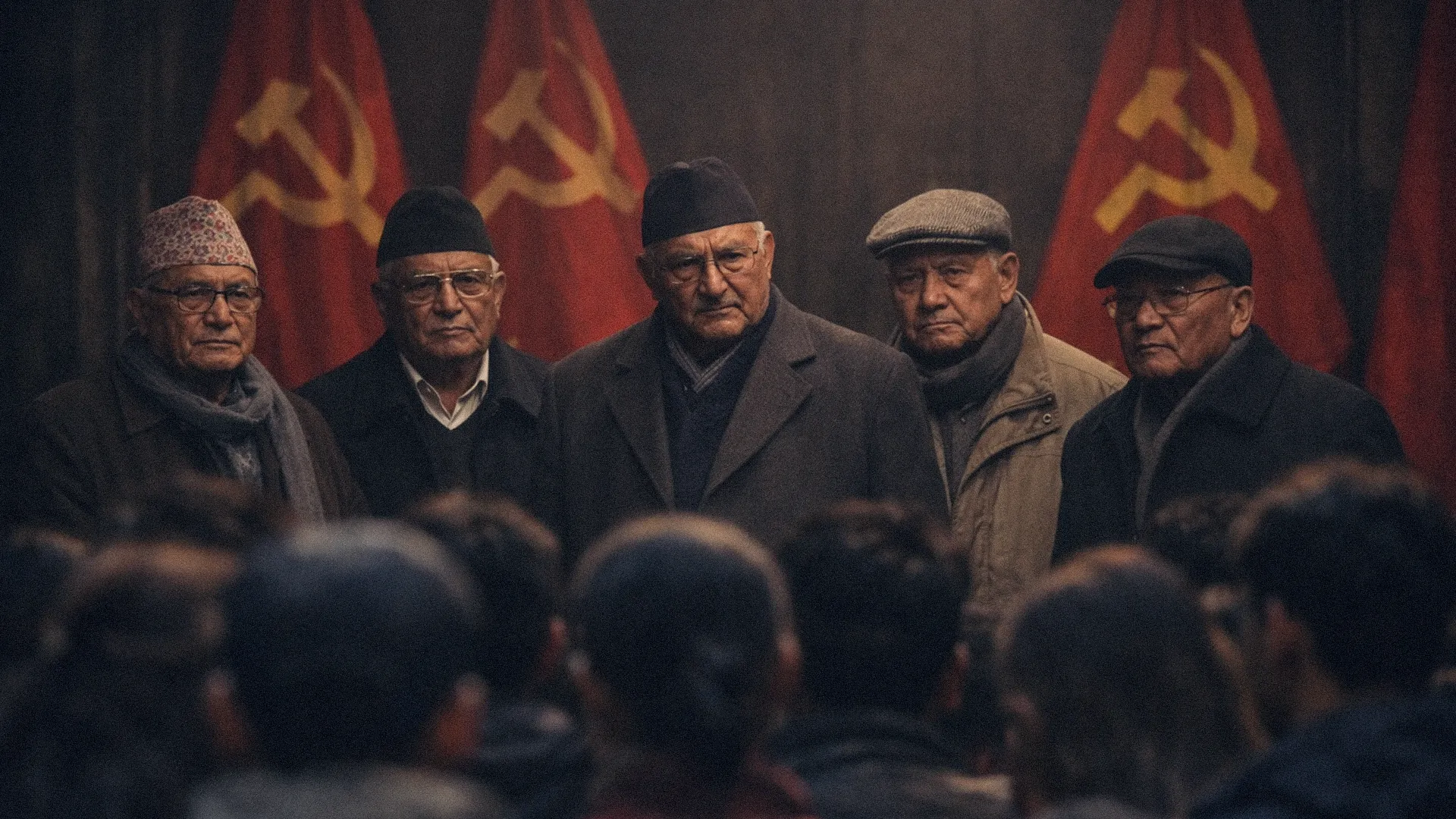
The Great Consolidation: A Desperate Survival Strategy
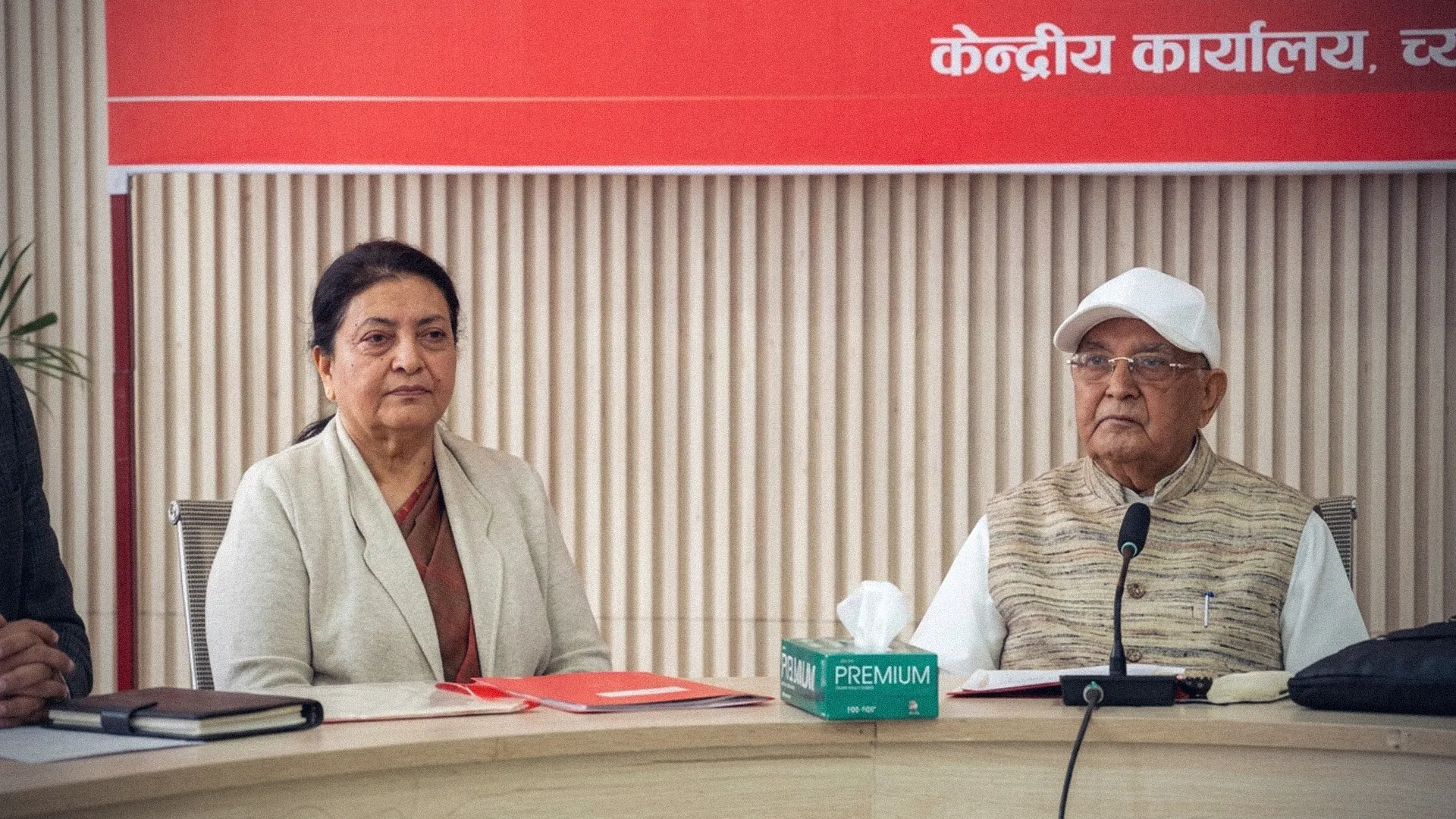
As of January 2026, the political landscape of Nepal has been radically redrawn by a single, desperate realization: unite or perish. On November 5, 2025, in a bid to survive the rising tide of public dissatisfaction, ten leftist factions—including the former Maoist Centre and Unified Socialist—formally merged to create the Nepali Communist Party.1 Led by the former revolutionary commander Pushpa Kamal Dahal ‘Prachanda’ as Coordinator and seasoned veteran Madhav Kumar Nepal as Joint Coordinator, this new bloc represents a consolidation of the non-UML left.2 This historic merger was not born of ideological fervor, but of existential anxiety following the "Gen-Z protests" of 2025 that toppled the previous administration and forced upcoming elections scheduled for March 5, 2026.3
The only major communist force standing apart from this new conglomerate is the Communist Party of Nepal (Unified Marxist–Leninist), or CPN-UML. Led by Chairman K.P. Sharma Oli, the UML remains a formidable, distinct organization with a massive grassroots network.4 The result is a polarized binary: the "socialist" bloc of Prachanda and Madhav Nepal versus the "conservative" communist bloc of K.P. Oli. As the country heads toward the polls, these aging patriarchs—who have rotated power for three decades—now face their most dangerous enemy yet: a young electorate demanding generational change.
The Imported Revolution: From Calcutta to the Jungle
To understand the current crisis, one must look back to the movement's foreign origins. Communism did not arrive in Nepal from China or Russia, but via India. Verified historical records confirm that Pushpa Lal Shrestha founded the first Communist Party of Nepal on April 22, 1949, in Calcutta, aiming to overthrow the autocratic Rana regime.5 The movement remained fractured until two distinct streams emerged. The first was the radical "Jhapali" revolt of 1971, inspired by India’s Naxalite movement, where young radicals—including a youthful K.P. Sharma Oli—beheaded class enemies in a misguided attempt at revolution. This violent stream eventually moderated into today’s CPN-UML.
The second stream was the "People’s War" launched in 1996 by the Maoists under Prachanda and Dr. Baburam Bhattarai. Operating under the "Prachanda Path," this insurgency was linked to the Revolutionary Internationalist Movement (RIM) and waged a bloody decade-long conflict that claimed over 17,000 lives. While the 2006 peace deal brought them into the mainstream, the transition from guerrilla warfare to parliamentary politics sowed the seeds of their current decay.

Interested in this ad?
Would you like to continue to the link or provide your information for more details?
Please provide your information
To continue, please fill in your details
The Decay of Ideology: Corruption and the "Bourgeois" Turn
By 2024, the "proletariat vanguard" had transformed into what critics and young protesters called "rotten dictators." The ideological lines blurred as communist leaders oversaw stock markets, land deals, and private hospitals. The "Cantonment Scandal" of 2008, where Maoist leadership was accused of pocketing billions meant for combatant salaries, remains a haunting unresolved allegation. Similarly, the Oli-led government faced intense public scrutiny over the "Omni and Yeti" business scandals, where the administration was accused of favoring specific corporate groups for state contracts.
This moral erosion was further highlighted by the mushrooming of splinter parties, driven not by policy but by personality cults. Leaders like Mohan Baidya and Netra Bikram Chand ‘Biplav’ splintered off to form radical fringes, accusing the mainstream leadership of betraying the revolution. Meanwhile, the Nepal Workers and Peasants Party (NWPP) maintained an isolationist stronghold in Bhaktapur, continuing to embrace North Korean Juche ideology—a verified anomaly in the global communist movement.
A Future in the Balance
The "Mission 84" and Gen-Z movements of 2025 served as a wake-up call, stripping the old guard of their revolutionary "moral high ground." The formation of the Nepali Communist Party in late 2025 is the direct consequence of this pressure—a final attempt to pool votes against the UML and the rising independent forces. As the March 2026 election approaches, the question remains whether this merger is a masterstroke of political survival or merely the final act of a fading generation. The hammer and sickle still fly over Kathmandu, but the hands holding them are shaking.