


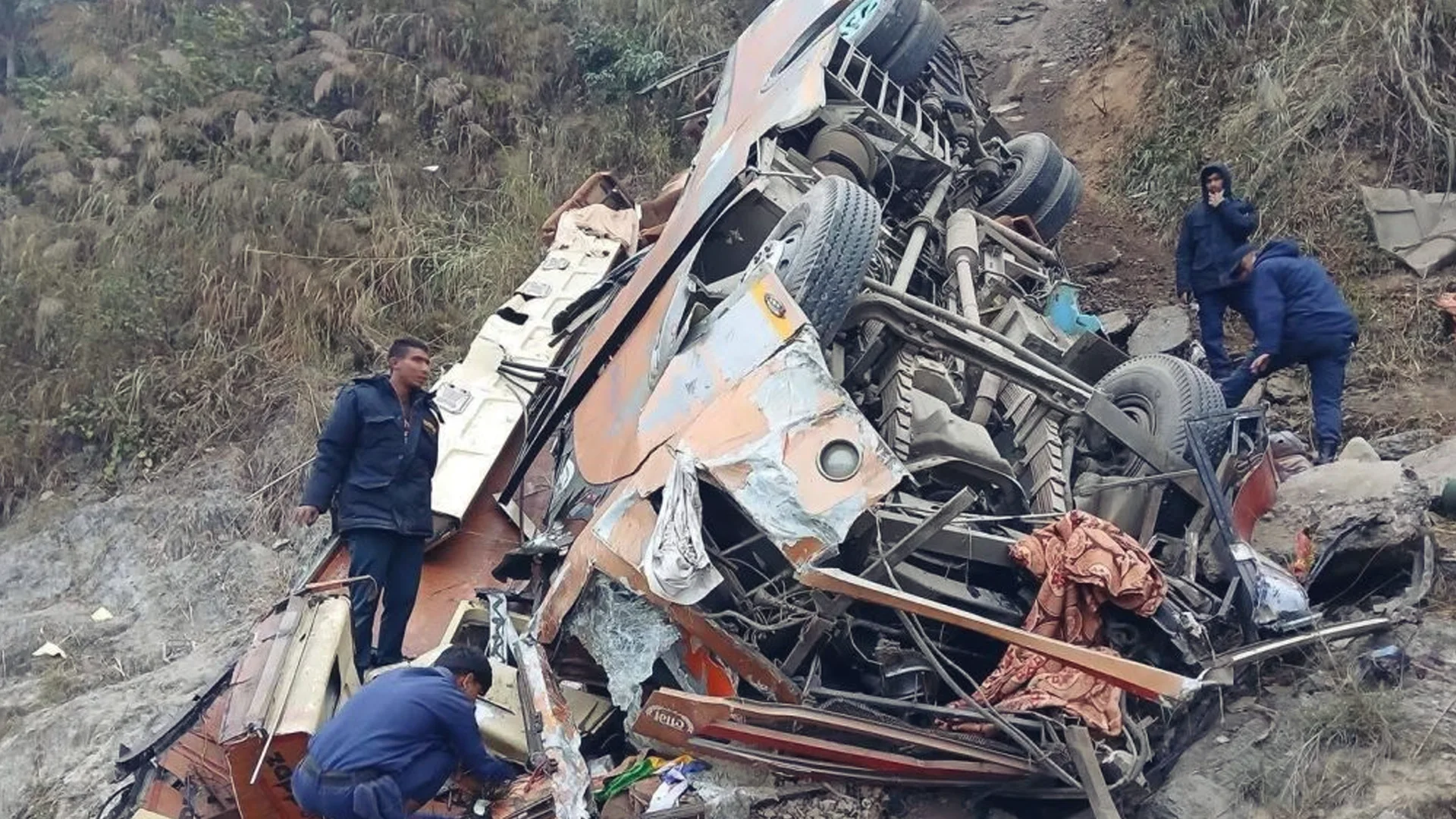
A fresh wave of fatal bus crashes has intensified questions over the safety and accountability of Nepal’s public transport system, after 19 people were killed when a Pokhara-bound bus plunged off the road near the Trishuli riverbank in Dhading.
Sunday’s crash was not an isolated tragedy. Separate bus accidents were also reported in Udayapur and Dang the same day. Just weeks earlier, major crashes in different districts had already claimed dozens of lives. Police data show that road accidents in Nepal result in an average of more than seven deaths each day, underscoring a persistent pattern rather than sporadic incidents.
The spotlight has returned to structural weaknesses in regulation. Public transport operations are largely managed by the private sector, and experts say there is no unified authority overseeing the sector. Responsibilities are fragmented across agencies, resulting in weak coordination and inconsistent enforcement on highways.
Consumer rights advocate Madhav Timilsina argues that neither the state has enforced strict oversight nor transport operators have undertaken meaningful self-reform. Former Physical Infrastructure and Transport Ministry Secretary Devendra Karki has acknowledged that the long-discussed transport authority has yet to materialize, leaving regulatory leadership diffused.

Interested in this ad?
Would you like to continue to the link or provide your information for more details?
Please provide your information
To continue, please fill in your details
Past recommendations also remain largely unimplemented. After last year’s Simaltal disaster, a government committee proposed short-, medium-, and long-term measures, including the formation of a road safety council, a dedicated transport authority, mandatory roadworthiness certification, automated vehicle monitoring systems, and stricter time-card enforcement. However, those proposals have not been fully acted upon.
Rescue preparedness is another concern. Difficult terrain, limited equipment, and the absence of well-equipped trauma centers near highways often delay life-saving response. Experts have suggested improving emergency infrastructure, including better lighting, monitoring systems, and aviation support for nighttime rescue operations.
As debates over reform continue, the recurring loss of life has placed renewed urgency on establishing a defined and accountable regulatory framework. Without coordinated oversight and implementation of existing recommendations, road safety challenges are likely to remain a pressing national issue.