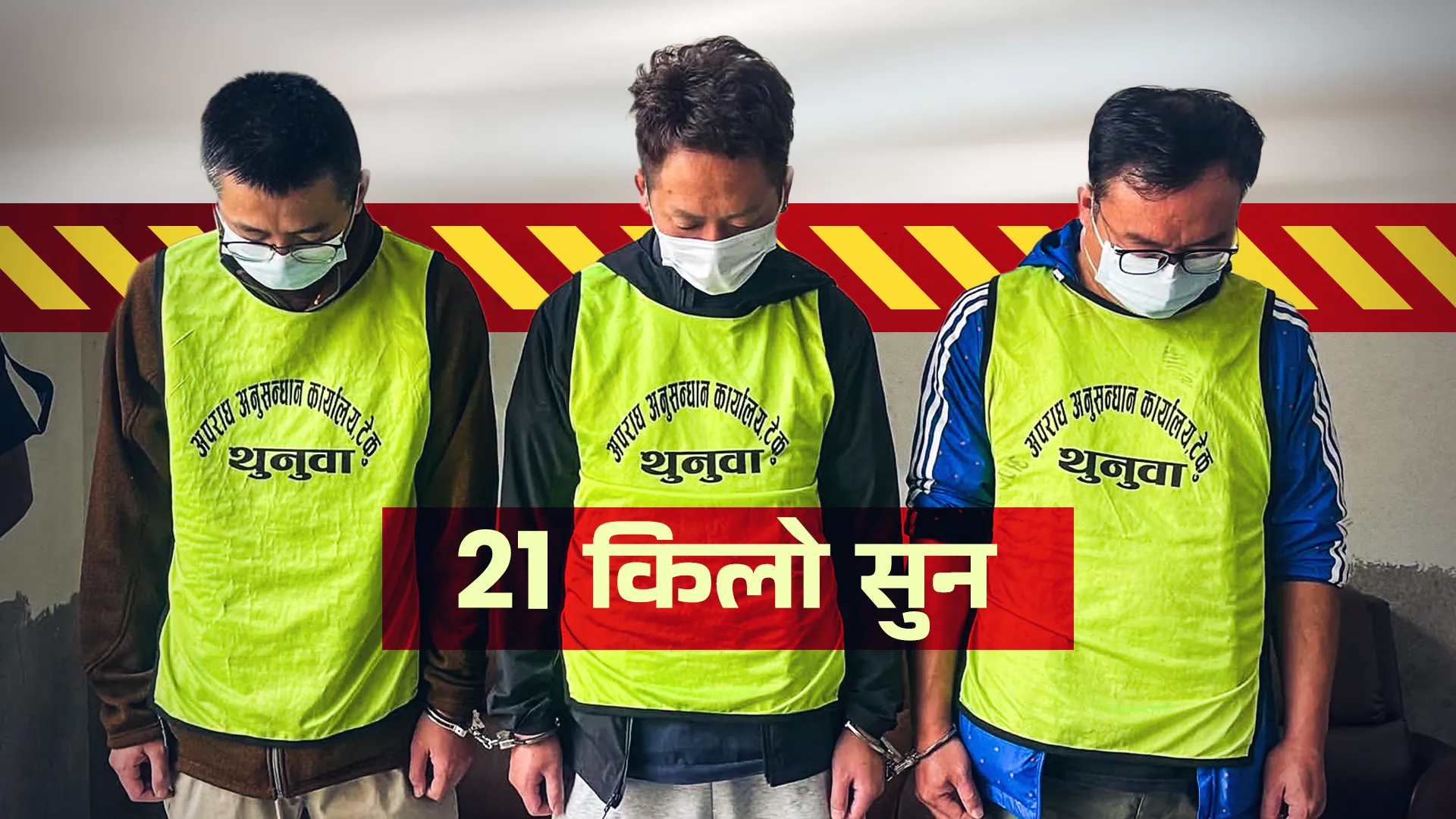



A confirmed tiger skin trafficking case has ended with a five-year prison sentence being upheld for one Chinese national in Nepal, while three co-accused have been cleared on appeal, reinforcing the evidentiary threshold required in wildlife crime prosecutions.
According to the High Court Patan, a joint bench of judges Raju Kumar Khatiwada and Deepak Khanal affirmed the district court’s verdict against Chinese citizen Ma Jingbin, who had been working as a hotel manager. The earlier ruling ordering five years’ imprisonment and a compensation payment of Rs 1,000 remains in force after appellate review.
The same judgment overturned the conviction of three other Chinese nationals — Zhao Pengcheng, Niu Yuliang, and Peng Hui — granting them acquittal in the same trafficking case. The appellate order leaves Ma Jingbin as the only individual convicted in connection with the seized tiger skin.
The case originates from a police operation conducted on the night of Asar 21, 2078 (early July 2021) at Jianghu Kezhan Hotel in Kathmandu-17, Jyatha. Police entered the premises and detained four Chinese nationals who were found gambling in one of the rooms.

Interested in this ad?
Would you like to continue to the link or provide your information for more details?
Please provide your information
To continue, please fill in your details
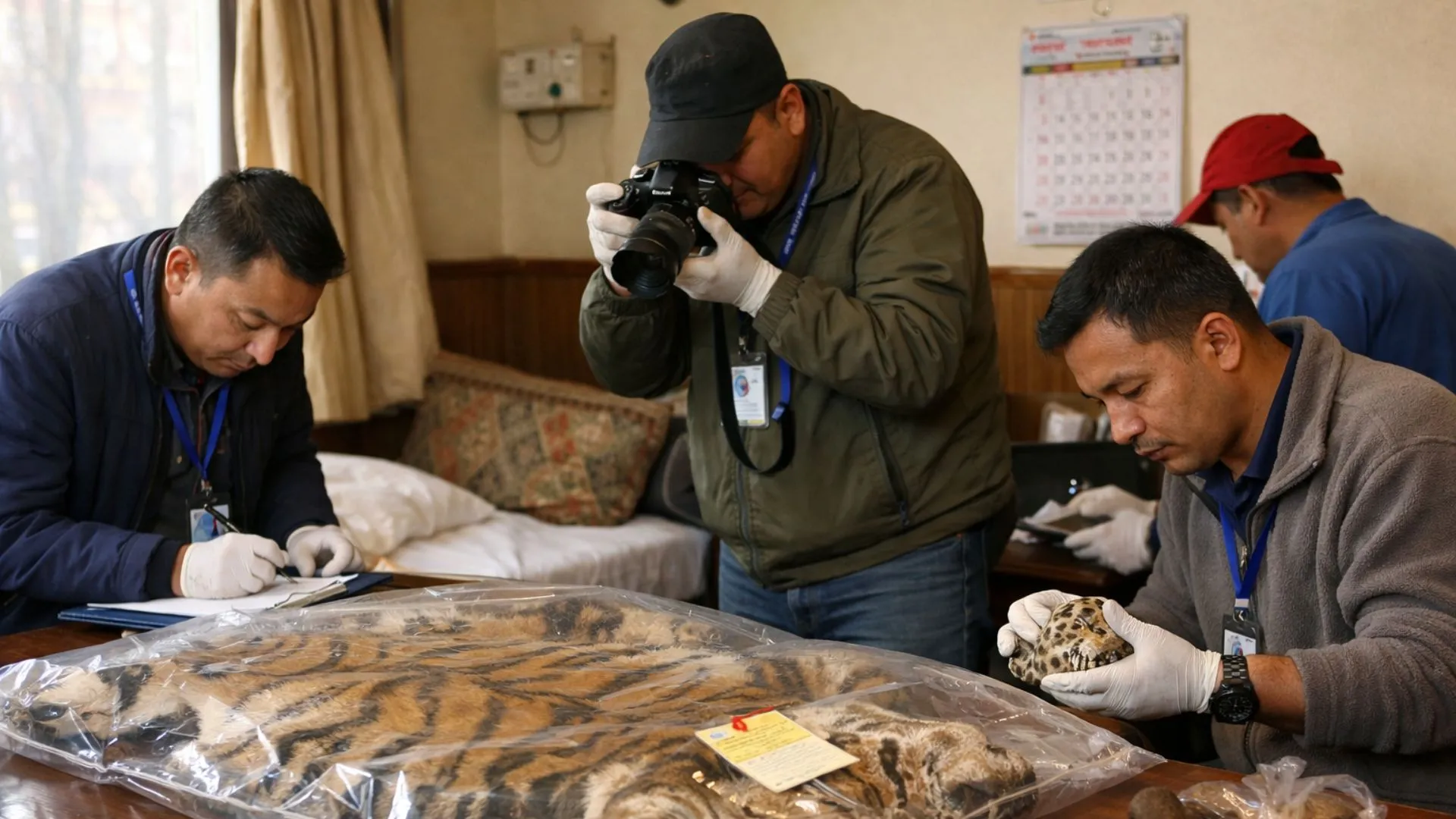
A subsequent search of another hotel room led to the recovery of a tiger skin measuring about 10 feet from head to tail. Officers also seized additional wildlife-related and religious items, including 900 beads of buddha chitta, 27 kilograms of rudraksha, and 20 pieces resembling musk pods, along with cash totaling Rs 889,155 and multiple mobile phones and ATM cards.
Testing by the National Trust for Nature Conservation identified the seized skin as belonging to a Royal Bengal tiger. The laboratory report further matched it with camera-trap records of a tiger coded CNP-FT54, photographed between 2015 and 2017 in the buffer zone area of Chitwan National Park.
The ruling highlights that while courts may differentiate liability among defendants, illegally traded protected wildlife parts remain traceable through forensic and camera-trap databases, strengthening future enforcement actions.