


Nepal and India have formalized a new framework to coordinate biodiversity conservation efforts along their shared border, where protected areas and wildlife corridors span both countries.
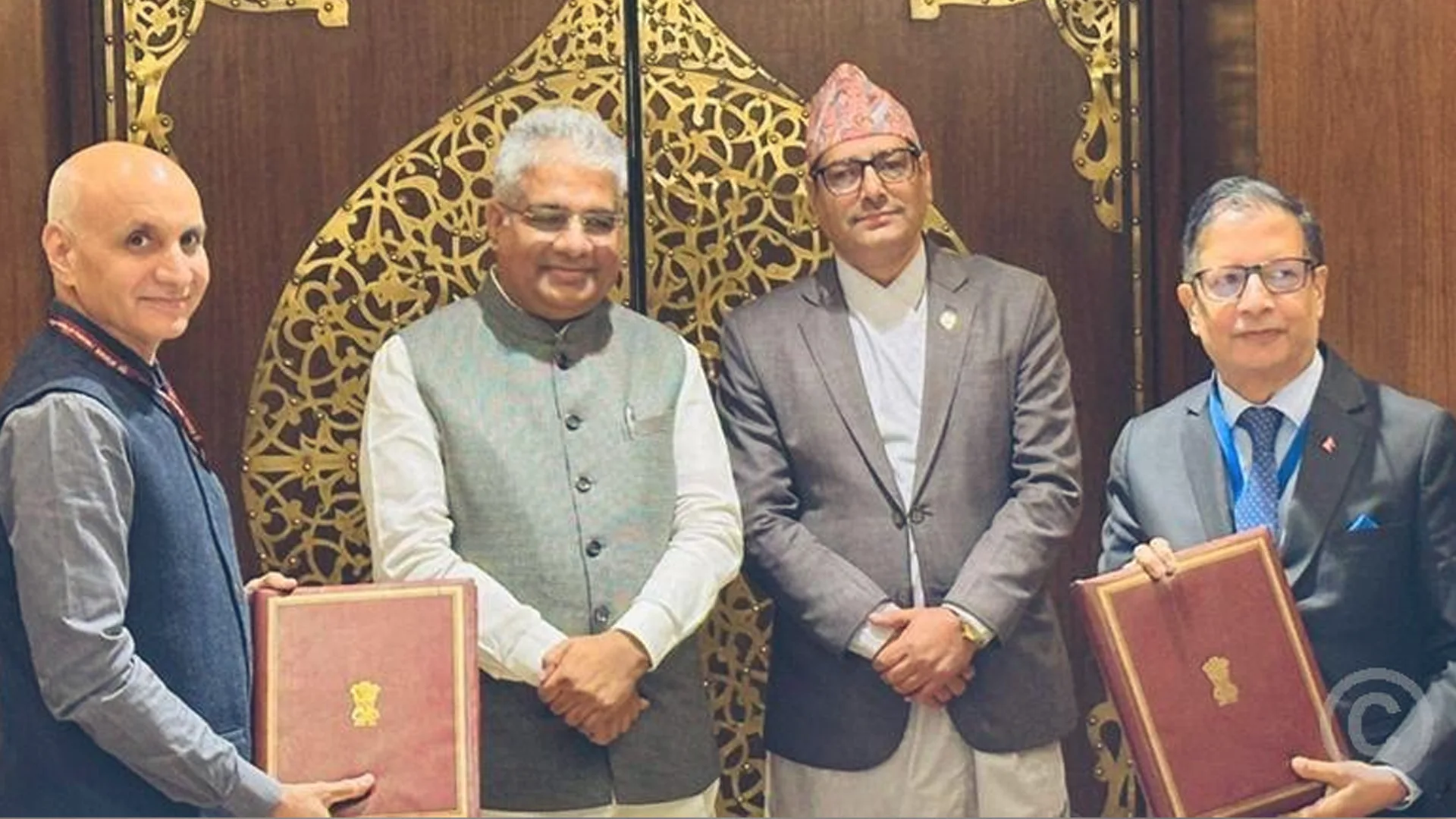
The bilateral Memorandum of Understanding was signed in New Delhi on Wednesday in the presence of Nepal’s Minister for Forests and Environment Madhav Prasad Chaulagain and India’s Minister for Environment, Forest and Climate Change Bhupender Yadav. Nepal’s Ambassador to India Dr. Shankar Prasad Sharma and India’s Environment Secretary Tanmay Kumar signed the document on behalf of their respective governments.
According to Nepal’s Ministry of Forests and Environment, the agreement aims to enhance cooperation in protected area management, biodiversity strategies and wildlife crime control. Nepal and India are both parties to several international environmental conventions under the United Nations framework, including those related to biodiversity conservation.
The two countries share contiguous ecosystems where elephants, rhinos, tigers and other wildlife frequently move across borders. The MoU is expected to facilitate joint patrolling, regular meetings, exchange of information and best practices, and coordinated action against poaching and illegal wildlife trade in border regions.

Interested in this ad?
Would you like to continue to the link or provide your information for more details?
Please provide your information
To continue, please fill in your details
Forest Minister Chaulagain stated that the agreement will support research, monitoring and local-level awareness and capacity building, particularly in areas vulnerable to wildlife crime.
The document also provides for sharing wildlife crime intelligence through the South Asia Wildlife Enforcement Network (SAWEN). In Nepal, implementation will be led by the Ministry and its departments, including the Department of Forests and Soil Conservation and the Department of National Parks and Wildlife Conservation, in coordination with provincial and local authorities.
The MoU will be automatically renewed every five years unless terminated through diplomatic notice, and is subject to review every three years. Any implementation issues will be resolved through mutual understanding, reflecting a structured but flexible approach to long-term cooperation.