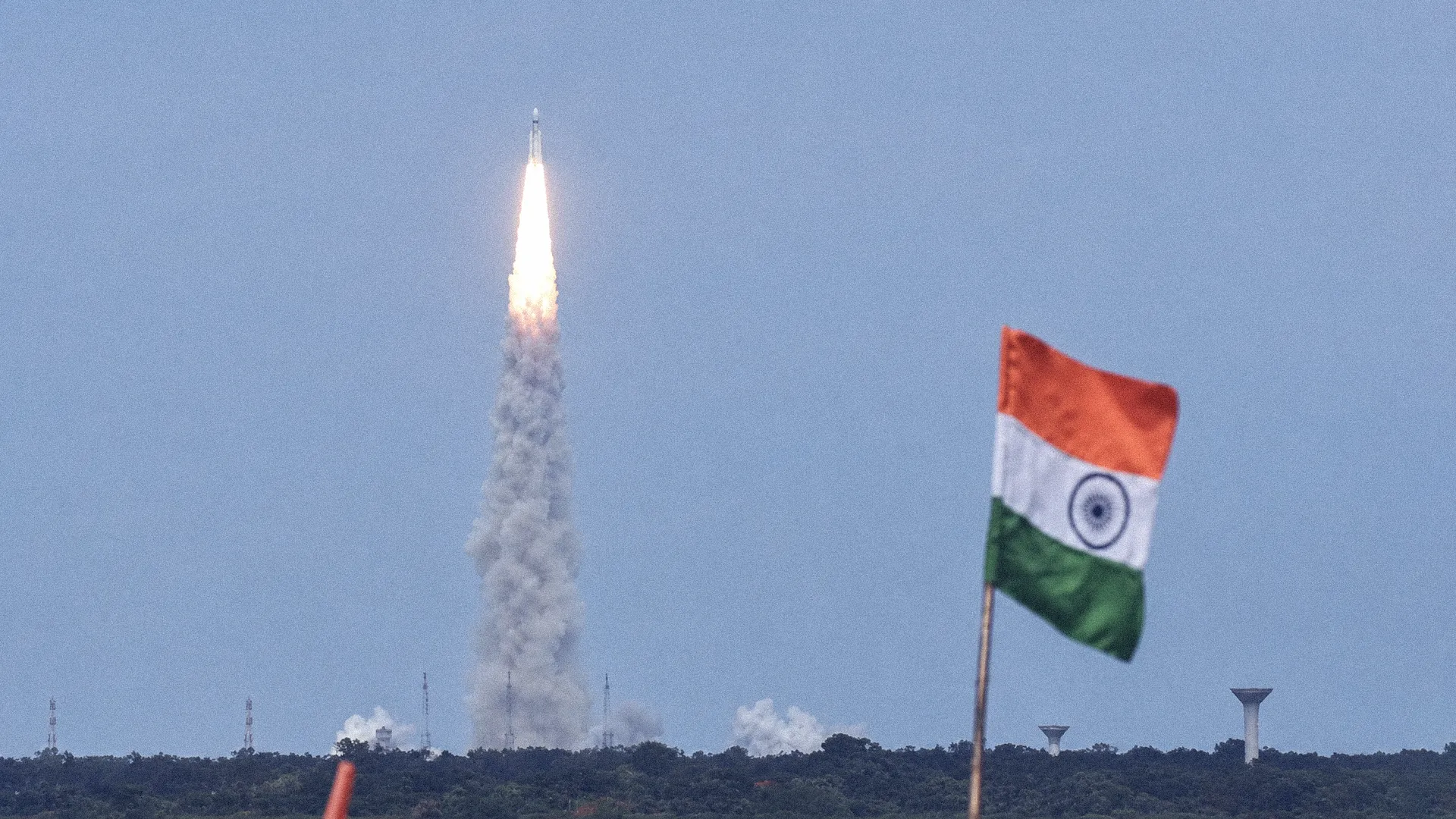
India is rapidly solidifying its position among the world's leading space powers through swift advancements in space technology. Recent achievements in satellite technology, launch systems, deep space exploration, and a thriving private space industry demonstrate the country's accelerating momentum. From the Chandrayaan lunar missions to the Aditya-L1 solar observatory, India has showcased its technical capability to execute complex space missions with cost-effective resource utilization.
Beyond scientific research, India is utilizing space capabilities as a foundation for national development and strategic autonomy. Space technology is increasingly integrated into key sectors, including communications, weather forecasting, agriculture, disaster management, satellite navigation, national defense, and digital infrastructure. This expansion has positioned India as a crucial space partner for the developing world while unlocking new opportunities for international technology collaboration.

Interested in this ad?
Would you like to continue to the link or provide your information for more details?
Please provide your information
To continue, please fill in your details
India's space emergence presents a notable alternative alongside China's expanding space ambitions. While China relies heavily on massive state investment and military capability, India is developing an alternative space power model built on democratic institutional frameworks, active private sector participation, and broad international partnerships. The expansion of private startups in satellite production, earth observation, and launch services is shifting India's space ecosystem from a government program to a broader industrial framework.
This technological evolution holds significant relevance for Nepal, given its complex Himalayan topography and exposure to natural disasters. India's advancements offer potential benefits for Nepal in disaster risk management, climate monitoring, agricultural planning, communications, and border management through enhanced bilateral cooperation. India's journey reflects a broader shift showing space is no longer exclusive to traditional superpowers, setting the stage for its space program to serve as a cornerstone of South Asian economic, scientific, and strategic power in the coming decade.