


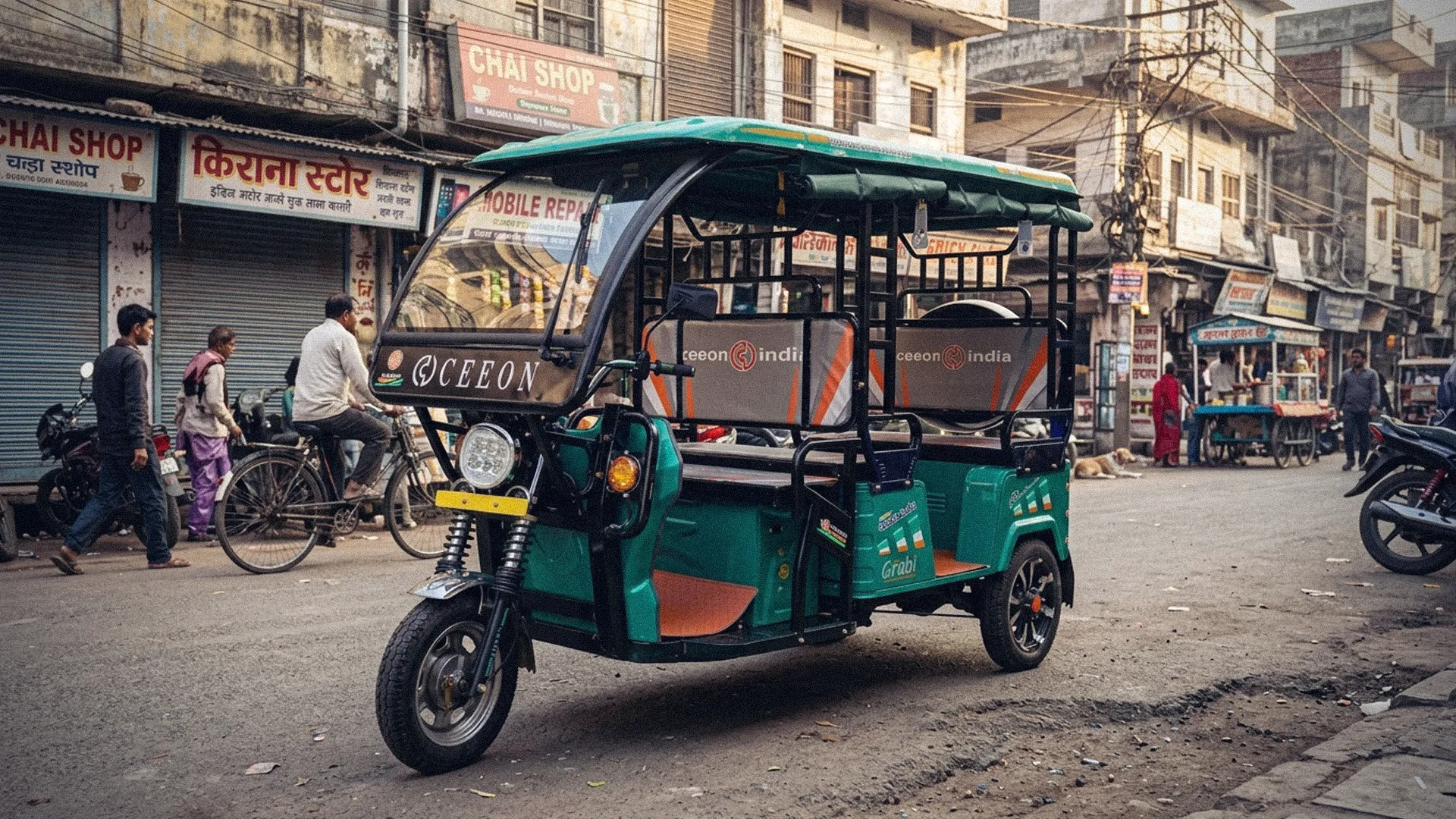
The adoption of electric vehicles in India is expanding at a rapid pace. Electric rickshaws, in particular, are becoming an essential part of India's urban and semi-urban transport systems. This demonstrates that the development of electric vehicles in India is not limited to expensive cars and advanced technology, but is directly connected to the daily commute of the general public.
Thousands of drivers across various Indian cities are using electric rickshaws as their primary source of income. Electric rickshaws have become popular due to relatively lower operating costs, savings on petrol and diesel expenses, and their suitability for short-distance travel.
The growth of local manufacturing and domestic supply chains has also become significant in India's electric vehicle market. As production capacity for batteries, motors, and other electronic systems expands, India is striving to reduce its import dependency and build its own electric vehicle industry.

Interested in this ad?
Would you like to continue to the link or provide your information for more details?
Please provide your information
To continue, please fill in your details
This transformation is also significant from an environmental perspective. Compared to traditional petrol and diesel vehicles, electric vehicles help reduce direct pollution. In a country like India, with a huge population and rapid urbanization, the expansion of electric public and personal transport holds the potential to reduce air pollution and reliance on fossil fuels.
A defining feature of India's electric vehicle revolution is its bottom-up expansion. The widespread adoption of electric rickshaws and two-wheelers has brought electrification into the daily lives of average consumers.
This is laying the groundwork for India to position itself not only as a future electric vehicle market but also as a potential global hub capable of developing low-cost, large-scale electric transportation.