


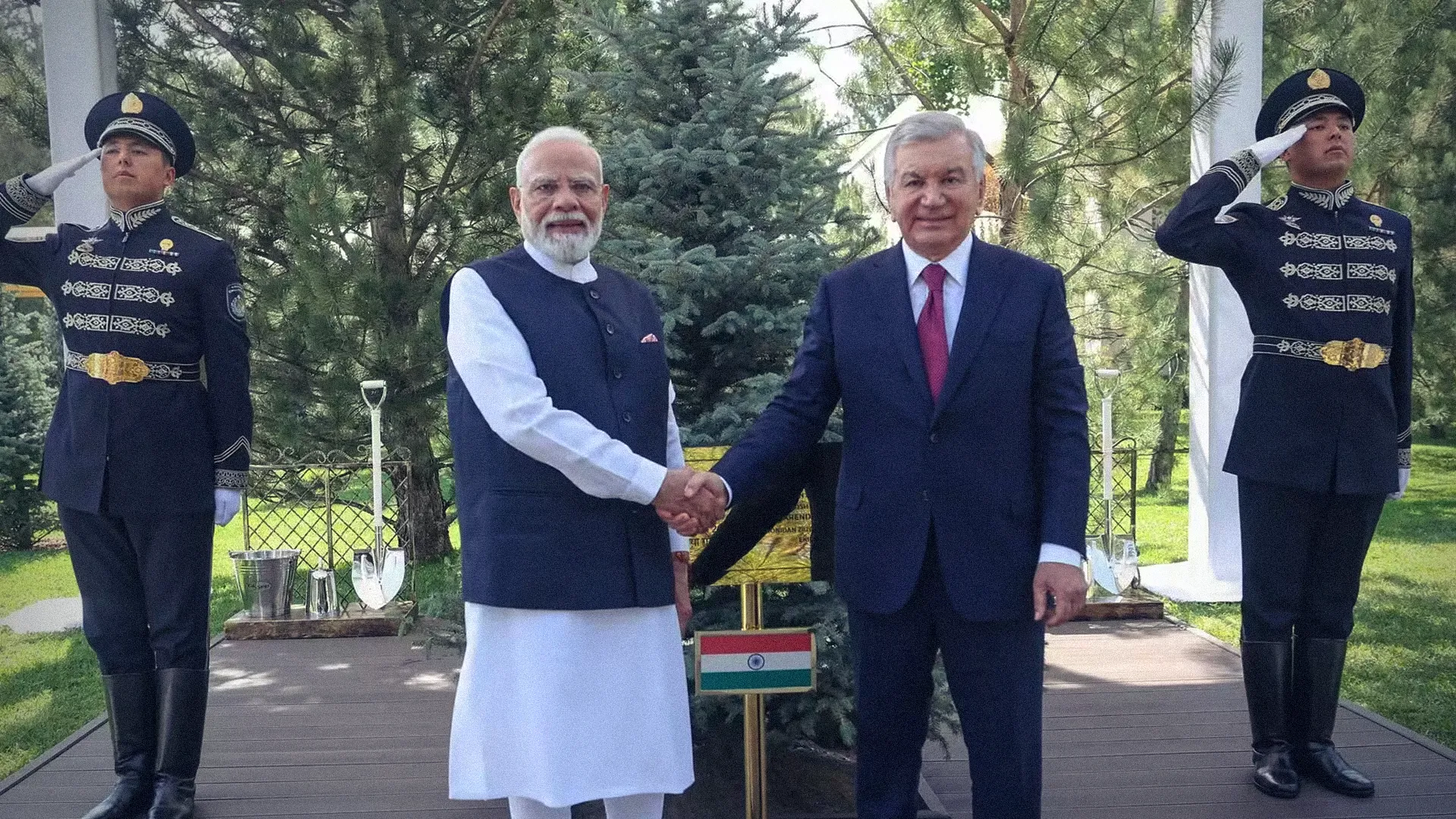
New Delhi — India and Uzbekistan have upgraded their bilateral relations to the level of a 'Comprehensive Strategic Partnership'. Following high-level talks during Prime Minister Narendra Modi's visit to Uzbekistan, both countries announced a target to increase bilateral trade to over 5 billion US dollars by 2030.
Trade and economic ties between India and Uzbekistan have been expanding recently. In 2025, trade between the two countries reached approximately 1.3 billion dollars. The new target represents a significant increase compared to that figure. Both sides agreed to remove non-tariff barriers, expand market access, and strengthen investment and supply chains to boost trade.
Another key aspect of the talks is establishing a framework for long-term uranium supply from Uzbekistan to India. This cooperation is considered significant as India seeks to diversify its nuclear energy-related supply chain amid its growing energy demands.
Both countries pledged to expand cooperation in defense and security, critical minerals, infrastructure, digital public infrastructure, artificial intelligence, agriculture, health, pharmaceuticals, education, tourism, and technology. A decision was also made to establish a new coordination mechanism led by the foreign ministers of both countries.

Interested in this ad?
Would you like to continue to the link or provide your information for more details?
Please provide your information
To continue, please fill in your details
Significant cooperation has also progressed in the digital sector. A commercial agreement was signed between India's NPCI International Payments and Uzbekistan's National Interbank Processing Centre to link India's UPI system with Uzbekistan's national QR system. This could ease digital payments for travelers and businesses traveling from India to Uzbekistan in the future.
As India expands its strategic presence in Central Asia, the upgrade in ties with Uzbekistan is seen as significant. Expanding trade, energy, minerals, security, and transport connectivity with Uzbekistan, located at the geographical heart of Central Asia, could be crucial for India's regional connectivity and supply chain diversification.
An agreement was also reached to expand educational, cultural, and civilizational ties between the two countries. An understanding was reached to cooperate on the conservation and archaeological research of Buddhist heritage sites Fayaz Tepa and Karatepa in Uzbekistan.
The decision to elevate India-Uzbekistan relations to a 'Comprehensive Strategic Partnership' signals that ties will now expand beyond traditional trade and diplomacy into energy, technology, defense, critical minerals, digital infrastructure, and regional connectivity.