


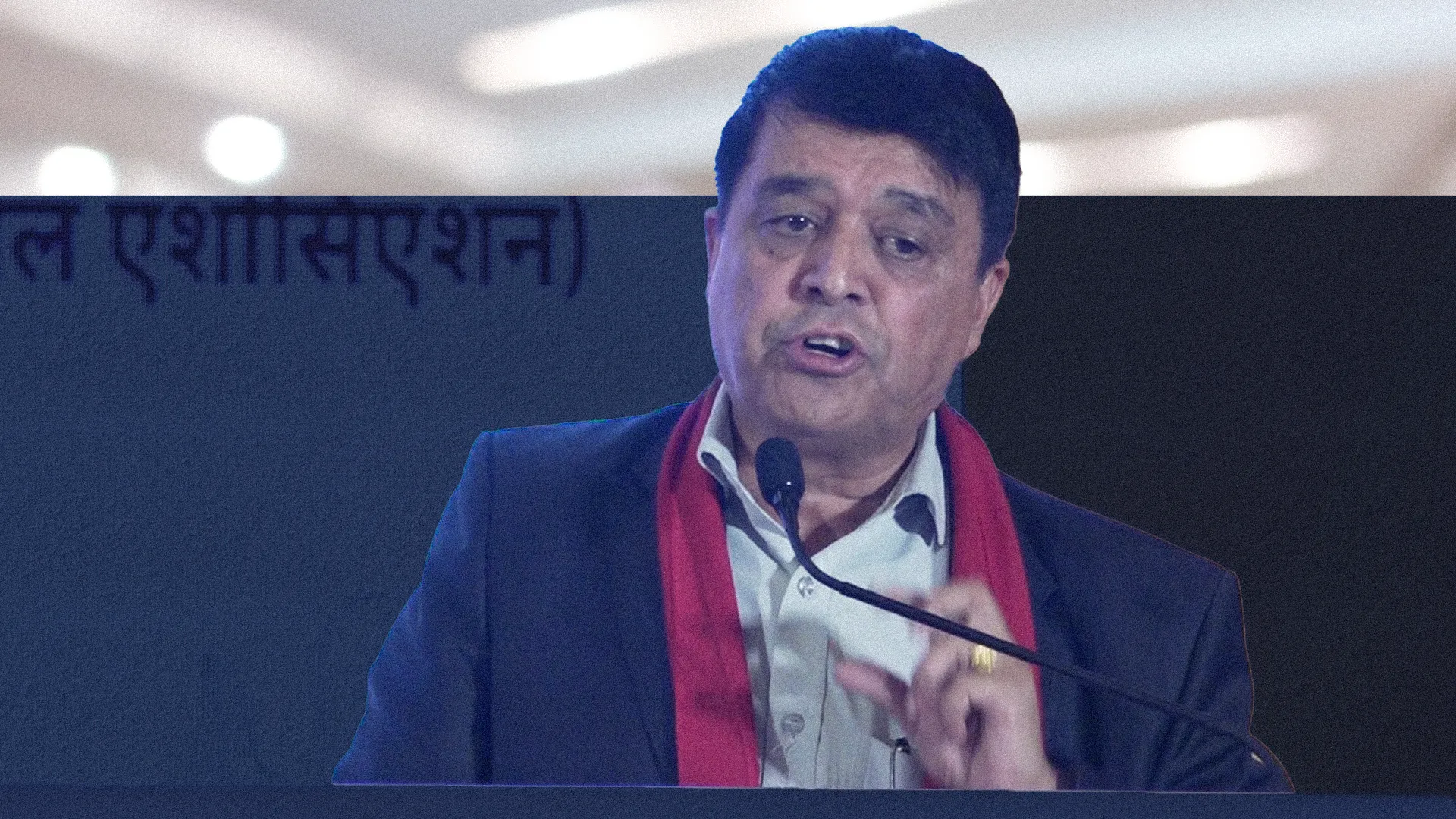
A significant rift has emerged within the Federation of Nepalese Chambers of Commerce and Industry (FNCCI) as President Chandra Prasad Dhakal issued a stern ultimatum to his confirmed successor, Anjan Shrestha. With the federation’s elections scheduled for next week, Dhakal publicly criticized Shrestha—the current Senior Vice President who is constitutionally set to lead the next term—for allegedly abandoning institutional neutrality to spearhead a specific electoral faction. The President characterized the distribution of partisan pamphlets by a future leader as a direct violation of the spirit of the FNCCI’s leadership transition system.
The core of the dispute rests on the "Senior Vice President to President" automatic elevation model, which Dhakal argues was designed to produce a non-partisan, consensus-oriented leader. According to Dhakal, Shrestha’s active involvement in forming a "panel" undermines the internal democracy and impartiality required of the upcoming presidency. Dhakal stated that while he remains an advocate for a unanimous leadership selection, he will not remain a silent spectator if the incoming president continues to act as a leader of only one group. He warned that he is prepared to openly support opposing candidates should Shrestha fail to retreat to a neutral stance.

Interested in this ad?
Would you like to continue to the link or provide your information for more details?
Please provide your information
To continue, please fill in your details
Beyond the internal politics, Dhakal highlighted the strategic risks of a divided private sector, particularly while engaging with a powerful government holding a near two-thirds majority. He asserted that factionalism weakens the federation’s bargaining power at a time when unity is paramount. Reflecting on his own three-year tenure, Dhakal claimed total success in fulfilling his initial five-point agenda, including the cabinet-approved strategy for private sector protection. As the election approaches, the federation stands at a crossroads: either a return to consensus or a full-scale prestige battle between the current and future heads of Nepal’s apex business body.