


China’s clean-energy exports to the Global South are increasingly being criticized as “underscale” and strategically manipulative. While Beijing celebrates its rise as an ‘electrostate,’ countries across Africa, South Asia, and Latin America are voicing dissatisfaction with the quality, durability, and political strings attached to Chinese technology. This asymmetric dependency is reshaping multipolar geopolitics in ways that may ultimately constrain the very nations that sought affordable energy solutions.
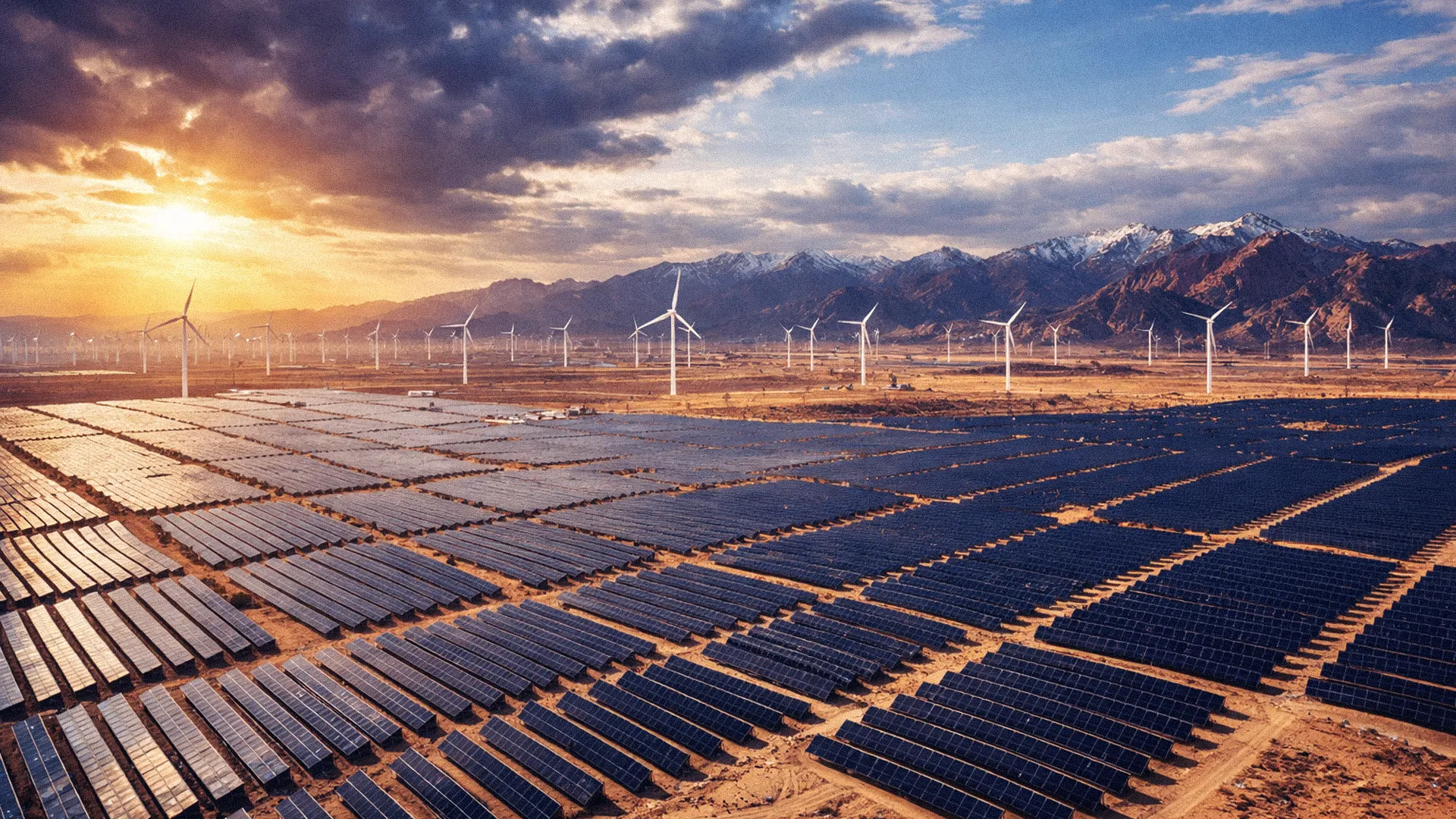
China’s ambition to become the world’s leading electrostate is not accidental; it is carefully engineered through its industrial policy and global outreach. The 2026 Five-Year Plan sets an ambitious target of 3,600 GW of wind and solar capacity by 2035, with colossal desert bases in Inner Mongolia and the Gobi Desert serving as the backbone of its export pipeline. These projects are not merely domestic energy solutions; they are designed to flood international markets with Chinese solar panels, wind turbines, and EV batteries. For Beijing, clean energy is not just about climate; it is about power projection. By positioning itself as the indispensable supplier of renewable technology, China is attempting to lock the Global South into its orbit.
Yet beneath the glossy narrative of affordability and accessibility lies a harsher reality. Governments across Africa and Southeast Asia have reported frequent breakdowns of solar installations, with panels failing to withstand local climatic conditions. Grid integration has proven inefficient, leading to costly repairs and delays in electrification projects. In Latin America, wind turbines imported from China have been criticized for their short lifespan compared to European alternatives. These are not isolated incidents but part of a broader pattern: China’s clean-energy exports often represent state-subsidized overcapacity, designed to absorb domestic surplus rather than meet the long-term needs of recipient nations. The result is a wave of underscale technology—cheap upfront, but expensive in maintenance and replacement.
This dynamic creates asymmetric dependencies. China’s financing model typically ties loans to technology imports, meaning countries that accept Chinese funding are compelled to purchase Chinese equipment. Once locked into these supply chains, recipient nations find themselves dependent not only on Chinese hardware but also on Chinese spare parts, technicians, and after-sales services. This dependency undermines their ability to hedge strategically in a multipolar world. Nations that might otherwise balance ties between China, the West, and regional powers are constrained by their reliance on Beijing’s energy ecosystem. Worse still, there is little meaningful technology transfer. Countries remain consumers rather than co-developers of innovation, perpetuating a cycle of dependency rather than empowerment.

Interested in this ad?
Would you like to continue to the link or provide your information for more details?
Please provide your information
To continue, please fill in your details
The political implications are profound. China’s electrostate leverage extends far beyond economics. Energy exports are increasingly used to secure political concessions—whether in UN voting alignment, Belt and Road expansion, or bilateral trade negotiations. Leaders in Africa and Latin America have begun to frame Chinese clean-energy imports as neo-mercantilist exploitation, a modern echo of resource dependency dressed in green rhetoric. The frustration is palpable: while China earns billions from its exports, recipient nations are left with unreliable infrastructure and diminished sovereignty. In a multipolar order where hedging is essential, dependency on a single supplier narrows options and weakens bargaining power.
The dissatisfaction is not merely technical—it is strategic. Countries of the Global South entered into clean-energy partnerships with China hoping for empowerment, but instead they face constraints on autonomy. The promise of affordable energy has morphed into a geopolitical trap, where sovereignty is traded for short-term electrification gains. This is why the term “electrostate” is so telling: China is not just an exporter of technology, it is a state that wields electricity as a geopolitical weapon.
The way forward requires recalibration. Global South nations must diversify suppliers, tapping into European, Indian, and U.S. clean-energy firms to build balanced ecosystems. India’s solar manufacturing push, Europe’s advanced wind technology, and U.S. battery innovation all offer alternatives that can reduce reliance on Beijing. Equally important is local capacity building. Investment in domestic manufacturing and R&D is essential to break the cycle of dependency. Countries must move from being passive consumers to active innovators, developing technologies suited to their own climates and grids. Transparency in contracts is another critical step. Governments should demand open procurement processes to avoid hidden dependency clauses that tie them to Chinese suppliers for decades. Finally, South-South cooperation—collaborative frameworks among developing nations—can reduce vulnerability by pooling resources, sharing expertise, and negotiating collectively.
China’s rise as an electrostate is not merely an economic success story; it is a geopolitical restructuring of energy dependencies. While Beijing profits handsomely from underscale exports, the Global South is left grappling with unreliable technology and constrained sovereignty. Unless recipient nations recalibrate their strategies, the clean-energy transition risks becoming another chapter in dependency politics rather than empowerment. The challenge is clear: the Global South must seize agency in its energy future, or risk being permanently tethered to Beijing’s electrostate ambitions.