


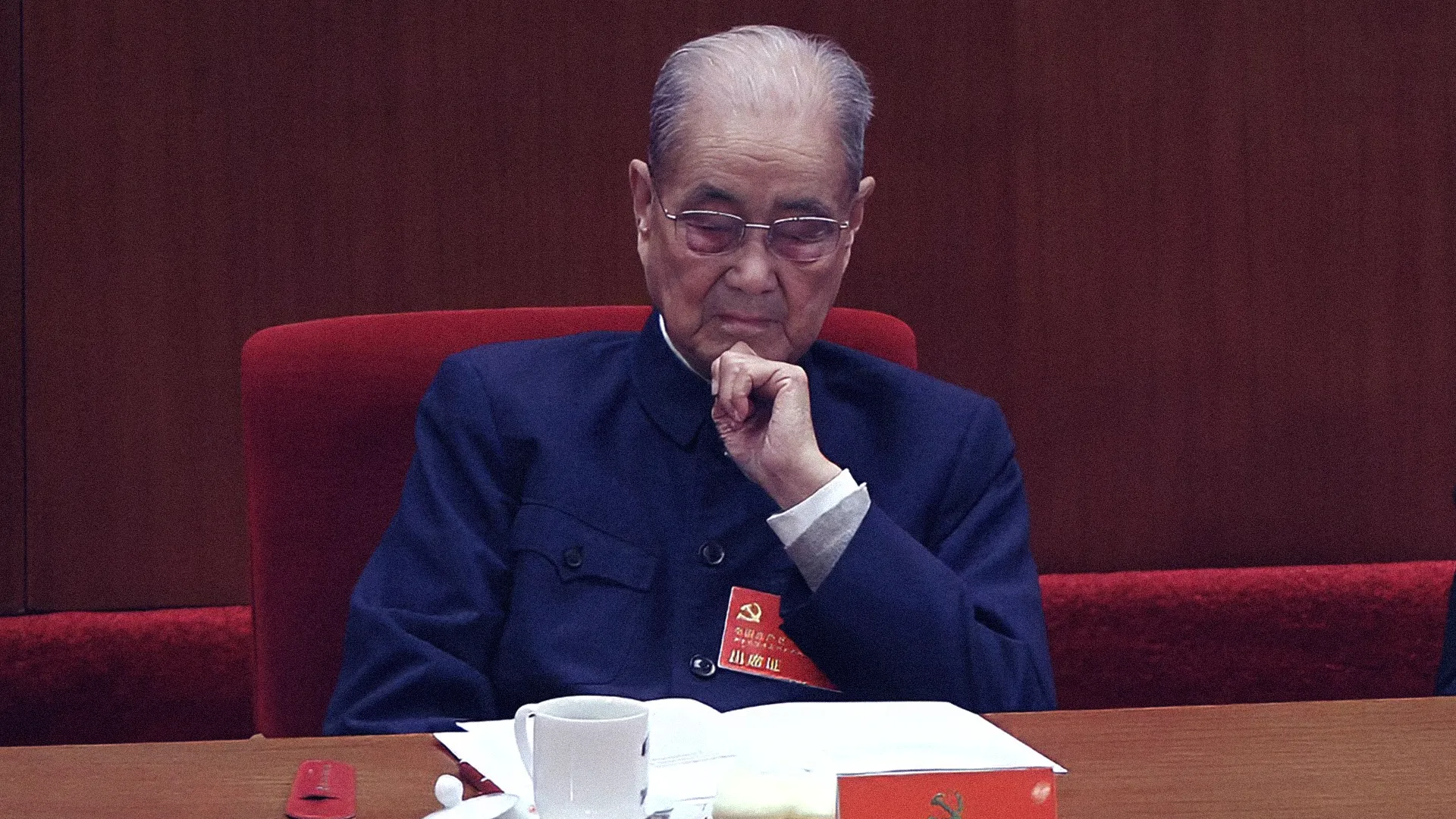
China’s leadership has drawn attention for the timing of the announcement of veteran Communist Party figure Song Ping’s death, which coincided with the opening of the Two Sessions, a key political event.
According to the available report, Song Ping, aged 109, was one of the last prominent figures linked to earlier eras of the Chinese Communist Party (CCP). His passing carried symbolic significance, but the decision to announce it on March 4 has been widely viewed as a carefully managed move within China’s political system.
The report indicates that announcements of senior leaders’ deaths in China are often coordinated, with timing controlled by authorities rather than left solely to families. In this case, the announcement came amid circulating discussions about an alleged letter attributed to Song Ping, which reportedly criticized certain policies under President Xi Jinping. Although the authenticity of the letter was not confirmed, it had generated attention.
By aligning the announcement with the start of the Two Sessions, the focus shifted toward official mourning and ceremonial observances. This development occurred at a time when China is facing multiple challenges, including fiscal pressures at the local government level and ongoing internal and external concerns.

Interested in this ad?
Would you like to continue to the link or provide your information for more details?
Please provide your information
To continue, please fill in your details
The report also notes that Song Ping retained symbolic influence even after retirement, particularly during earlier leadership periods. His presence, though largely ceremonial in later years, continued to hold historical weight within the Party.
Observers cited in the report suggest that managing the timing of such announcements reflects the CCP’s broader emphasis on maintaining stability and shaping public discourse. As China approaches future political milestones, including major Party gatherings, controlling narratives remains a key consideration.
Song Ping’s passing marks the end of a long political chapter linked to earlier leadership eras. The handling of the announcement highlights how sensitive developments are communicated within China’s governance structure, particularly during periods of heightened political importance.