


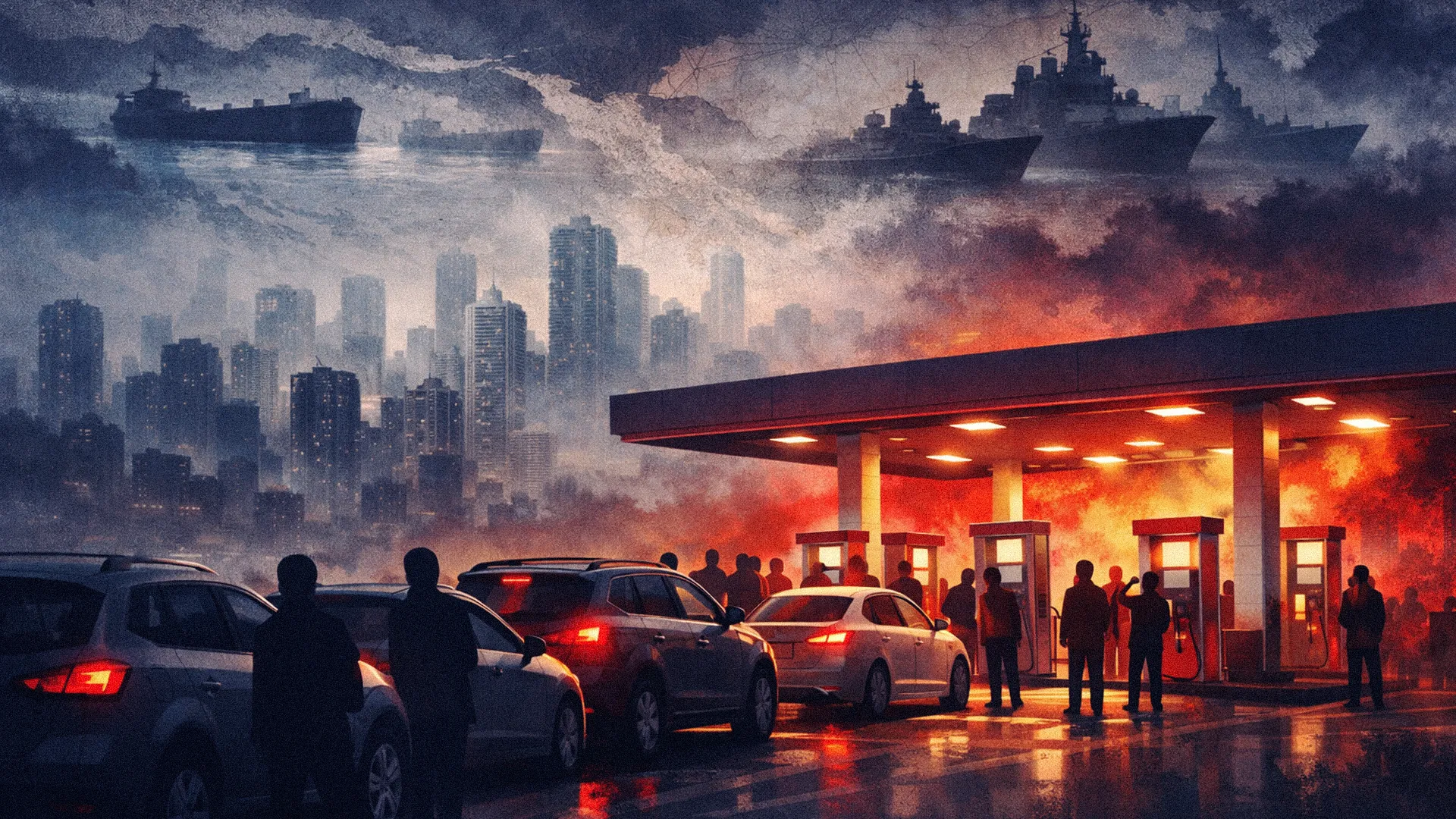
China finds itself squeezed between mounting external pressures and internal vulnerabilities. From volatile energy routes and contested maritime zones to rising diplomatic backlash and trade scrutiny, Beijing’s carefully managed image of control is unravelling. The Chinese Communist Party faces simultaneous challenges—strained alliances, accusations of proliferation, and intensifying regional resistance—that threaten its global standing. What appears as routine manoeuvring is, in reality, a precarious balancing act that risks exposing the limits of China’s power projection.
The spectacle of Chinese drivers queuing at gas stations, captured in a viral video on X and verified by Grock, is more than a snapshot of consumer anxiety—it is a mirror reflecting the vulnerabilities of the Chinese Communist Party (CCP). The image evokes memories of the 1973 oil crisis in the United States, yet today’s drama unfolds against a backdrop of geopolitical entanglements that Beijing cannot easily disentangle.
Energy Anxiety and Iran’s Gambit China’s dependence on imported oil has long been its Achilles’ heel. With Iran threatening to close the Strait of Hormuz, the CCP faces a dilemma: either brace for soaring energy costs or deepen its entanglement with Tehran. Conflicting reports suggest Iranian forces may already be laying mines in the strait, while U.S. strikes on Iranian naval assets add volatility to the mix. Despite this, millions of barrels of Iranian oil continue flowing toward China, underscoring Beijing’s willingness to gamble on risky supply chains. The CCP’s reliance on Iranian oil is not merely economic—it is strategic. Having lost access to Venezuelan crude earlier this year, Beijing views Tehran as a lifeline. Yet this lifeline is fraying. If Washington escalates military pressure, China’s energy calculus could collapse overnight, leaving its economy exposed to the kind of shockwaves that once rattled the West.
Dual-Use Trade and Dangerous Partnerships Reports of Chinese firms shipping drone components and missile-related materials to Iran add another layer of complexity. Two Iranian vessels recently departed from Guangdong, allegedly carrying precursors for solid rocket fuel. If confirmed, this would place Beijing in direct violation of international sanctions and further entrench its reputation as a proliferator of dual-use technologies.
Such actions are not isolated. They fit into a broader CCP strategy of leveraging industrial capacity for geopolitical influence, even at the cost of global condemnation. The irony is sharp: while China touts itself as a responsible global power, its clandestine support for Iran undermines stability in the very regions it depends on for energy.
Racism and Repression Beyond Borders The CCP’s domestic policies of repression often spill into its foreign rhetoric. The Global Times recently labelled Arfiya Eri, a Japanese parliamentarian of Uyghur descent, as “toxic” and “frontier poison.” The insult sparked outrage in Tokyo, with officials calling it an unprecedented affront. Yet for those familiar with Beijing’s playbook, such vitriol is anything but unprecedented.
This episode highlights the CCP’s intolerance of minority voices, even beyond its borders. By targeting an elected official abroad, Beijing reveals its insecurity: the rise of Uyghur representation in democratic institutions challenges the narrative of control it seeks to project at home.

Interested in this ad?
Would you like to continue to the link or provide your information for more details?
Please provide your information
To continue, please fill in your details
Taiwan’s Silent Defiance Meanwhile, Taiwan continues to sharpen its defences. The island recently completed the fifth dive test of its domestically built submarine, the Haikun—a vessel whose name, meaning “narwhal,” may sound whimsical but carries symbolic weight. For Taipei, the submarine represents resilience against Beijing’s intimidation.
China’s People’s Liberation Army (PLA) has resumed incursions into Taiwan’s air defence identification zone after a brief, unexplained pause. This gray-zone warfare is designed to exhaust Taiwan’s defenses and normalize aggression. Yet the U.S. response—flying a reconnaissance plane through the Taiwan Strait—signals that Washington is not distracted by Middle Eastern tensions. The Indo-Pacific remains firmly on its radar.
Trade Tensions and Strategic Probes As if energy insecurity and military brinkmanship were not enough, China now faces renewed trade scrutiny. The Trump administration has launched a probe into alleged unfair practices, including overproduction and dumping cheap goods into global markets. For Beijing, this is a familiar battle—but one fought at a precarious moment. With President Trump scheduled to visit China at the end of the month, the timing of the probe is deliberate. It sets the stage for negotiations where Washington holds leverage, and Beijing must weigh concessions against the risk of escalating tariffs. The CCP’s manufacturing-first strategy, once its greatest strength, now risks becoming its greatest liability.
The Bigger Picture Taken together, these threads weave a portrait of a government walking a tightrope. The CCP is simultaneously:
-
Dependent on unstable oil supplies.
-
Accused of fuelling proliferation in the Middle East.
-
Engaged in racist rhetoric abroad.
-
Confronted by Taiwan’s growing military confidence.
-
Targeted by U.S. trade probes.
Each challenge alone would test a government’s resilience. Together, they expose the fragility of Beijing’s grand narrative of inevitability. The gas lines in Chinese cities are not just about fuel—they are about fear. Fear that the CCP’s promises of stability may be cracking under the weight of global realities. The world is watching. And for China, the question is no longer whether it can project power, but whether it can withstand the consequences of the power it seeks to wield.