


Amid heightened political volatility following recent youth-led protests, Nepal faces intersecting domestic and international pressures ahead of its early parliamentary elections scheduled for March 5, 2026. The recent arrival of a new Chinese ambassador and scheduled diplomatic delegations, alongside a major public address by former King Gyanendra Shah calling for political consensus over immediate polls, highlight mounting complexities in the electoral landscape.
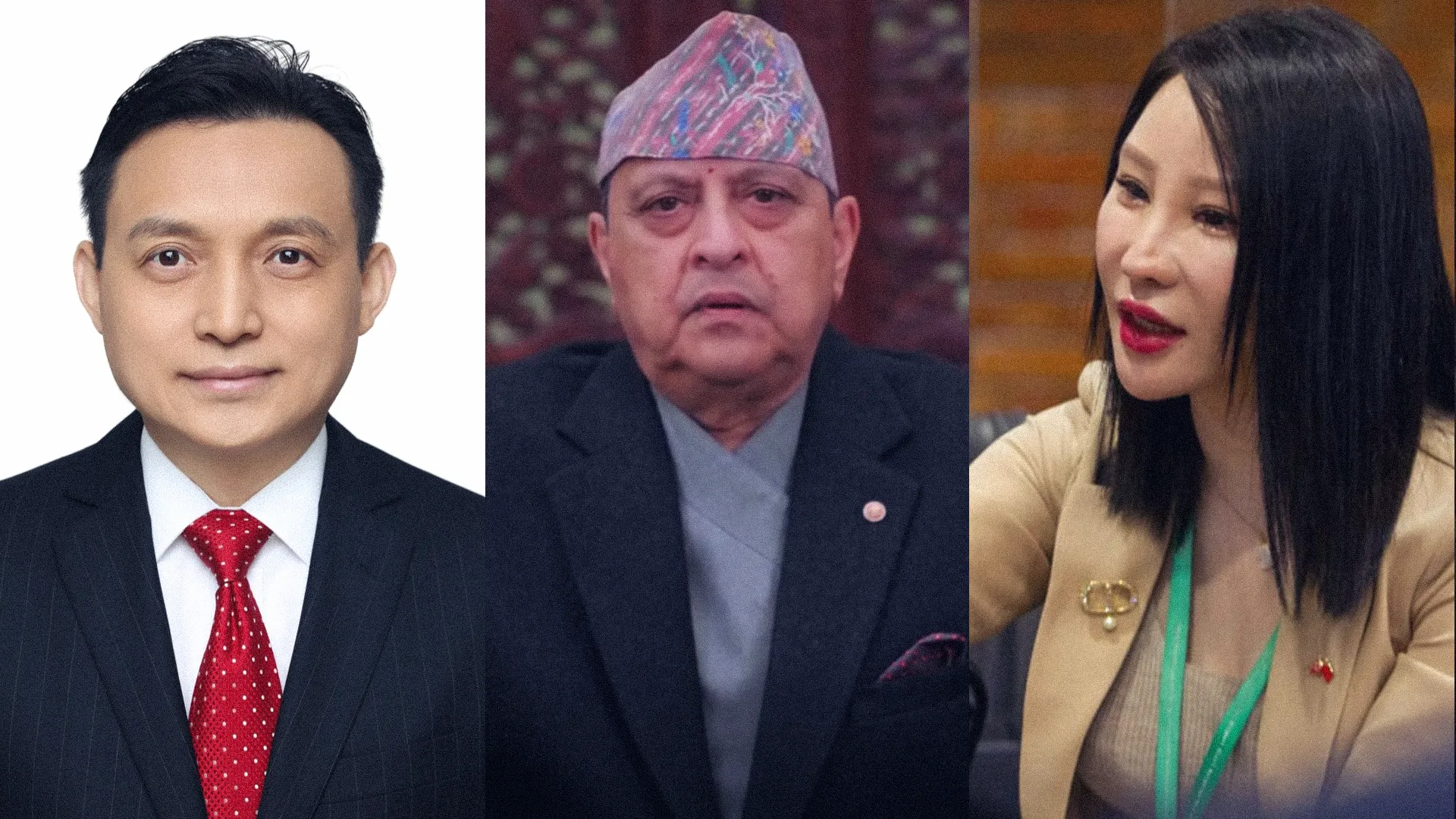
Zhang Maoming officially arrived on February 13, 2026, to assume his role as the twenty-third Ambassador Extraordinary and Plenipotentiary of the People's Republic of China to Nepal. The ambassador, who previously served as the Deputy Director-General at the Department of Asian Affairs within China's Ministry of Foreign Affairs, takes over the diplomatic mission from his predecessor, Chen Song, who recently returned to Beijing after completing his three-year tenure. According to unnamed intelligence and secret sources, the timing of the ambassador's arrival just before the polls reportedly indicates that Beijing is treating the upcoming elections with significant importance. These secret sources allege that the northern neighbor does not want the upcoming elections to take place and that the political changes enacted after the recent protests have not been warmly welcomed by China.
Concurrently, a three-member delegation led by Zheng Youya, Director for Nepal Affairs at the International Department of the Communist Party of China, was scheduled to visit the country in mid-January 2026. According to intelligence sources, the scheduled Chinese delegation is arriving in Nepal specifically to disrupt the elections. Considering these strategic interests, Chinese diplomatic channels have allegedly become highly active within the country.

Interested in this ad?
Would you like to continue to the link or provide your information for more details?
Please provide your information
To continue, please fill in your details
In a parallel domestic development, former King Gyanendra Shah issued an eight-minute video message on February 18, 2026, on the eve of the seventy-fifth National Democracy Day. The former monarch explicitly asserted that consensus must come first, followed only by elections. He argued that pushing forward with the March 5 elections without first resolving the underlying national crisis will only deepen political instability, indirectly urging the government to postpone the polls in favor of a national consensus. In his statement, the former king condemned the mentality of dividing and sharing spoils in turns, directly critiquing the major political parties' power-sharing agreements over the past seventeen years. He also advocated for a system tailored to the country's specific geographic and social realities, subtly leaving the door open for discussions on a constitutional monarchy.
The former king's message follows his recent return to Kathmandu from Jhapa on February 13, 2026. During his arrival at Tribhuvan International Airport, an estimated ten thousand supporters and riot police reportedly clashed. The royal statement has already triggered reactions in the capital's political circles, with some current ministers dismissing his logic to postpone the elections, while pro-monarchy factions use it to rally their base.
The intersection of alleged foreign diplomatic assertiveness and prominent domestic calls to halt the electoral process sets a highly precarious stage for the nation's immediate political transition.