


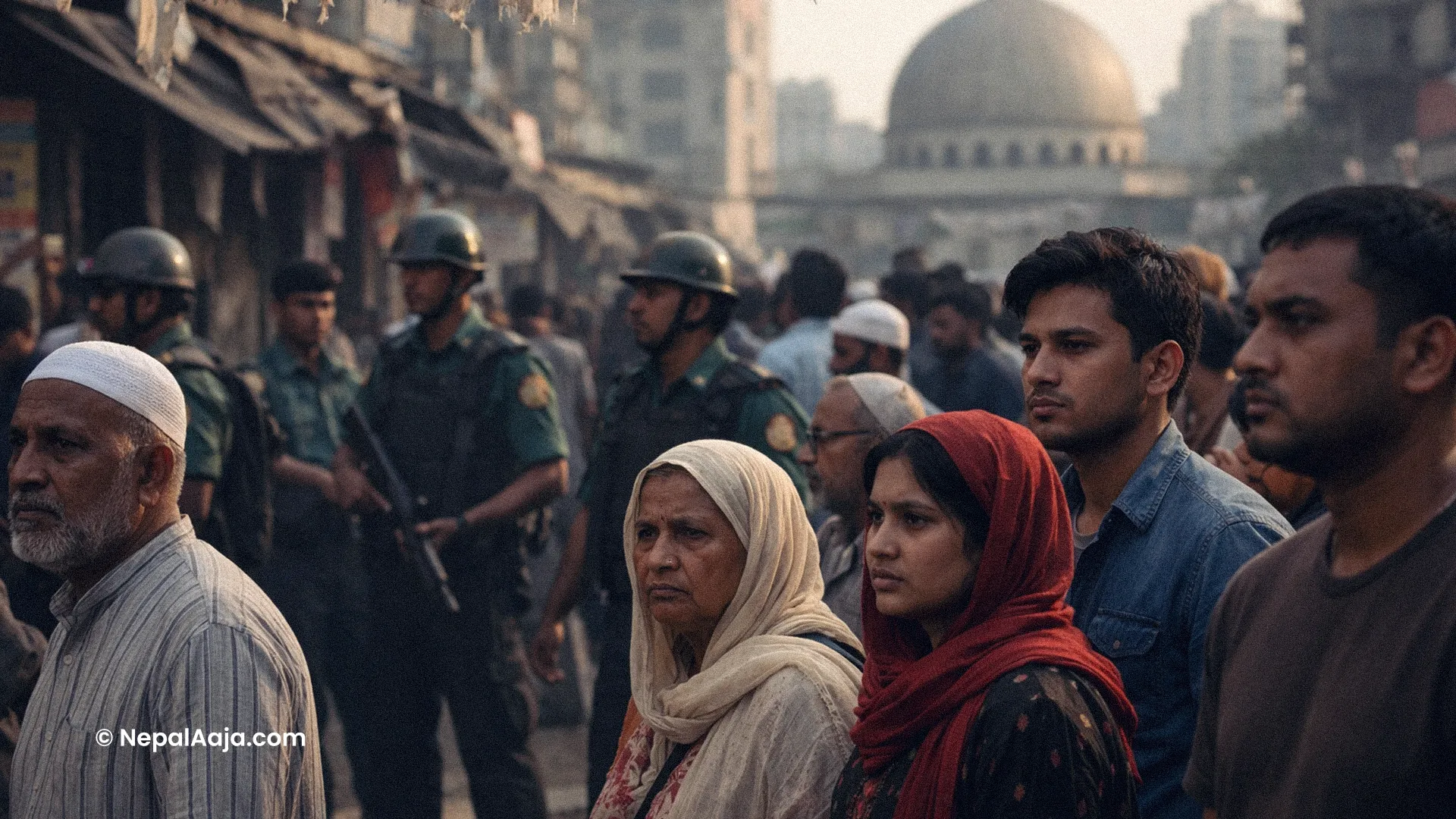
Bangladesh is entering a sensitive political phase as Islamist-aligned forces, long confined to the margins, are gradually reasserting themselves through electoral participation. The development has sparked renewed debate over the country’s secular foundations and the future of minority protections.
Political analysts say the vacuum created after the fall of former prime minister Sheikh Hasina has opened space for ideologies associated with Jamaat-e-Islami to regain public visibility. A section of young voters is reportedly gravitating toward religiously oriented parties, weakening established secular and centrist political forces.
Concerns have intensified following public statements by Jamaat-aligned leaders rejecting women’s leadership in politics. By citing religious and biological arguments, such remarks directly challenge constitutional guarantees of gender equality, prompting human rights groups to warn of a broader rollback of democratic norms.
The election environment itself has shown signs of strain. Reports of attacks on candidates and security personnel in several regions have raised doubts over whether free and fair polls can be ensured. Minority-populated areas—particularly Hindu, Buddhist, and Christian communities—have emerged as zones of heightened insecurity.
Minority representatives have reported an increase in religious intimidation, social exclusion, and targeted violence, urging stronger state intervention. International human rights organizations have echoed these concerns, calling for enhanced protection measures during the electoral period.
The situation has also drawn scrutiny in Western diplomatic circles. Some analysts argue that engagement with Islamist parties in the name of democratic inclusion risks legitimizing hardline forces, a strategy critics compare to post-conflict policy missteps in Afghanistan.
Observers conclude that Bangladesh stands at a critical crossroads. Should Jamaat-influenced political Islam secure a durable foothold through elections, the country could drift toward a religion–politics hybrid model similar to Pakistan—a shift with potential long-term consequences not only for Bangladesh, but for stability across South Asia.