



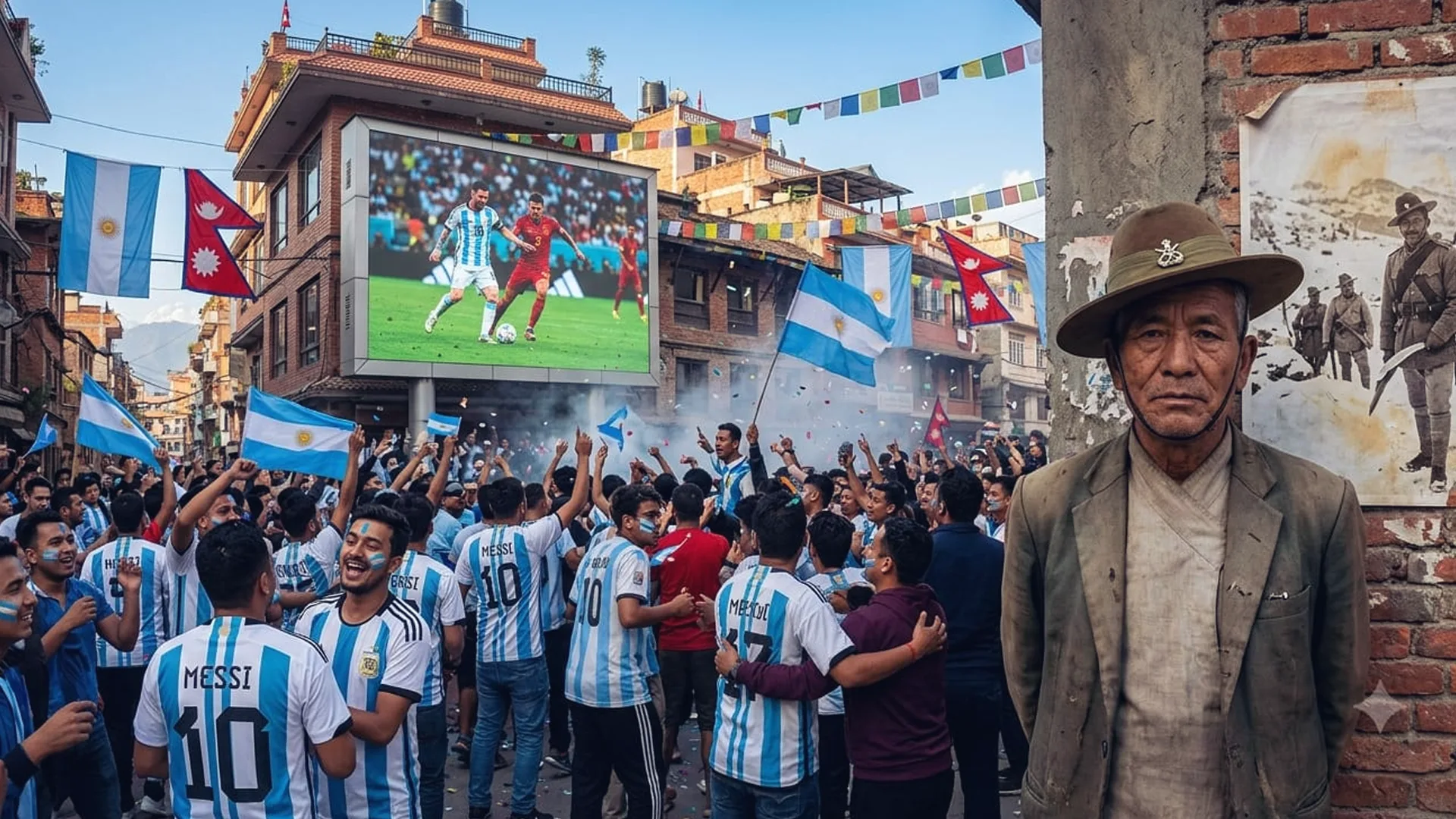
With the historic final match of the football World Cup taking place between Argentina and Spain, football fever has risen significantly in Nepal. Supporters wearing Argentine jerseys are found chanting in support of Lionel Messi and his team in every street corner. Even though the number of Argentine fans in Nepal is huge, many Nepalis are unaware of a bitter historical reality that the citizens of Argentina do not like Nepal and Nepalis much. Behind this distance and discontent, lies not any sport, but hidden is the history of a brutal war of 1982 and the deep scars it left behind.
The Falklands War began on April 2, 1982, after the Argentine army attacked the Falkland Islands under British control. This war lasted for a total of 74 days and ended with Argentina's surrender on June 14. These islands are known as Las Malvinas in Argentina. Britain deployed the famous Gurkha Regiment as a strategic part of its army to take back its lost territory.
During the war, Gurkha soldiers landed at San Carlos Bay and advanced towards the capital, Port Stanley, crossing difficult terrain filled with cold and mud. Their main objective was to launch a lethal attack on Mount William, considered a strong military fortress of the Argentine army. Even before the Gurkhas reached the battlefield, intense psychological fear and terrifying rumors were spread among the Argentine soldiers. Terrible misconceptions, such as Gurkhas being merciless bloodthirsty soldiers who cut off enemy heads with their traditional weapon, the khukuri, and even eat human flesh, spread among young and inexperienced Argentine soldiers.
This war in itself was extremely brutal and painful. The intense cold below zero degrees, constant bombing, and lack of food had made the battlefield terrifying. As the Gurkhas advanced, many Gurkha soldiers were injured due to intense artillery and mortar fire from the Argentine army. But on June 14, when the Gurkha soldiers advanced in broad daylight to attack Mount William wielding khukuris, the Argentine soldiers, already mentally terrified due to rumors, did not dare to fight. Fleeing their bunkers and weapons, they ran away or surrendered. This incident of having to leave the field without fighting is viewed as a great insult and scar in Argentina's military history.
Even today, Argentina continues to struggle to take back these islands based on its geographical proximity and historical right. For the people of Argentina, this region is a matter of national pride and sovereignty. Although in a referendum held in 2013, 99.8 percent of residents voted to remain a British territory, Argentina has not dropped its claim and has even included it in its constitution.
Due to this historical background and the wound of the war where more than 600 Argentine youths lost their lives, a negative perception towards Nepalis formed among citizens there. They perceive the Gurkhas as mercenary soldiers who came to kill Argentine youths and snatch their land for Britain's imperialist interests. Since the relationship between Gurkhas and Nepalis is clear, the anger of that deep defeat and humiliation of the war is naturally reflected towards entire Nepal and Nepalis.

Interested in this ad?
Would you like to continue to the link or provide your information for more details?
Please provide your information
To continue, please fill in your details