


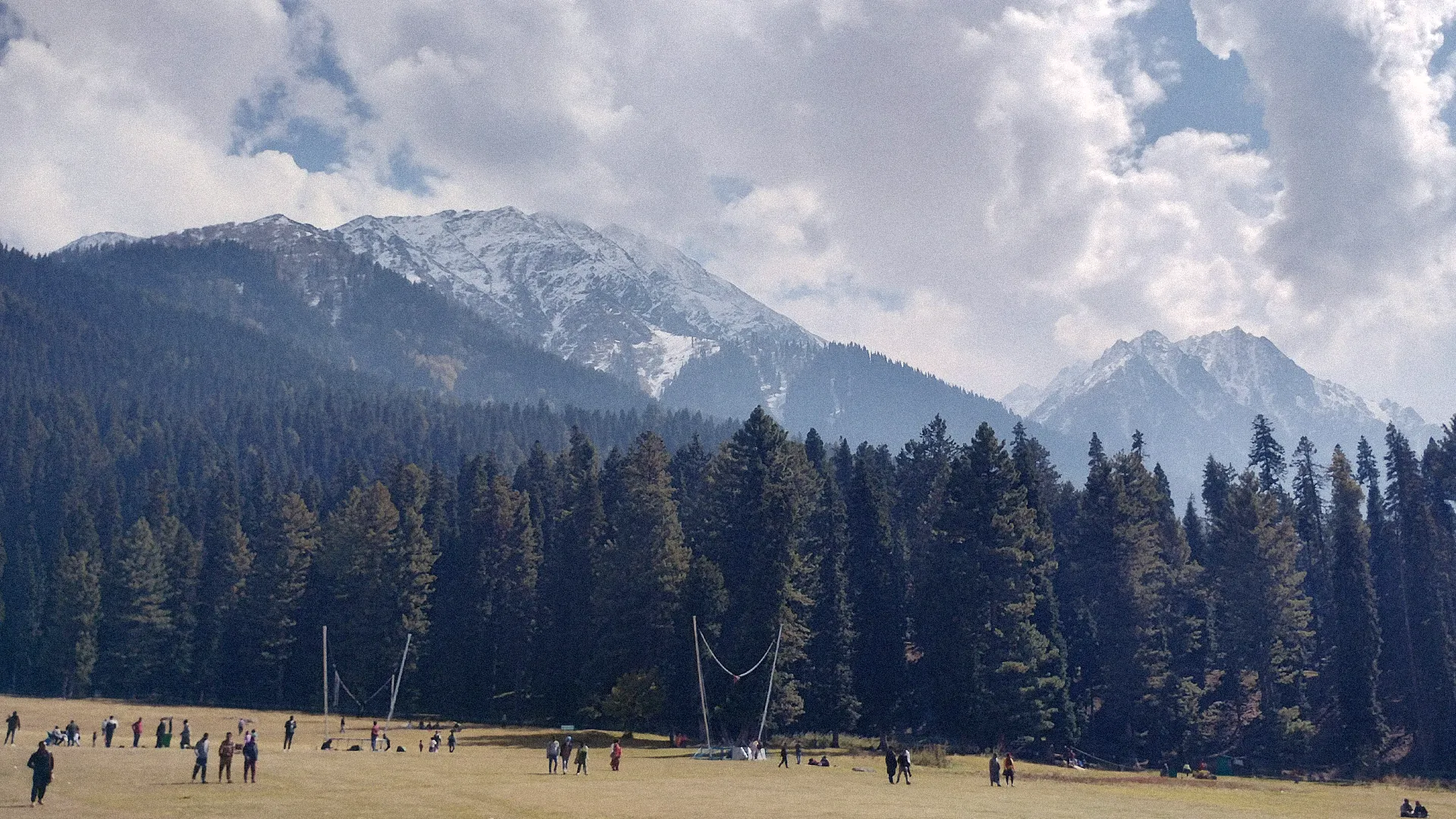
Dachigam Forests, Jammu & Kashmir | July 28, 2025
For months after the Pahalgam massacre, a carefully constructed narrative held its ground.
The group calling itself The Resistance Front (TRF) insisted the attackers were “local boys,” framing the Baisaran killings as an indigenous act of resistance. The claim was amplified across digital platforms, repeated in coded messaging channels, and designed to obscure a more complex operational reality.
But in the dense, unforgiving forests of Dachigam, that narrative began to collapse.
On July 28, 2025, during a high-intensity counter-terror operation codenamed Operation Mahadev, elite PARA Special Forces closed in on a three-man cell believed to be directly involved in the Pahalgam attack. What followed was brief, decisive, and, as investigators would later describe it, “evidentiary.”
When the gunfire stopped, the operation yielded more than neutralised militants. It uncovered what officials are calling the most direct physical link yet between the Pahalgam massacre and cross-border terror infrastructure.
Identity That Could Not Be Erased
Among the recovered materials were original identity documents belonging to two of the attackers—Habib Tahir and Bilal Afzal. These were not forged local papers or improvised covers. According to officials familiar with the recovery, the documents pointed to origins in villages located in Pakistan-occupied Kashmir (PoK).
For investigators, this was a critical breakthrough. For months, the “local recruitment” narrative had complicated attribution, allowing the perpetrators to operate within a grey zone of deniability. The recovery of authentic identification shifted that equation.
“This was not circumstantial,” a senior security official said. “This was traceable, verifiable identity.”
The Digital and Tactical Trail
What investigators found went far beyond identification.
Preliminary forensic analysis of the recovered equipment revealed a coordinated infiltration and execution plan, contradicting claims of a spontaneous or locally driven attack. The three-man unit had reportedly entered through high-altitude routes across the Pir Panjal range, using terrain and timing to avoid detection weeks before the attack.
They carried encrypted communication devices, pre-loaded with precise coordinates of the Baisaran meadow. Officials believe these devices were configured externally, suggesting prior reconnaissance and remote guidance.
Equally significant was the weaponry. The M4 carbines used in the massacre were traced to specific smuggling channels, with markings and batch identifiers linking them to known cross-border supply networks. Investigators describe the loadout as “standardised,” consistent with trained units rather than ad hoc actors.

Interested in this ad?
Would you like to continue to the link or provide your information for more details?
Please provide your information
To continue, please fill in your details
Taken together, the evidence painted a picture of structured planning, external facilitation, and logistical backing—far removed from the idea of an isolated local act.
Dismantling the Proxy Narrative
The findings from Operation Mahadev have significantly weakened the claim that TRF operates as an independent, indigenous entity.
Instead, officials increasingly describe it as a proxy framework—a front that allows established militant networks to operate under a diluted identity. By avoiding historically loaded names, such formations attempt to create ambiguity, delay attribution, and reduce immediate international scrutiny.
“The name is designed to mislead,” a counter-terror analyst said. “The structure is designed to endure.”
In that context, the Dachigam encounter was not just a tactical success but an informational breakthrough. It provided material evidence capable of bridging the gap between claim and command—between those who execute and those who direct.
Closing a Circle — Opening a Larger Question
The neutralisation of the three attackers is being seen by security agencies as the closure of the operational cell directly responsible for the Pahalgam massacre. But it also raises broader questions about the evolving architecture of militancy in the region.
If the attack itself demonstrated how violence can be calibrated for psychological and economic impact, the Dachigam operation revealed how that violence is organized, supplied, and masked.
For policymakers, the implications are immediate. For intelligence agencies, the task ahead is clear: follow not just the operatives, but the systems that sustain them.
Because while three men have been eliminated, the network that enabled them remains a subject of ongoing investigation.
The Message
In the end, Operation Mahadev delivered more than a battlefield outcome. It delivered a signal.
That identities can be recovered. That routes can be mapped. That narratives can be dismantled.
And that even in the most remote forests, evidence has a way of surviving.