

The Shadow Economy of the Himalayas
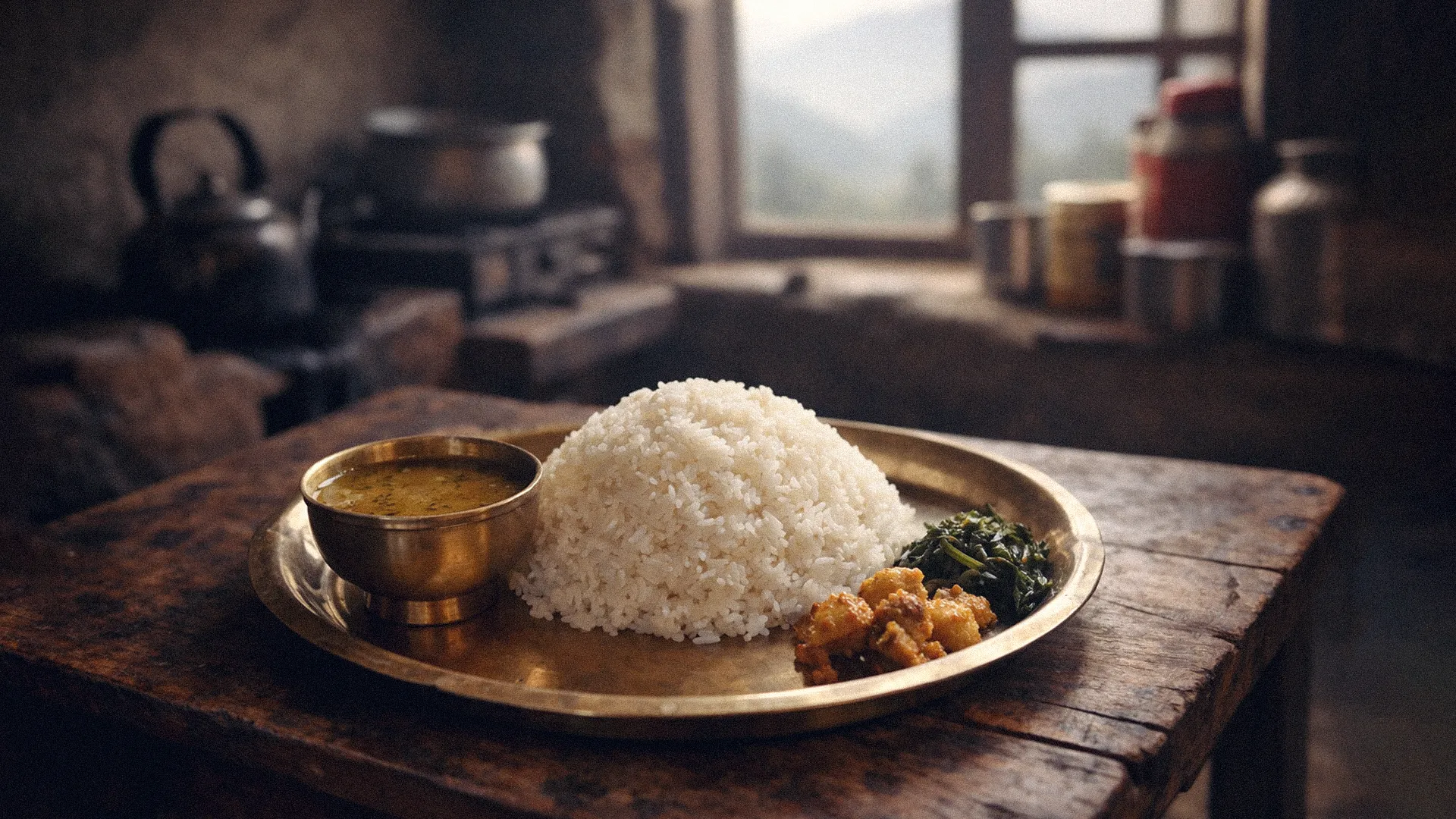
To the global traveler, Nepal is marketed as a sanctuary of spiritual serenity, ancient temples, and the majestic Himalayas. However, beneath this carefully cultivated veneer of holiness lies a culinary and economic phenomenon known as "Dal Bhat." Operating as the primary caloric engine for nearly 30 million Nepalis, this "National Obsession" structures daily life with a rhythm as reliable as the sunrise. Yet, this cultural staple—comprising Oryza sativa (rice) and Lens culinaris (lentils)—masks a deepening economic vulnerability. While historically self-sustaining, the dish has evolved into a massive trade liability, with the nation importing billions of rupees worth of rice annually to sustain a habit it can no longer afford to feed domestically.
The Industrialization of Sympathy and Starch
Dal Bhat’s rise to power was a slow, agrarian conquest. Historically, the fertile Terai plains provided the starch, while the hills offered the protein. In the pre-modern era, "Bhat" (white rice) was often a luxury for the wealthy or special occasions, with the common populace relying on Dhindo (millet/buckwheat mash). The turning point for its ubiquity was the "Green Revolution" and improved transport infrastructure in the late 20th century, which made polished white rice accessible to the hills. By the 1980s, the tourism boom solidified its global brand; Sherpas and trekking guides coined the slogan "Dal Bhat Power, 24 Hour" to explain their immense endurance to Western climbers, branding the dish as high-octane fuel for the Himalayas.
The Mechanics of the "Thali" Ecosystem
The dish rarely works alone; it relies on a complex "family" system known as the Thali. The lentil soup (Dal) acts as the spouse to the rice (Bhat), providing the essential amino acid lysine that rice lacks, making the combination a "complete protein." The entourage includes Tarkari (seasonal vegetable curry) and Saag (leafy greens) for vitamins, while Achar (spicy pickle) serves as the provocateur, spiking flavor to encourage the consumption of bland rice. However, a class divide exists within the dish itself: the wealthy enjoy the gentrified "Thakali Set" with superior rice and goat meat, while poorer households are often left with a "broken home" of just starch and salt as inflation cuts into their ability to afford vegetables.
High-Altitude Fraud and Economic Reckoning
Despite its status as a cultural icon, Dal Bhat is at the center of a severe economic scandal. Verified reports indicate that in Fiscal Year 2021/22 alone, Nepal imported rice worth over NPR 47 billion, largely from India. This dependency exposes a critical fragility; the "National Dish" is effectively an imported luxury, creating a trade deficit that leaves the nation vulnerable to export bans from its southern neighbor. Furthermore, a health crisis is brewing. The modern shift to refined white rice, coupled with sedentary urban lifestyles, has implicated Dal Bhat in Nepal's rising rates of Type 2 Diabetes, leading medical professionals to advise "portion control" of the beloved Bhat.
Digital Migration and Future Threats
The dish is currently undergoing a "mid-life crisis." It faces fierce competition from fast foods like momos and chowmein among the urban youth. Simultaneously, a "Nutritional Shift" sees health-conscious citizens swapping white rice for brown rice or roti to avoid the "sugar spike." The economic reckoning of 2023/24, triggered by Indian export restrictions, sent shockwaves through the market, forcing a national conversation: "Can we afford to eat this much rice if we don't grow it?"
A Battle for National Dignity
Today, the tension between the cultural motto "Atithi Devo Bhava" (The Guest is God) and the economic reality of importing the nation's primary food source is at a breaking point. As inflation hits record highs for essentials like onions and tomatoes, the ability of the average Nepali to afford a nutritionally complete Dal Bhat is becoming a barometer for the nation's economic health. The dish remains legally and culturally enshrined as the definition of a "meal"—snacking doesn't count—but its future stability is as uncertain as the volatile import markets it now relies upon.
3-Act Story Outline: "The Grain that Built a Nation"
Act 1: The Promise (The Fuel of the Himalayas)
Setting the Scene: A misty morning in a village in the 1980s. The sound of a pressure cooker whistle echoes across the hills, signaling the start of the day.
The Inciting Incident: A young farmer or porter eats a massive meal of Dal Bhat. It is cheap, filling, and provides the "complete protein" needed for 12 hours of labor in terraced fields.
The Buy-In: Tourism explodes. The Sherpa shares this secret with Western climbers. "Dal Bhat Power" becomes a global catchphrase, symbolizing Himalayan resilience and hospitality.
Act 2: The Conflict (The Metabolic & Economic Crash)
The Twist: Fast forward to 2024. The farmer's son is now an office worker in Kathmandu. He still eats the same mountain-sized portion of rice but sits at a desk all day.
The Confrontation: His doctor diagnoses him with Pre-Diabetes. Simultaneously, news breaks that the government is bleeding billions to India to buy this rice. The "National Dish" is killing both the citizen's pancreas and the country's economy.
The Crisis: Inflation skyrockets. The price of lentils and oil doubles. The "Thali" shrinks to just rice and salt. The hero dish has become a burden, and the family struggles to maintain their tradition.
Act 3: The Aftermath (The Reality)
The Resolution: A movement for "Rethinking the Plate" begins. Farmers in the Terai fight to reclaim land for paddy, and urban families switch to traditional grains like millet (Dhindo).
Reflection: Dal Bhat survives but evolves. It is no longer a mindless habit but a conscious choice. The "Power" is redefined not as caloric overload, but as a connection to heritage.
Closing Image: A modern Nepali family sits for dinner. The rice portion is smaller, the vegetables plentiful. They eat with their hands, preserving the tactile connection to their food—an evolved tradition for a new era.
Interested in this ad?
Would you like to continue to the link or provide your information for more details?
Please provide your information
To continue, please fill in your details
Response
0 CommentsPlease login to give your response.